To determine the genetic cause and clarify the clinical diagnosis in a Chinese family initially misdiagnosed with juvenile-onset open-angle glaucoma (JOAG).
Key Findings:
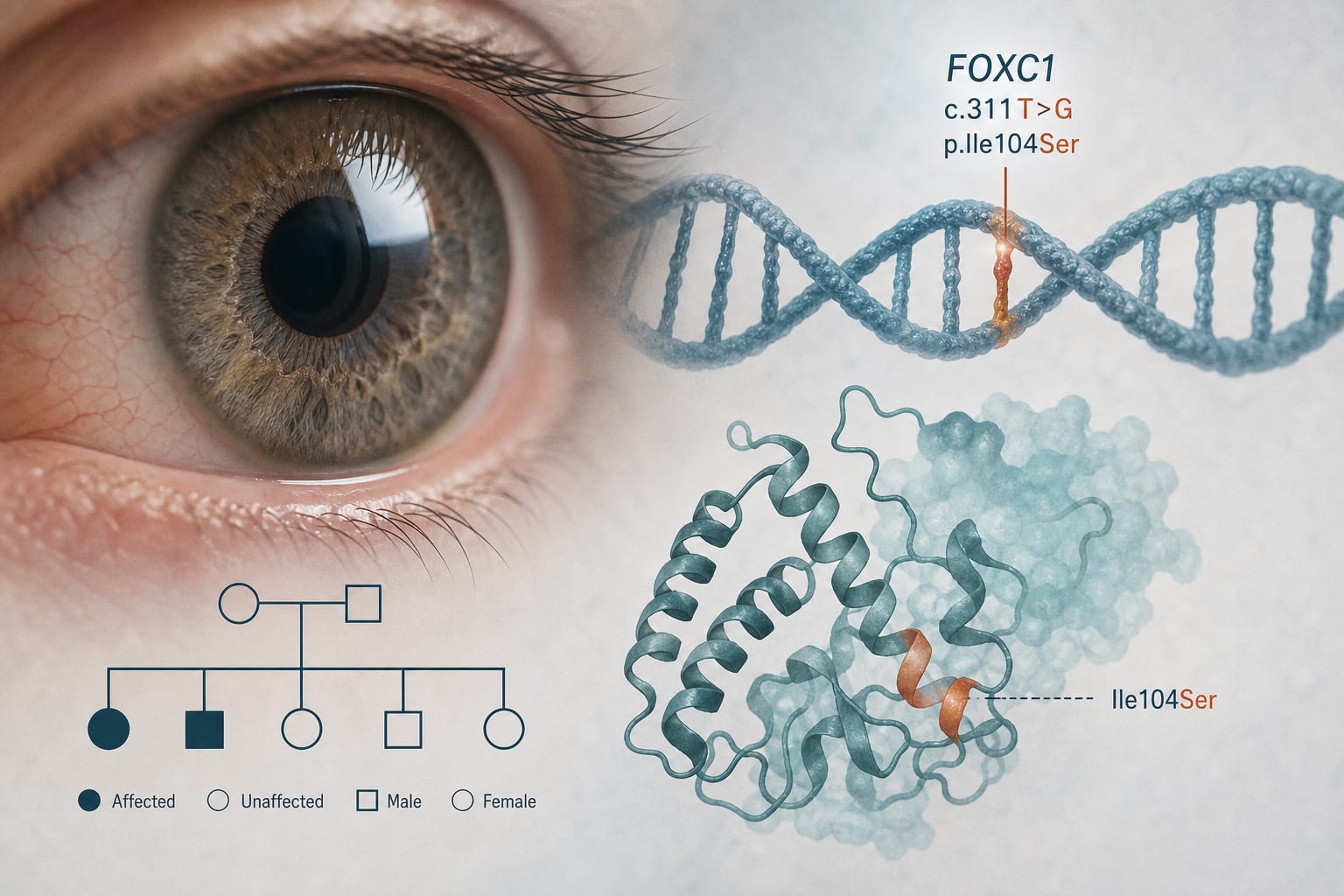
A novel heterozygous missense variant c.311T>G (p.Ile104Ser) in FOXC1 was identified, which may have significant implications for genetic counseling.
The variant was absent from the East Asian population in gnomAD and predicted to be highly deleterious, indicating its potential role in disease.
The variant co-segregated with the disease phenotype and showed incomplete penetrance in the unaffected father, highlighting the complexity of genetic expression.
Interpretation:
The findings suggest that ARS-associated glaucoma can closely mimic JOAG, leading to initial misdiagnosis, which underscores the need for thorough genetic evaluation in similar cases.
Limitations:
The study is limited to a single family, which may not represent broader population genetics, potentially affecting the generalizability of the findings.
Conclusion:
The identification of a novel FOXC1 variant expands the genotypic spectrum of FOXC1-related disorders and emphasizes the importance of systemic evaluation and genetic testing in early-onset glaucoma patients to avoid misdiagnosis.