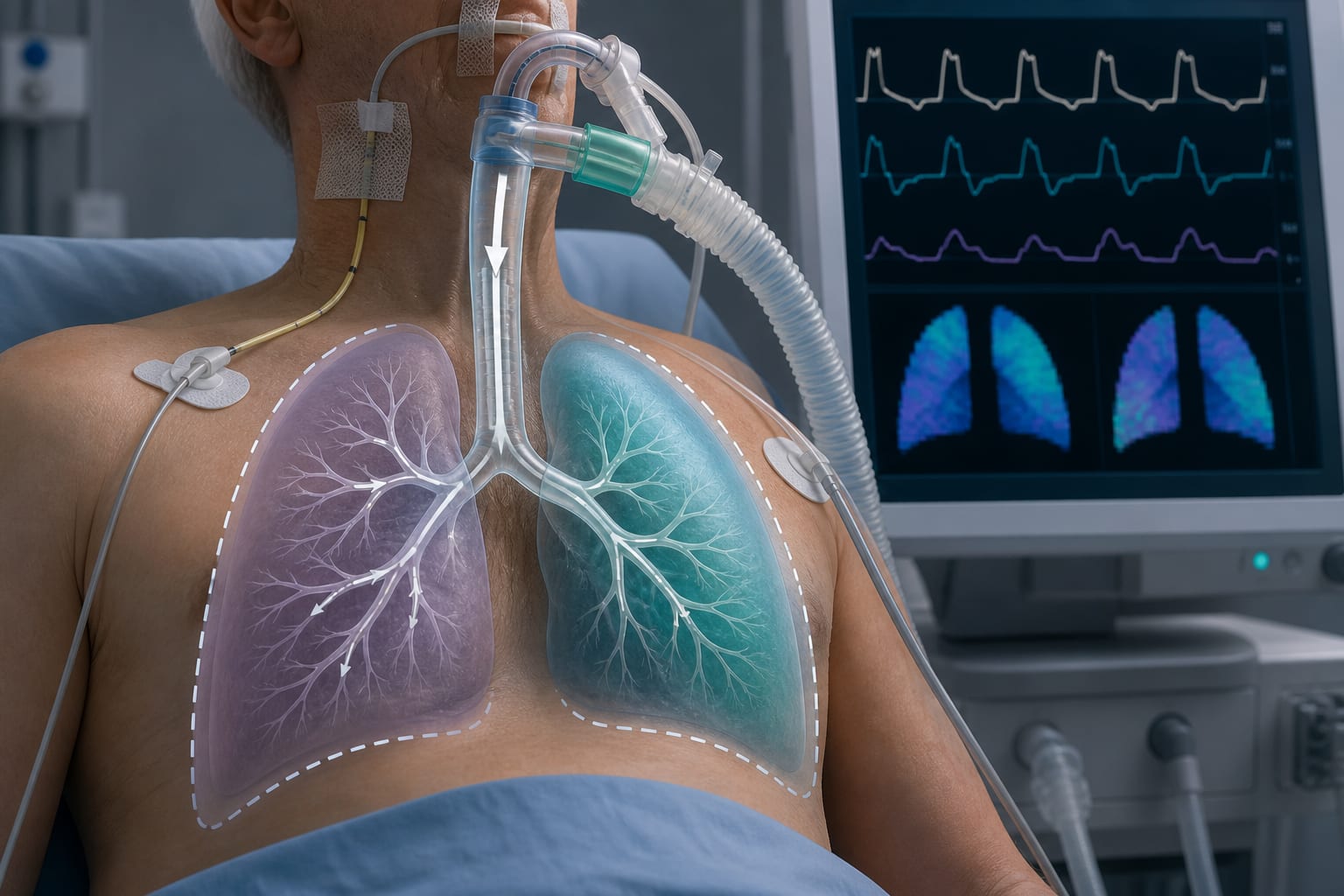
To critically assess the physiological implications of high-flow oxygen (HFO) during spontaneous breathing trials (SBTs) and its comparison to conventional T-piece breathing.
Approach:
Physiological Assessment: The study utilized esophageal pressure monitoring, electrical impedance tomography, and bench experiments to evaluate the effects of flow rate and expiratory port diameter on various respiratory parameters.
Comparison Analysis: The authors discuss the limitations of comparing inspiratory effort during tracheal HFO to post-extubation conditions, highlighting the need for careful interpretation of results.
Key Findings:
Inspiratory effort with tracheal HFO was similar to that observed during T-piece breathing.
Post-extubation conditions may not provide a valid physiological reference due to the influence of additional respiratory support.
Exclusion of patients requiring immediate reintubation may overlook critical physiological data.
Interpretation:
The findings indicate that while tracheal HFO can maintain certain physiological parameters, it does not replicate the full physiological challenge of unsupported breathing during SBTs.
Limitations:
Post-extubation measurements were taken only from stable patients, potentially biasing results.
The exclusion of two patients who required reintubation may overlook critical physiological data.
Conclusion:
The study indicates that tracheal HFO creates a distinct physiological state, necessitating careful consideration of its implications for SBT objectives.