Endocrine-driven inflammatory–epigenetic adaptation as a proposed axis of radioresistance in endocrine-exposed prostate cancer: a translational hypothesis - Summary - MDSpire
Advertisement
Endocrine-driven inflammatory–epigenetic adaptation as a proposed axis of radioresistance in endocrine-exposed prostate cancer: a translational hypothesis
To propose a translational hypothesis regarding the dynamic nature of radiosensitization in prostate cancer under endocrine therapy, focusing on the interplay between AR signaling, inflammatory adaptation, and epigenetic changes.
Approach:
Key Findings:
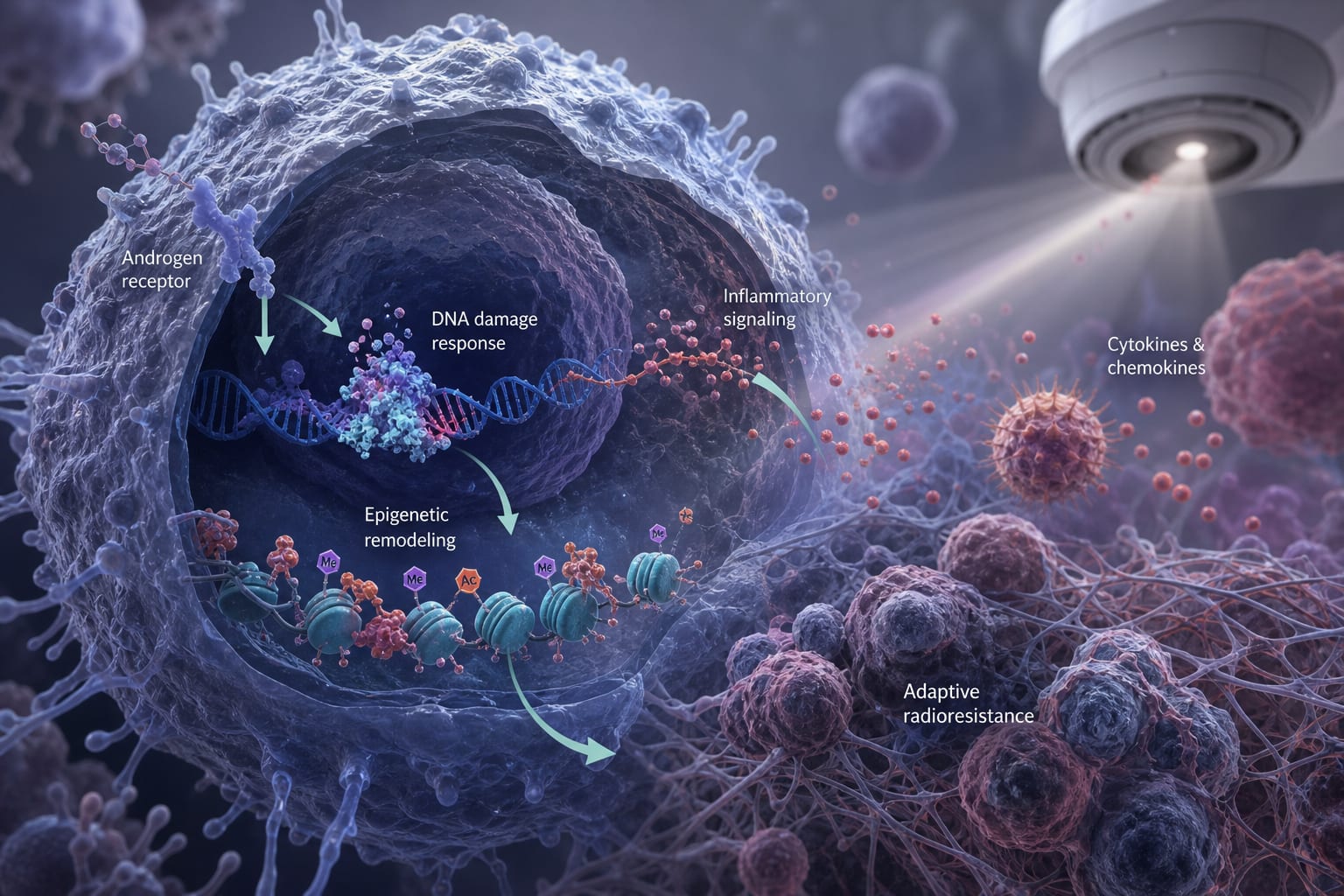
Endocrine therapy can initially impair AR-dependent DNA damage response signaling.
Sustained endocrine pressure may lead to adaptive inflammatory signaling that contributes to radioresistance.
Epigenetic remodeling may stabilize resistance phenotypes in prostate cancer.
Interpretation:
The proposed model suggests that the relationship between endocrine therapy and radiosensitization is not fixed but evolves over time, potentially leading to varying responses in tumors exposed to similar treatments.
Limitations:
The framework is inferential and primarily hypothesis-generating.
The interactions between endocrine therapy, inflammation, and epigenetics require further empirical validation.
Conclusion:
The article reframes the understanding of endocrine-associated radiosensitization as a dynamic biological state that may change over time.