Neutrophil-to-lymphocyte ratio is associated with early cervical shortening after cerclage: a single-center cohort study integrating C-reactive protein - Summary - MDSpire
Advertisement
Neutrophil-to-lymphocyte ratio is associated with early cervical shortening after cerclage: a single-center cohort study integrating C-reactive protein
To explore the association of pre-operative systemic inflammatory markers (NLR and CRP) with early post-cerclage cervical shortening and to examine variations in atosiban use according to inflammatory status, specifically noting that atosiban was administered at the physician's discretion.
Key Findings:
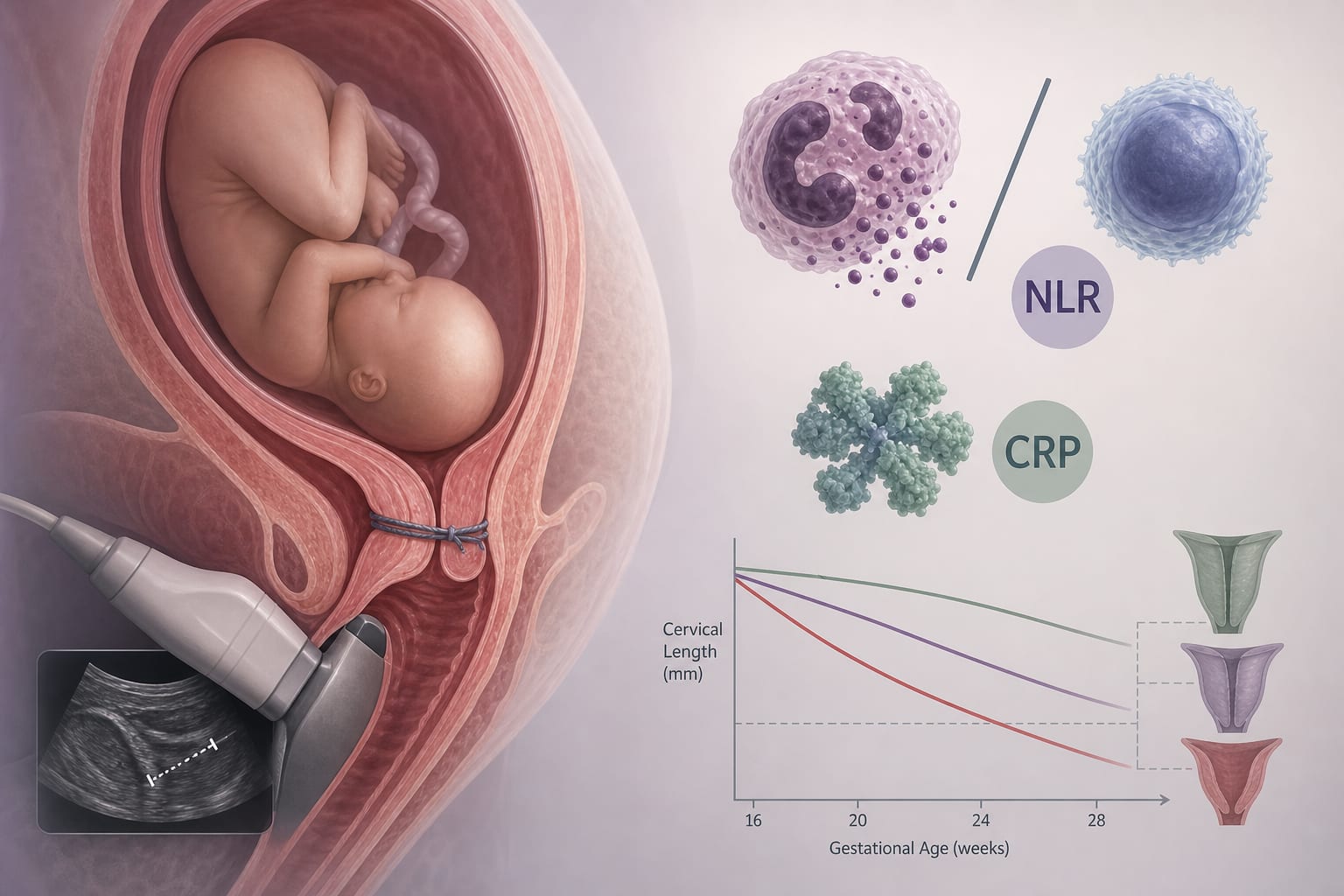
NLR correlated linearly with cervical length shortening (r = 0.61, p < 0.001), indicating a strong relationship.
Each 1-unit increase in NLR was associated with an additional 0.09 mm/week of cervical shortening, highlighting the impact of NLR.
60.0% of high-NLR women without atosiban experienced preterm birth before 32 weeks compared to 14.3% with atosiban, emphasizing the potential protective effect of atosiban.
Combined NLR and CRP predicted large cervical shortening (ΔCL ≤ -5 mm) with an AUC of 0.81, suggesting good predictive capability.
Interpretation:
Pre-operative NLR and CRP were statistically associated with accelerated cervical shortening after cerclage; however, findings are exploratory and do not imply causation.
Limitations:
Small sample size (n = 84) and single-center design limit generalizability, potentially skewing results.
Subgroup analyses based on small numbers (n = 5, n = 2) introduce confounding by indication, affecting reliability.
No causal inference or clinical recommendations can be made due to the exploratory nature of the study.
Conclusion:
Further prospective validation in randomized trials is essential to confirm these findings and their implications.