Aerobic exercise training attenuates the deleterious effects of walker-256 cancer: effects on physical capacity, cachexia, and cardiac mass - Summary - MDSpire
Advertisement
Aerobic exercise training attenuates the deleterious effects of walker-256 cancer: effects on physical capacity, cachexia, and cardiac mass
To investigate cancer cachexia-induced cardiac changes in the Walker-256 tumor model and analyze the therapeutic effects of aerobic exercise training (AET) on these changes.
Approach:
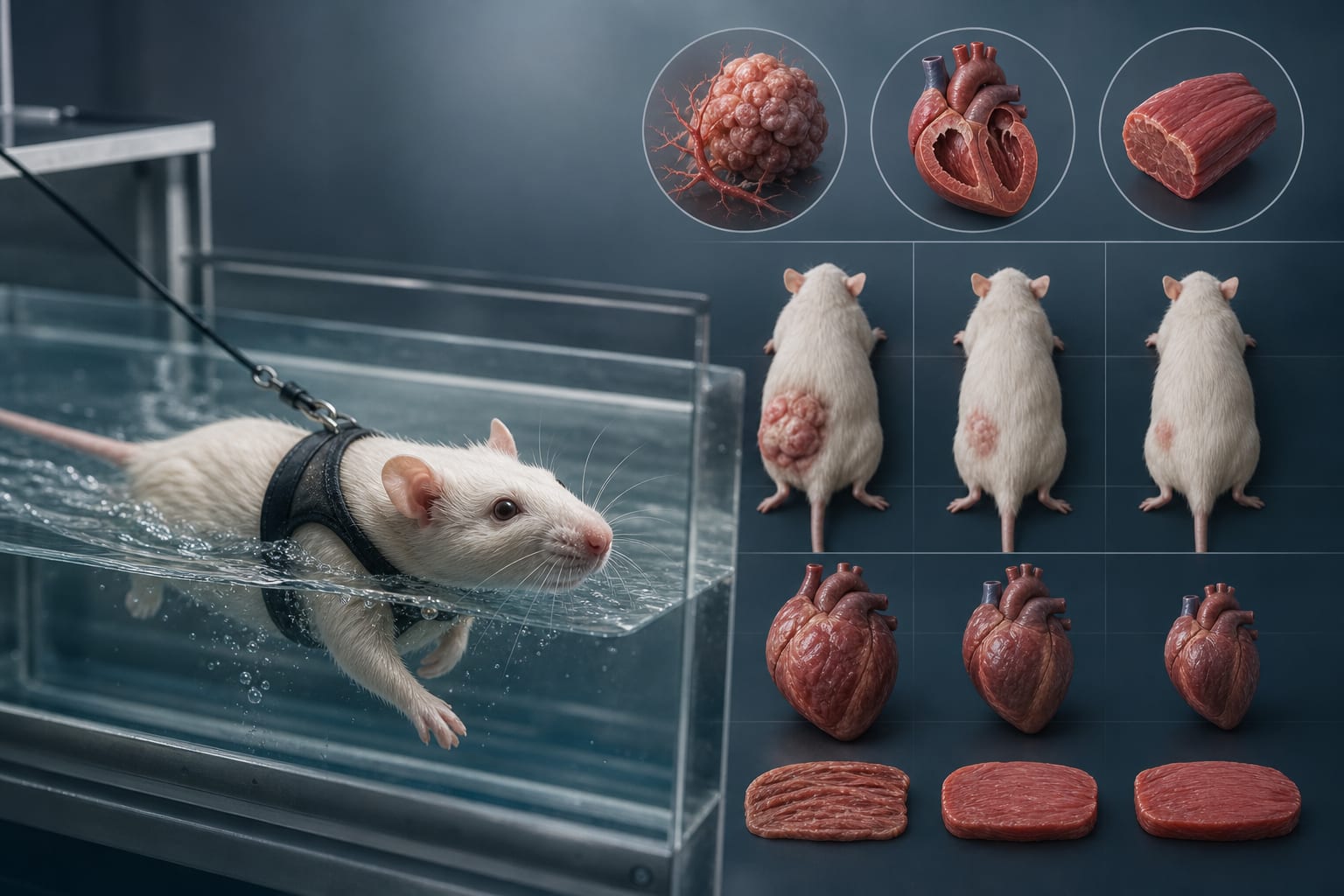
Study Design: Wistar male rats were assigned into three groups: Wistar control (WC), control tumor (WCT), and tumor trained (WTT). Walker-256 tumor cells were injected into cancer groups. AET consisted of swimming for 60 min, 5 times a week for 6 weeks.
Assessment Methods: Exercise tolerance was measured by distance run, hemodynamic parameters were assessed through echocardiography, and tumor growth, cachexia, skeletal muscle, and left ventricular mass were evaluated using tissue weight to tibia length ratios.
Method: key_findings
Key Findings:
AET prevented exercise intolerance in the WTT group compared to WCT.
WTT group showed reduced tumor weight and percentage of cachexia compared to WCT group.
Skeletal muscle wasting was observed in cancer cachexia compared to control.
AET reversed cardiac atrophy and improved left ventricular mass in the WTT group.
Interpretation:
The study provides a robust model of cancer cachexia and highlights AET's effects in mitigating exercise intolerance, tumor growth, cachectic status, and cardiac damage in Walker-256 tumor.
Limitations:
The study was conducted in a rodent model, which may not fully replicate human conditions.
Long-term effects of AET beyond the 6-week training period were not assessed.
Conclusion:
AET may serve as a preventive strategy against the adverse effects of cancer cachexia on physical performance and cardiac health.