Objective:
The article examines WHO guidance on obesity treatment for children and adolescents and discusses evidence gaps in lifestyle and pharmacological approaches.
Approach:
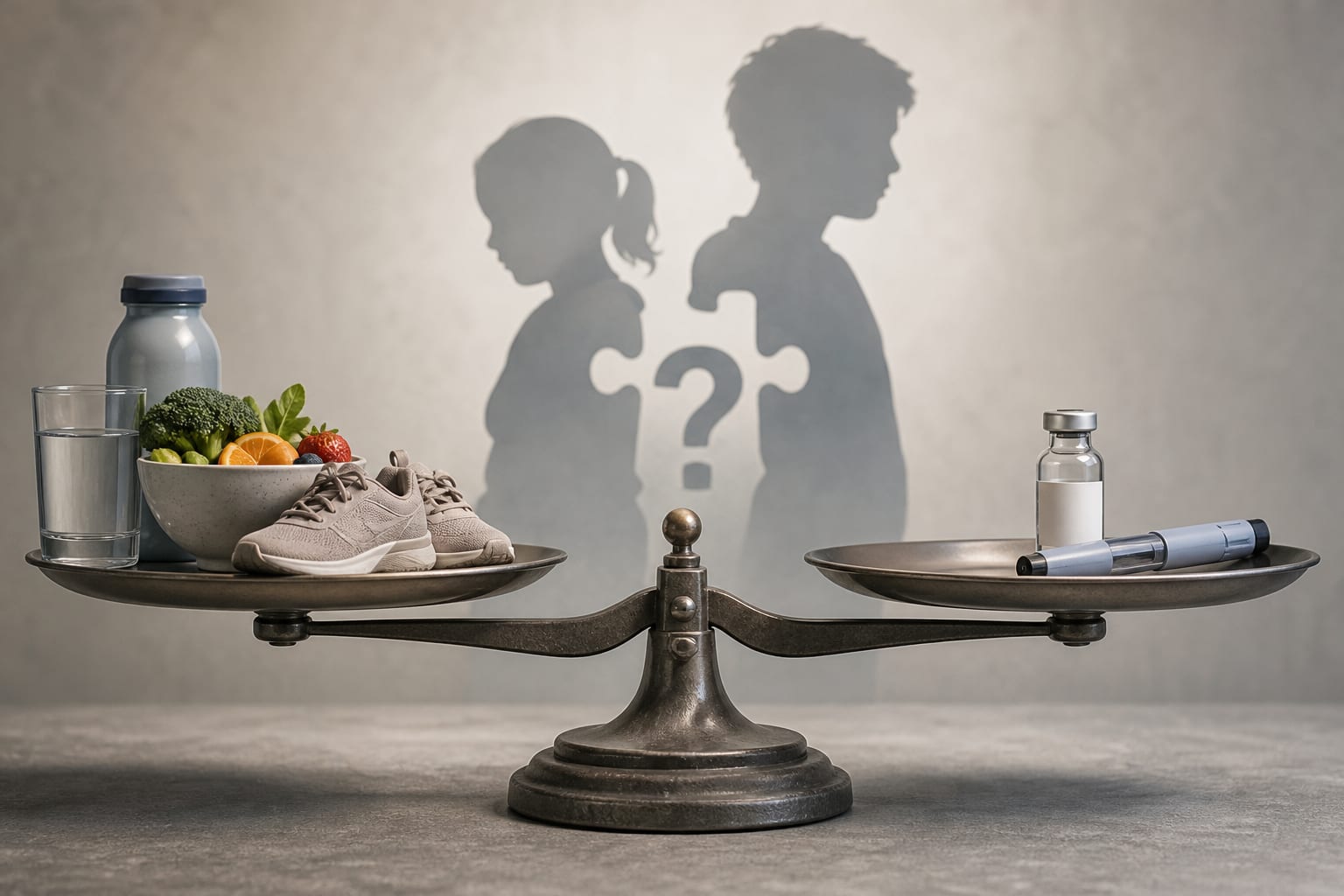
- Guidelines: Issued on 7 October 2026, the WHO guidelines advise against pharmacological treatment, including GLP-1 receptor agonists (GLP-1RAs), for children younger than 10. For adolescents aged 10–19, medication is recommended only after alternative treatment options have been exhausted.
- Evidence: The article describes evidence for pharmacotherapy as low quality and evidence for conventional weight-loss approaches, including diet and exercise, as very low quality.
- Context: It discusses social and environmental influences on youth obesity and research needs concerning lifestyle interventions, medication safety, long-term treatment, and potential misuse.
Key Findings:
- The proportion of adolescents worldwide who were overweight rose from 8% in 1990 to 20% in 2024.
- About 70% of adolescents with obesity remain affected at age 30. Youth obesity is associated with long-term conditions including chronic kidney disease and type 2 diabetes, as well as immediate risks including poor oral health, asthma, hypertension, stigma, depression, and lower educational attainment.
- Access to safe places for exercise and affordable nutritious food can constrain lifestyle interventions; children often have limited control over their diets.
- Evidence on GLP-1RA use in adolescents is sparse. The article calls for extended follow-up to assess safety during development and puberty.
- Adult evidence indicates weight regain after GLP-1RA discontinuation, raising questions about long-term treatment and support for people who stop medication.
- The article identifies potential concerns about unsupervised access, misuse, and effects on eating disorders and body dysmorphia.
Interpretation:
The article describes how social and environmental factors shape young people’s choices and highlights evidence gaps in lifestyle and pharmacological treatment.
Limitations:
- The article notes that benefits of food-voucher initiatives have not been examined in children.
- Evidence on GLP-1RA efficacy and safety in adolescents is described as sparse, with long-term developmental effects unresolved.
Conclusion:
The article calls for treatment options grounded in evidence and responsive to the complex environments in which children and adolescents live.
Sources:
Based on findings from:
Young people with obesity deserve better care
Nature Medicine, 2026.
https://www.nature.com/articles/s41591-026-04784-x
This content is an AI-generated, fully rewritten summary based on a published scholarly article. It does not reproduce the original text and is not a substitute for the original publication. Readers are encouraged to consult the source for full context, data, and methodology.