Early neurological and developmental trajectories of infants at high risk of cerebral palsy in Bangladesh: a prospective longitudinal cohort study - Summary - MDSpire
Advertisement
Early neurological and developmental trajectories of infants at high risk of cerebral palsy in Bangladesh: a prospective longitudinal cohort study
To describe survival, diagnostic, neurological, and developmental outcomes of infants at risk of developing cerebral palsy (CP) in Bangladesh.
Approach:
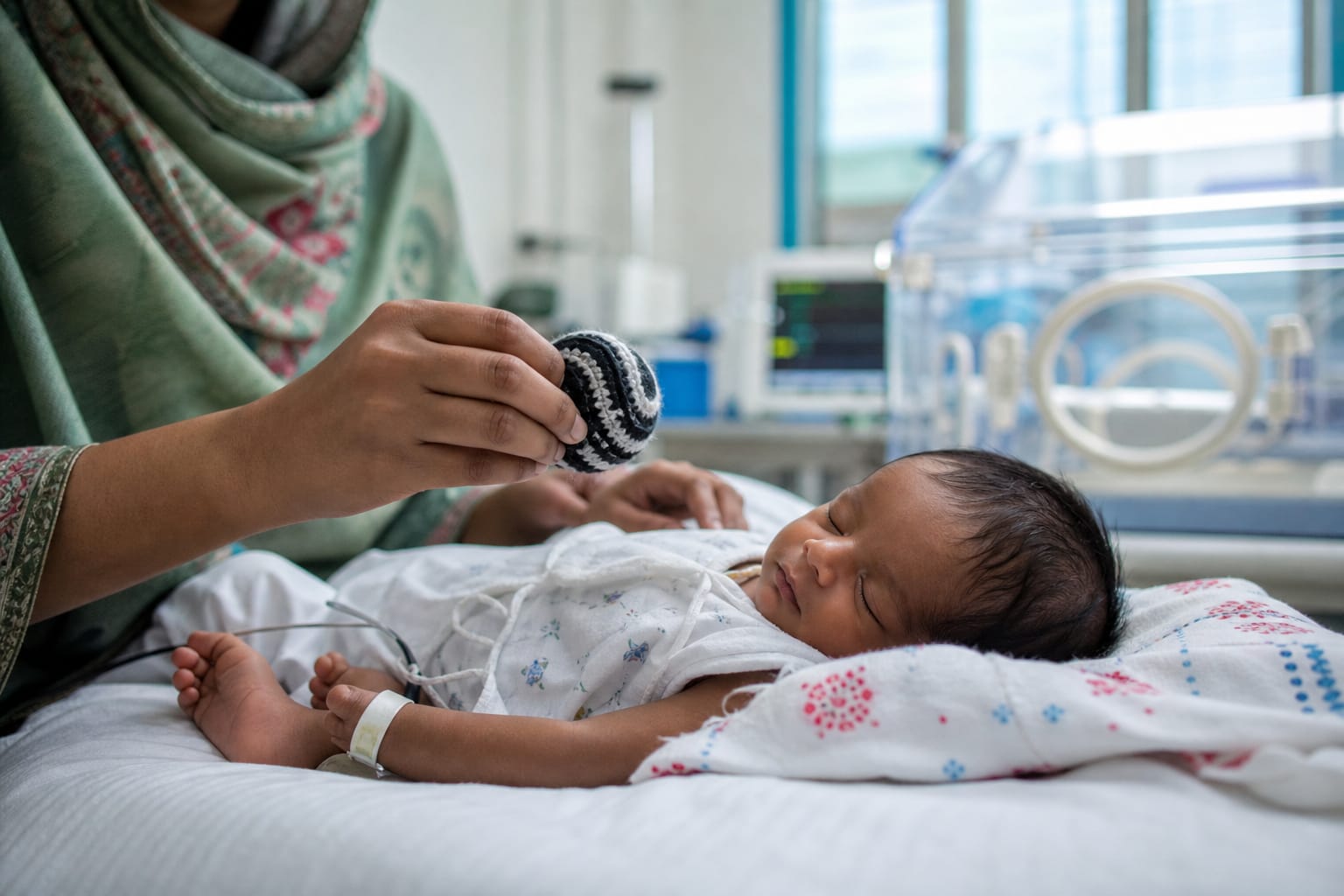
Study Design: Prospective longitudinal cohort study of neonates with risk factors for CP admitted to a tertiary neonatal intensive care unit.
Outcome Measures: Outcomes at 24 months included CP, developmental delay (DD), no known disability, and death, assessed using various developmental and neurological scales.
Statistical Analysis: Survival probability was analyzed using Kaplan-Meier curves and mortality risk using Cox proportional hazards models.
Key Findings:
27% of the 227 enrolled infants died at a median age of 41 days.
Mortality risk was significantly associated with multiple birth and neonatal encephalopathy.
29% of the 125 infants assessed at 24 months were diagnosed with CP, 10% with DD, and 61% had no known disability.
Infants with CP had significantly lower motor scores compared to those with DD and no known disability.
Interpretation:
One-third of the infants died, and an additional third of the survivors developed CP, predominantly non-ambulant CP.
Limitations:
Limited longitudinal data for high-risk infants in low- and middle-income countries.
Survival bias affecting prevalence estimates of CP.
Conclusion:
The study provides insights into the outcomes for high-risk infants in Bangladesh.