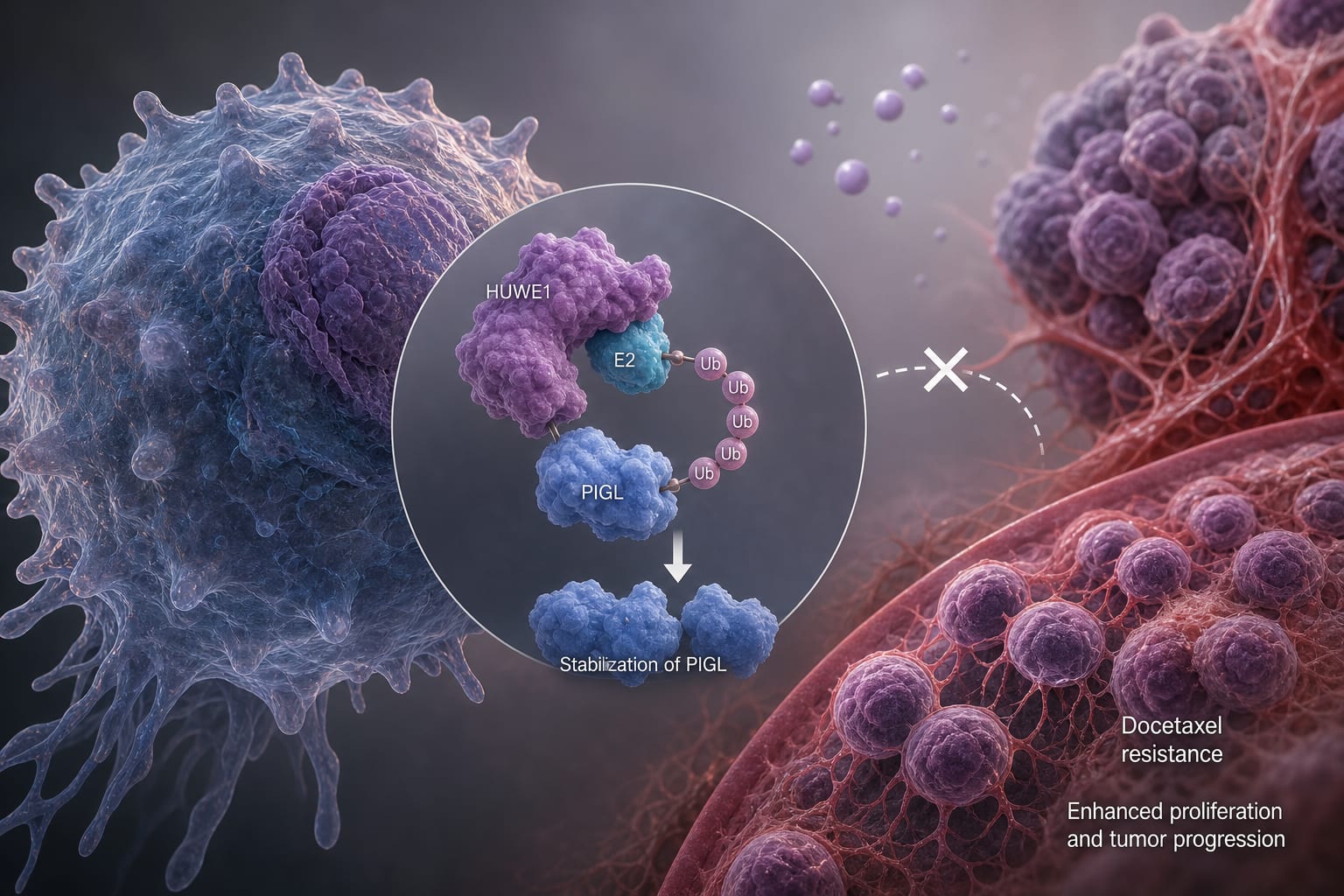
To explore the role of PIGL in docetaxel resistance in prostate cancer and identify its regulatory mechanism involving HUWE1, emphasizing its potential as a therapeutic target.
Approach:
Key Findings:
PIGL mRNA and protein levels are elevated in prostate cancer and correlate with poor prognosis.
PIGL protein is significantly higher in docetaxel-resistant prostate cancer.
High PIGL expression promotes proliferation, migration, invasion, and docetaxel resistance in prostate cancer cells.
HUWE1 is identified as a binding partner of PIGL and acts as its E3 ubiquitin ligase, negatively regulating PIGL protein expression.
Knockdown of HUWE1 enhances docetaxel resistance, which can be reversed by silencing PIGL.
Interpretation:
The study highlights the critical role of PIGL in prostate cancer progression and docetaxel resistance, with HUWE1 serving as a regulatory factor, suggesting potential therapeutic targets.
Limitations:
The study primarily relies on in vitro assays, which may not fully replicate in vivo conditions, potentially affecting the applicability of results.
Further research is needed to validate findings in larger clinical cohorts to ensure robustness.
Conclusion:
PIGL and HUWE1 are significant in the context of docetaxel resistance in prostate cancer, providing insights into potential therapeutic targets.