iNOS is a key mediator of anti-PD-1 melanoma therapy response - Summary - MDSpire

iNOS is a key mediator of anti-PD-1 melanoma therapy response

  • By

  • Quang Tam Nguyen

  • Youngchul Kim

  • Thi Hong Nga Le

  • Saurabh Garg

  • Vishanna Balkaran

  • Trisha Bhathivi

  • Alejandra Chamizo

  • Christopher W. Dukes

  • Kimberly Ward

  • Andrew S. Brohl

  • Lilit Karapetyan

  • Nikhil I. Khushalani

  • Zeynep Eroglu

  • Ahmad A. Tarhini

  • James J. Mulé

  • Joseph Markowitz

  • June 22, 2026

  • 0 min

Share

Objective:

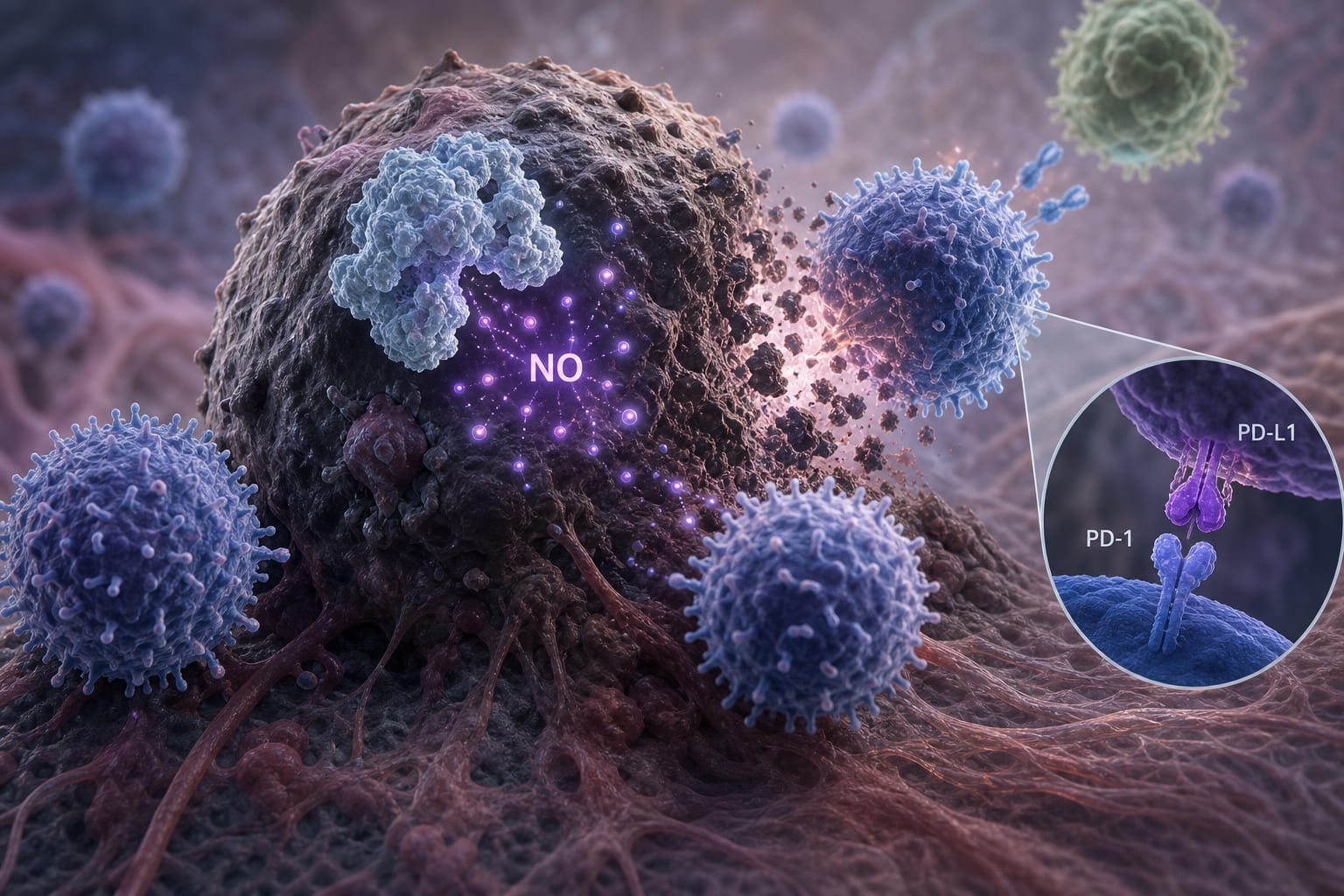
To examine how inducible nitric oxide synthase (iNOS) shapes the efficacy of anti–PD-1 therapy in melanoma, particularly through interferon signaling.

Approach:
    Key Findings:
    • Tumors grew significantly faster in iNOS KO mice, and anti–PD-1 therapy had no effect, indicating that iNOS-derived NO contributes to treatment efficacy.
    • NO donors inhibited melanoma proliferation and induced apoptosis in vitro.
    • Transcriptomic analysis showed anti–PD-1 upregulated interferon pathway genes in WT but not iNOS KO mice.
    • A NO-producing dendritic-cell subset was associated with improved PFS in melanoma patients (hazard ratio 0.453; 95% CI = 0.270-0.992; p=0.048).
    Interpretation:

    iNOS-derived NO is necessary for effective anti–PD-1 immunotherapy in melanoma, promoting interferon signaling and immune activation.

    Limitations:
    • The study primarily utilized murine models, which may not fully replicate human responses.
    • The sample size of melanoma patients analyzed was limited to 27.
    Conclusion:

    Loss of iNOS impairs tumor control and immune responsiveness, supporting NO as a potential biomarker and therapeutic adjunct in melanoma treatment.

Original Source(s)

Related Content