Plasma HERV-K envelopE RNA: a minimally invasive biomarker for lung adenocarcinoma detection and prognostic assessment in the context of conventional serum tumor markers - Summary - MDSpire
Advertisement
Plasma HERV-K envelopE RNA: a minimally invasive biomarker for lung adenocarcinoma detection and prognostic assessment in the context of conventional serum tumor markers
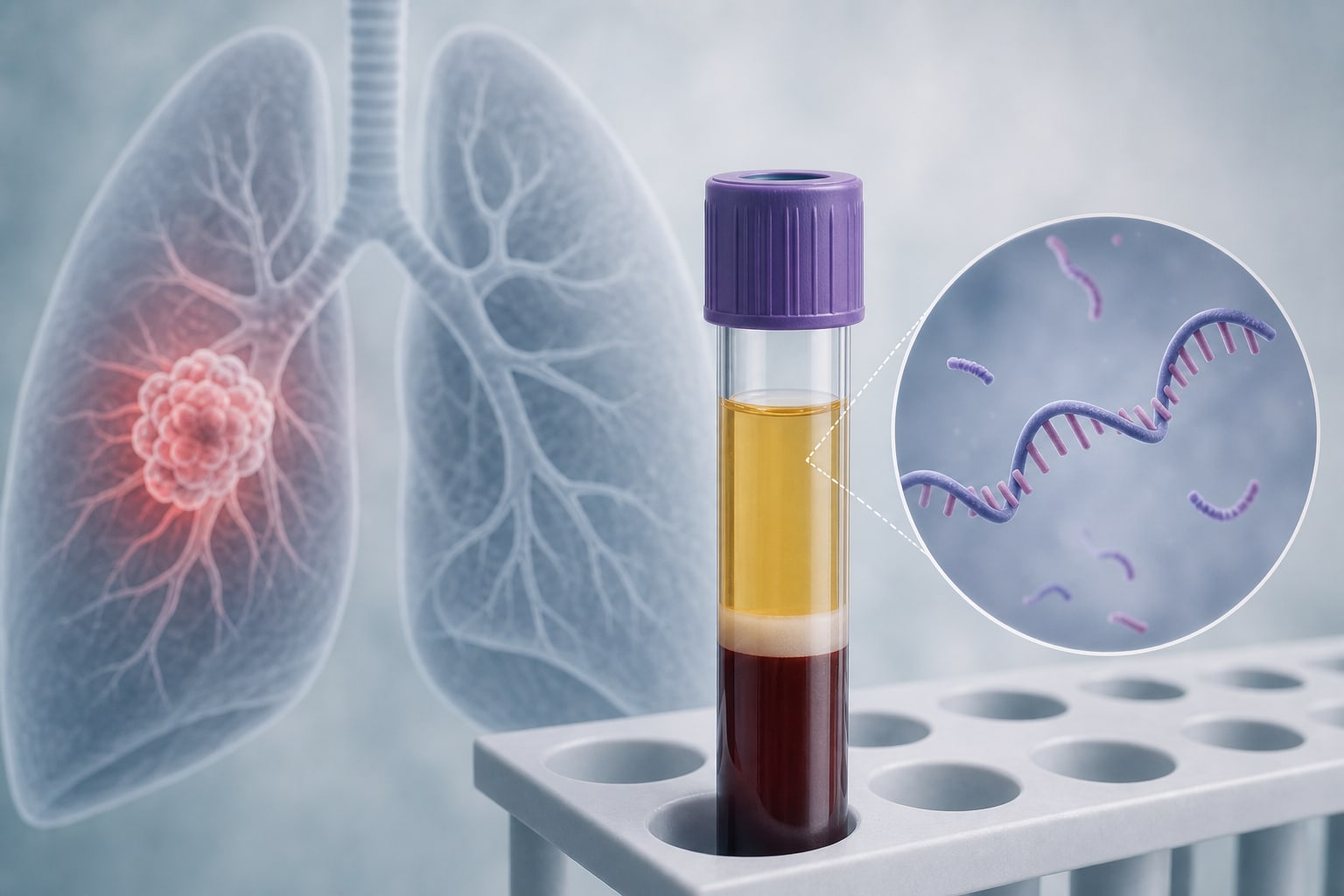
To investigate whether plasma HERV-K env mRNA could serve as a minimally invasive biomarker for subtype-specific diagnosis and prognostic assessment in lung cancer.
Approach:
Study Design: A retrospective single-center study enrolling 379 subjects, including patients with non-small cell lung cancer, malignant and benign pulmonary nodules, and healthy controls.
Biomarker Quantification: HERV-K env mRNA was quantified in tumor tissues, paired adjacent tissues, and plasma using qRT-PCR.
Statistical Analysis: Associations with clinicopathological variables, tissue-plasma concordance, correlations with serum tumor markers, ROC analysis, Kaplan-Meier survival, and multivariable Cox regression were analyzed.
Key Findings:
HERV-K env mRNA was significantly upregulated in NSCLC tissues compared to paired adjacent tissues (P < 0.0001).
Plasma HERV-K env mRNA levels were significantly elevated in lung cancer compared to benign nodules and healthy controls (P < 0.0001).
Strong correlation between plasma and tissue expression of HERV-K env mRNA in both LUSC (r = 0.9025) and LUAD (r = 0.7305).
ROC analysis showed excellent performance for stage I/II LUAD versus healthy controls (AUC = 0.914).
High plasma HERV-K env mRNA was associated with poorer overall survival in LUAD (P = 0.035).
Interpretation:
Plasma HERV-K env mRNA captures a biologically plausible signal in LUAD.
Limitations:
The study is retrospective and conducted at a single center.
Broader clinical application and comparison with multi-marker panels require further validation.
Conclusion:
Plasma HERV-K env mRNA may serve as a novel biomarker for diagnosing LUAD and evaluating prognosis.