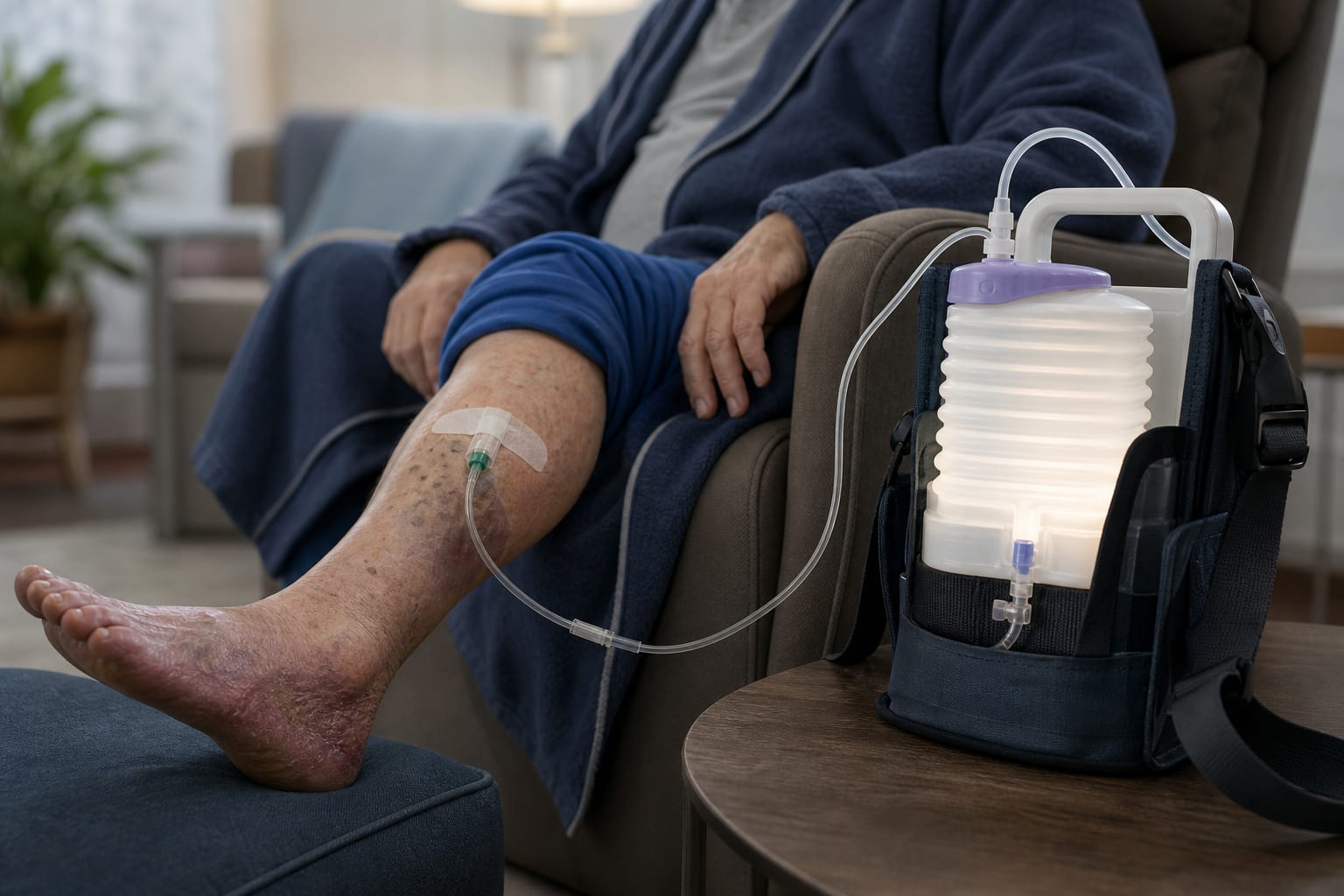
To evaluate the safety and effectiveness of low-dose intravenous iloprost administration by elastomeric pump for 24 hours at home in patients with chronic limb-threatening ischemia (CLTI) who are considered 'no-option' for revascularization.
Approach:
Study Design: Patients diagnosed with CLTI were enrolled based on specific criteria including ankle pressure, clinical symptoms, and significant arterial stenosis/occlusion. Follow-up assessments were conducted over a 3-year period, with specific inclusion criteria for 'no-option' patients.
Patient Data and Definitions: Patients were classified based on hypertension, diabetes, obesity, and coronary artery disease. Diagnosis of thromboangiitis obliterans and embolic PAD was also established according to defined criteria.
Key Findings:
Iloprost is a potent PGI2 analogue with a proposed benefit in reducing major amputations in CLTI patients.
Previous studies have shown mixed results regarding the efficacy of iloprost, with some suggesting no benefit or potential harm.
The study aims to address the safety and effectiveness of a low-dose regimen administered at home.
Interpretation:
The study seeks to provide insights into the administration of iloprost in a home setting, potentially improving patient outcomes for those unable to undergo revascularization.
Limitations:
The study is preliminary and may not have a large sample size, which could affect the generalizability of the findings.
Long-term outcomes and broader applicability need further investigation.
Conclusion:
The findings may contribute to understanding the role of home-based iloprost therapy in managing CLTI in patients who are not candidates for revascularization.