Degeneration rather than hypoplasia may be the pathologic feature of the endolymphatic sac in patients with ipsilateral delayed endolymphatic hydrops - Summary - MDSpire
Conexiant’s news site is now MDSpire News. Learn more
Advertisement
Pathological Characteristics of the Endolymphatic Sac in Patients with Ipsilateral Delayed Endolymphatic Hydrops: Emphasizing Degeneration Over Hypoplasia
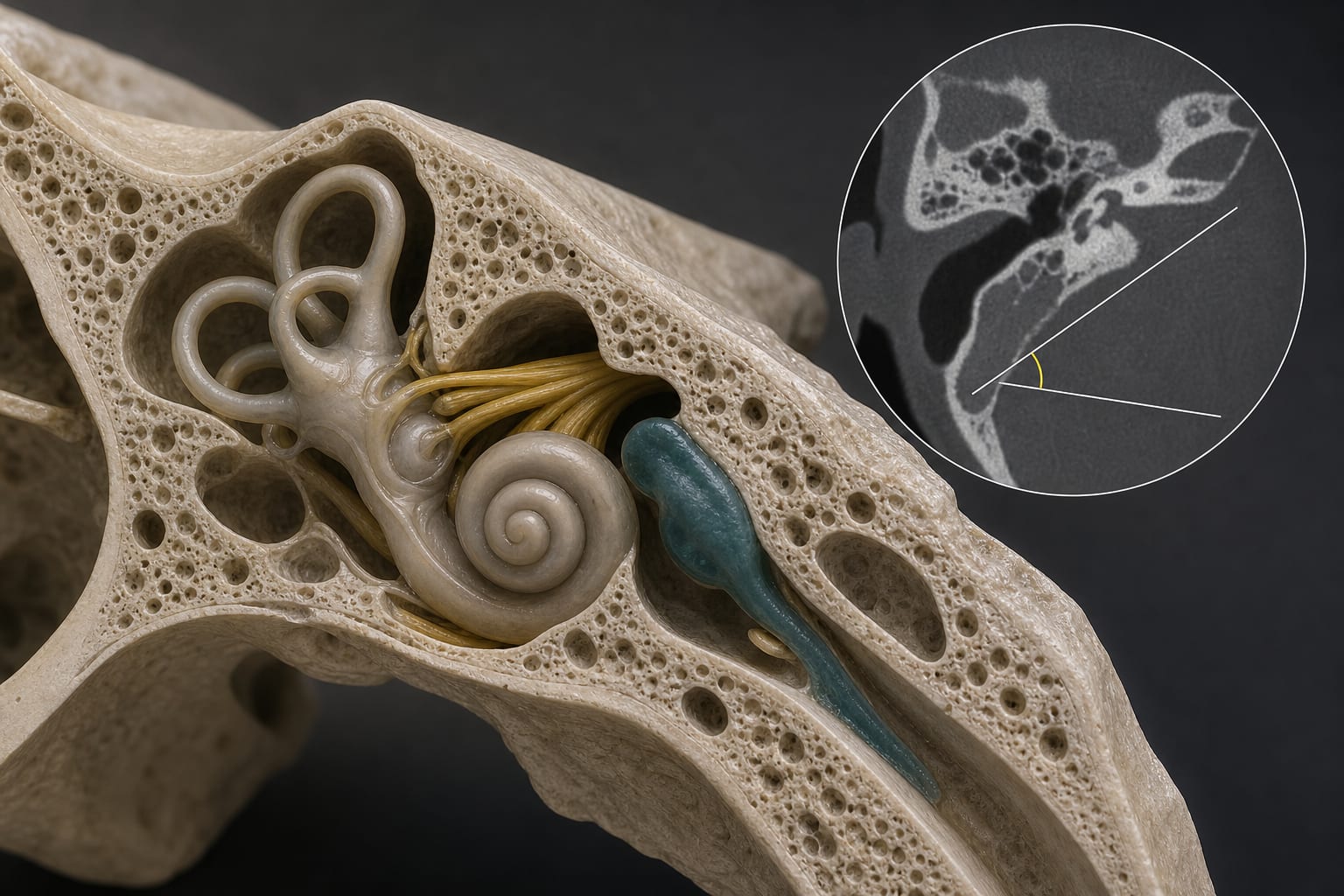
To investigate the prevalence of angular trajectory of the vestibular aqueduct (ATVA) categories in patients with ipsilateral delayed endolymphatic hydrops (DEH) and unilateral Ménière’s disease (MD), and to explore the clinical significance of ATVA in ipsilateral DEH patients.
Approach:
Study Design: A retrospective study involving 27 ipsilateral DEH patients, 114 unilateral MD patients, and 45 control participants.
Data Collection: ATVA was determined using temporal bone CT imaging, and clinical features such as gender, age, and caloric test results were collected.
Statistical Analysis: Comparison of ATVA prevalence between DEH and MD patients, and examination of associations between ATVA and clinical features.
Key Findings:
ATVA ≤ 120° was more frequent in DEH-affected ears compared to MD-affected ears (χ2 = 9.231, p = 0.002).
ATVA ≥ 140° was less frequent in DEH-affected ears compared to MD-affected ears (χ2 = 6.865, p = 0.009).
The distribution of ATVA categories in affected ears of ipsilateral DEH patients was not significantly different from control ears (χ2 = 1.190, p = 0.510).
The prevalence of ATVA categories in affected ears of ipsilateral DEH patients was comparable to non-affected ears (χ2 = 1.083, p = 0.568).
Interpretation:
Degenerative endolymphatic sac may be the dominant pathological type in ipsilateral DEH patients due to the high occurrence of ATVA ≤ 120°.
Limitations:
The study is retrospective and may have inherent biases.
Sample size for ipsilateral DEH patients is relatively small.
Conclusion:
The findings indicate a distinct pathological characteristic in ipsilateral DEH patients compared to unilateral MD patients.
Burnout is easing. Sleep science is getting weird. And dental schools have been winging cadaver training for 50 years. This week's research is full of good news that immediately complicates itself.