To describe and compare the demographic, geographic, and state-level correlates of the 1985–1993 and 2014–2021 US firearm homicide surges.
Approach:
Data and periods: Morral and Smart analyzed national mortality data from 1979 to 2023, defining surges as 1985–1993 and 2014–2021.
Analyses: They examined patterns by race, sex, age, county urbanicity, and state, and assessed state-level correlates of surge severity.
Key Findings:
The 2014–2021 surge was larger and more broadly distributed demographically and geographically than the 1985–1993 surge.
The later surge involved more deaths in rural settings and among females, older people, and people of races other than Black; the earlier surge was more concentrated among young Black males in urban areas.
The two surges had distinct correlates, but both were associated with measures of structural vulnerability, including unemployment, poverty, household instability, and premature mortality.
Although the surge periods span several years, 63% of excess deaths in the earlier period occurred in 1991–1993, and 55% in the later period occurred in 2020–2021.
Interpretation:
The authors of the commentary describe firearm homicide as multicausal, involving interactions between period-specific exposures and preexisting structural vulnerabilities. They note that the study is descriptive and that its findings can inform hypotheses about causes and prevention.
Limitations:
The study is descriptive and does not establish causal relationships.
The commentary states that a systematic accounting of where, among whom, and when the post-2021 decline occurred remains unavailable.
Further research is needed to clarify the reasons for the decline in firearm homicide rates since 2021.
Conclusion:
The comparison identifies both changing patterns across surge periods and persistent associations with structural vulnerability. The commentary calls for further investigation of the post-2021 decline and its possible drivers.
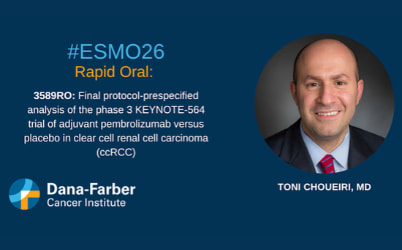
Final analysis of the pivotal KEYNOTE-564 trial in kidney cancer presented by Toni Choueiri, MD. After 7 years of follow-up, adjuvant pembrolizumab continued to extend disease-free survival and overall survival in high-risk clear-cell renal cell carcinoma.