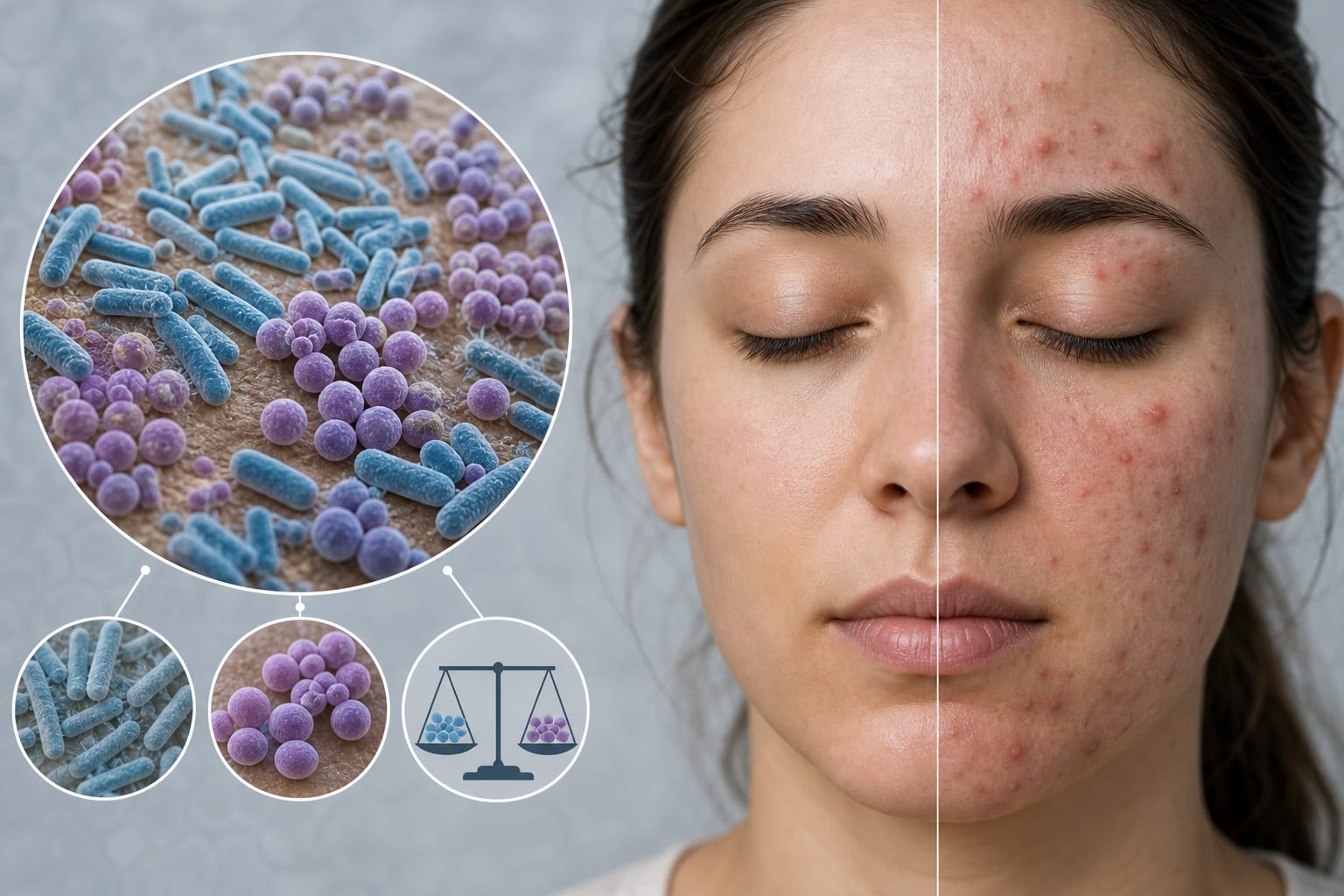
To explore the composition of the facial skin microbiome and its relationship with skin health and disorders.
Approach:
Microbial Composition Analysis: The study examines the primary bacterial species on facial skin, focusing on Cutibacterium acnes and Staphylococcus epidermidis, and how their balance is influenced by factors such as skin site, age, and condition.
Sampling and Analytical Methods: It discusses the impact of different sampling techniques, particularly swabbing, and various analytical methods on data interpretation.
Key Findings:
Acne-prone skin is linked to changes in the balance of facial bacteria, including reduced diversity of C. acnes and shifts in S. epidermidis lineages.
Common acne treatments reduce bacterial load but may also affect microbial diversity and cause unwanted effects.
Emerging targeted and probiotic approaches aim to restore microbial balance.
Interpretation:
A deeper understanding of bacterial strain diversity could inform more targeted strategies for promoting skin health.
Limitations:
Study outcomes are influenced by sampling and analytical methods.
Variability in microbial composition with age and skin condition complicates data interpretation.
Conclusion:
Understanding the dynamics of the facial skin microbiome is crucial for developing effective treatments for skin disorders.