Integrative genetic and expression profiling prioritizes LIPA in mononuclear phagocytes as a candidate regulator of carotid plaque
By
Zhuyuan Yu
Shuhua Mao
Ying Song
Xiangyuan Meng
Jianing Yu
Ziyu Zong
Tianlin Gao
Hao Chen
June 19, 2026
Objective: To identify carotid plaque candidate genes and evaluate their therapeutic potential using genetic and transcriptomic approaches.
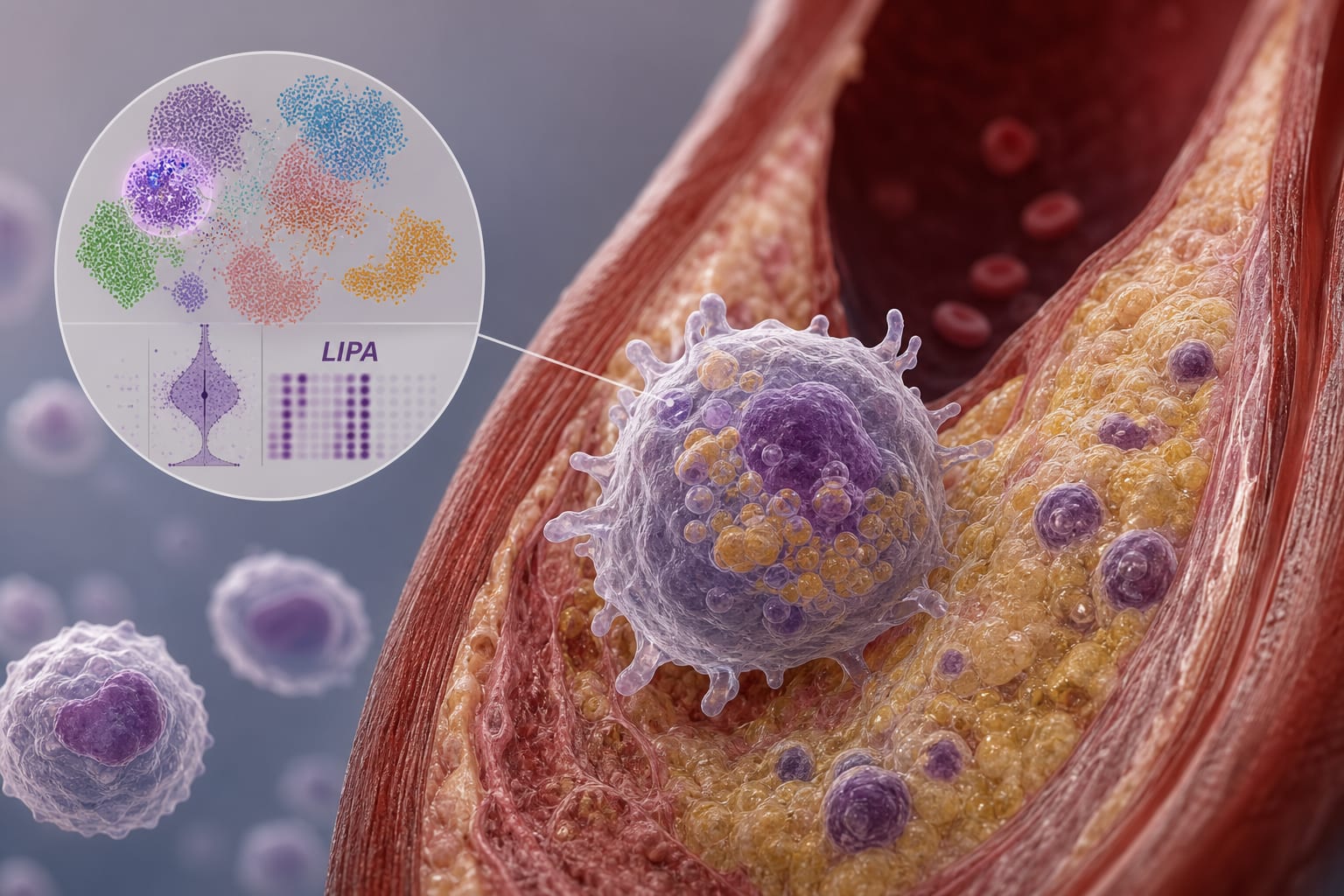
Approach: Key Findings: 22candidategenesforcarotidplaquewereidentified.LIPA_Mono_Cshowedaconsistentcausalassociationwithincreasedcarotidplaquerisk.LIPAwashighlyexpressedinmononuclearphagocytesofcarotidplaquetissues.Invitroexperimentsconfirmedthatoxidizedlow-densitylipoproteinupregulatedLIPAinmacrophages.LIPAknockdownalleviatedlipidaccumulationandsuppressedcomplementactivation.InsilicoknockoutofLIPArevealedsignificantenrichmentofthecomplementandcoagulationcascades,andCellChatanalysissuggestedapotentialSPP1-CD44-mediatedinteractionbetweenLIPA-expressingmononuclearphagocytesandTcells. Interpretation: LIPA may be associated with lipid accumulation, complement-related activation, and immune regulation in carotid plaque, but these findings require further validation.
Limitations: FurthervalidationisneededtoconfirmthetranslationalrelevanceofLIPA-relatedmodulation.Thestudyprimarilyfocusesongeneticandtranscriptomicdatawithoutextensiveclinicalvalidation. Conclusion: The study prioritizes LIPA as a candidate gene for carotid plaque, suggesting its role in lipid metabolism and immune regulation, pending further validation.