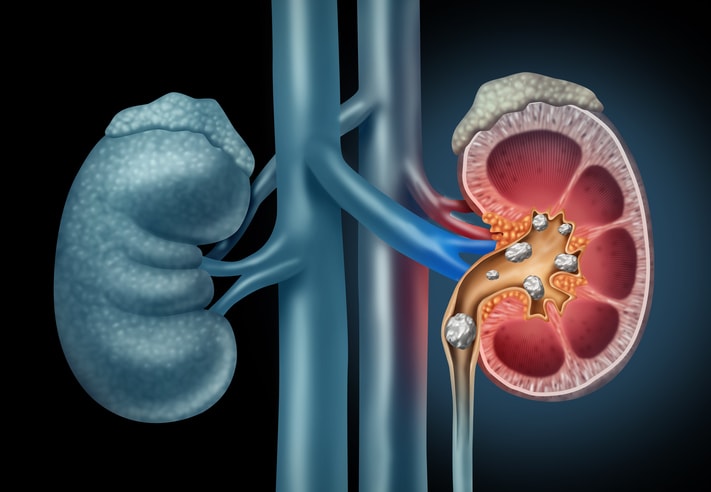
To evaluate the effectiveness of a multicomponent behavioral intervention aimed at increasing fluid intake specifically to reduce symptomatic kidney stone recurrence.
Key Findings:
Symptomatic stone events occurred in 19% of the intervention group vs 20% of the control group, with no significant difference.
Urine volume increased in both groups, with the intervention group showing a greater increase (600 mL/day vs 360 mL/day), although the difference diminished over time.
Secondary outcomes related to stone growth and new stone formation were similar between groups.
Urinary storage symptoms were more common in the intervention group at 6 and 12 months.
Interpretation:
Despite achieving higher urine volumes, the behavioral intervention did not lead to a reduction in symptomatic kidney stone recurrence over 2 years, indicating no correlation between increased urine volume and reduced recurrence.
Limitations:
Participants were recruited from tertiary care centers, which may limit generalizability to broader populations.
Increased urine volume in the control group may have reduced detectable differences between groups.
Additional fluid intake not captured by the smart water bottle was not measured.
Conclusion:
The increase in urine volume from the behavioral intervention did not correlate with a decrease in recurrent symptomatic stone events over the 2-year follow-up.
A large English cohort study found influenza hospitalization more than doubled the short-term risk of new-onset diabetes, with prediabetes and critical care admission among the strongest predictors.