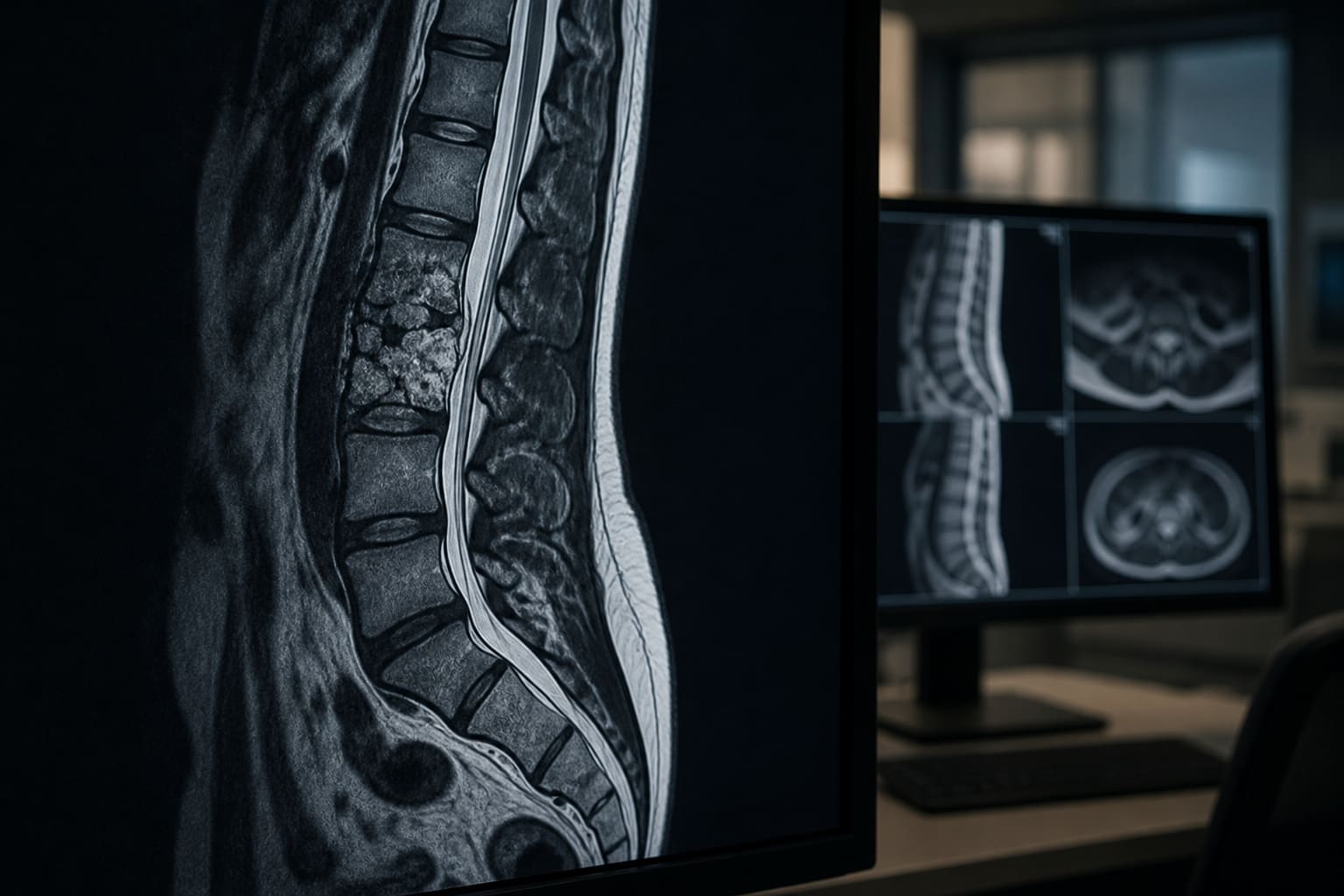
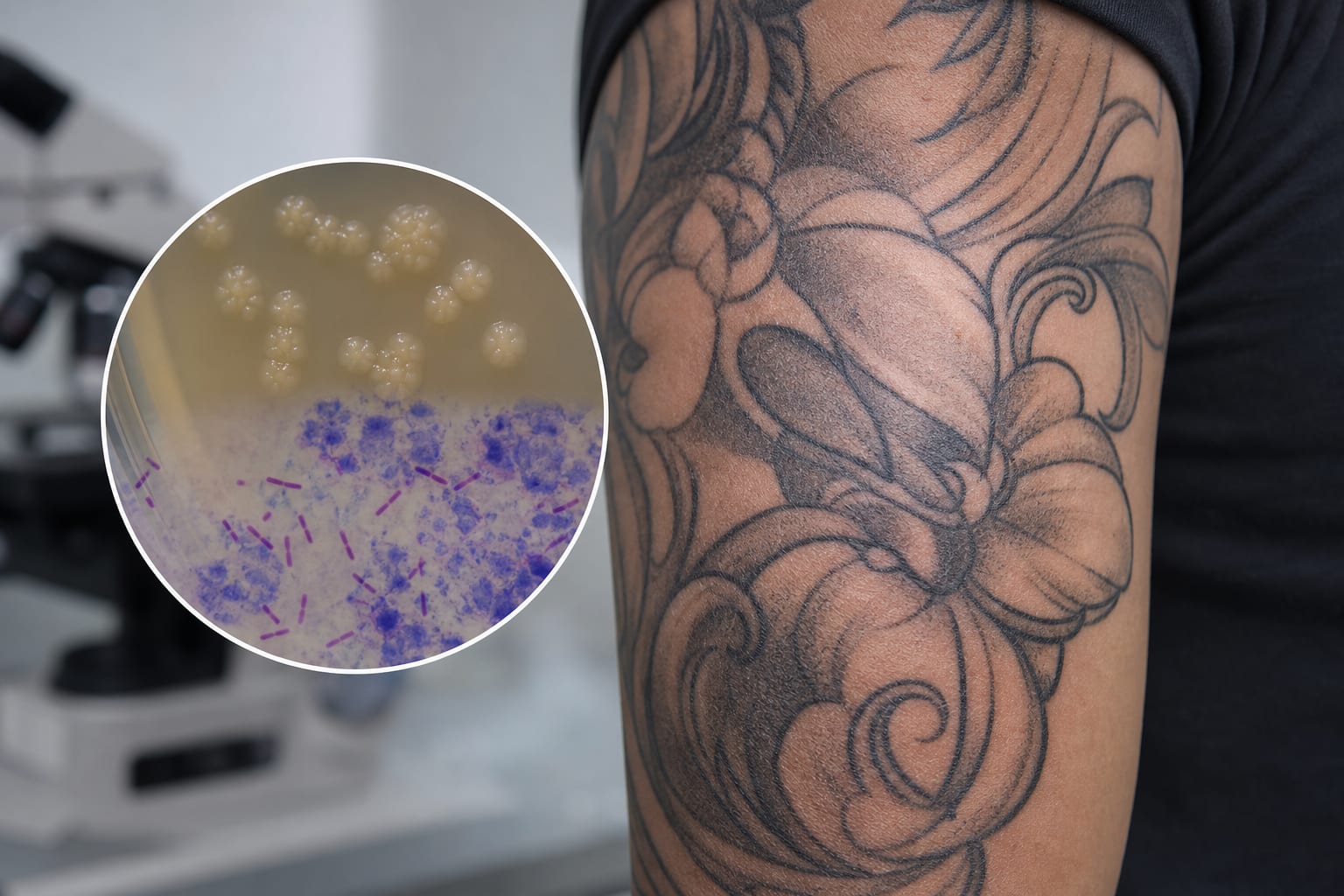
To characterize clinical and radiological disease activity, treatment duration, and outcomes in a retrospective cohort of patients with spinal tuberculosis (TB).
Approach:
Design and setting: Retrospective study of patients diagnosed from 2011 to 2022 at a London NHS Trust spanning three hospitals.
Eligibility: Patients aged 16 years or older with culture-confirmed, histologically confirmed, or convincing MRI evidence of spinal TB, at least two spinal MRI examinations, and clinical follow-up through 12 months; 62 of 94 identified cases were evaluated.
Assessment: Clinical records and serial MRI scans were reviewed at diagnosis, mid-treatment (4–8 months), and approximately 12 months. A neuroradiologist blinded to clinical outcomes scored five MRI domains; a weighted clinical score captured pain and neurological symptoms.
Analysis: Within-patient changes were assessed using Wilcoxon signed-rank tests; associations between clinical and MRI score changes were assessed using Spearman correlation.
Key Findings:
Among 62 patients, 45 (73%) were male, median age was 33 years (IQR, 26–40), and 52 (84%) were migrants.
Median treatment duration was 12 months (IQR, 12–12); 41 patients received 12 months, 7 received 6–11 months, and 14 received longer treatment.
Median MRI scores decreased from 7 at baseline to 3.5 at 6 months and 1 at 12 months; 51 patients had 12-month MRI assessments.
Clinical and radiological improvement was greater at 12 months than at 6 months. Changes in MRI and clinical scores correlated at both time points.
Three patients (5%) required surgery, and 12 (19%) experienced complications lasting more than 6 months after treatment completion. No relapses or TB-related deaths occurred.
Interpretation:
Continued improvement between 6 and 12 months supports considering clinical and radiological response together when individualizing treatment duration. The study does not establish the superiority of longer treatment.
Limitations:
Retrospective design, no control group, and no dedicated 6-month treatment comparison arm.
Thirty-two cases were excluded for incomplete clinical data.
Twelve-month clinical and MRI assessments were available for 57 and 51 patients, respectively.
MRI scoring by one reader prevented assessment of inter-reader reliability.
Conclusion:
Clinical and MRI findings improved during treatment, with greater improvement at 12 months than at 6 months. Prospective randomized studies are needed to establish optimal treatment duration.