Disruption of a GalR2–mitochondrial axis in the ventral hippocampus contributes to depression-like phenotypes after prenatal stress - Summary - MDSpire
Advertisement
Disruption of a GalR2–mitochondrial axis in the ventral hippocampus contributes to depression-like phenotypes after prenatal stress
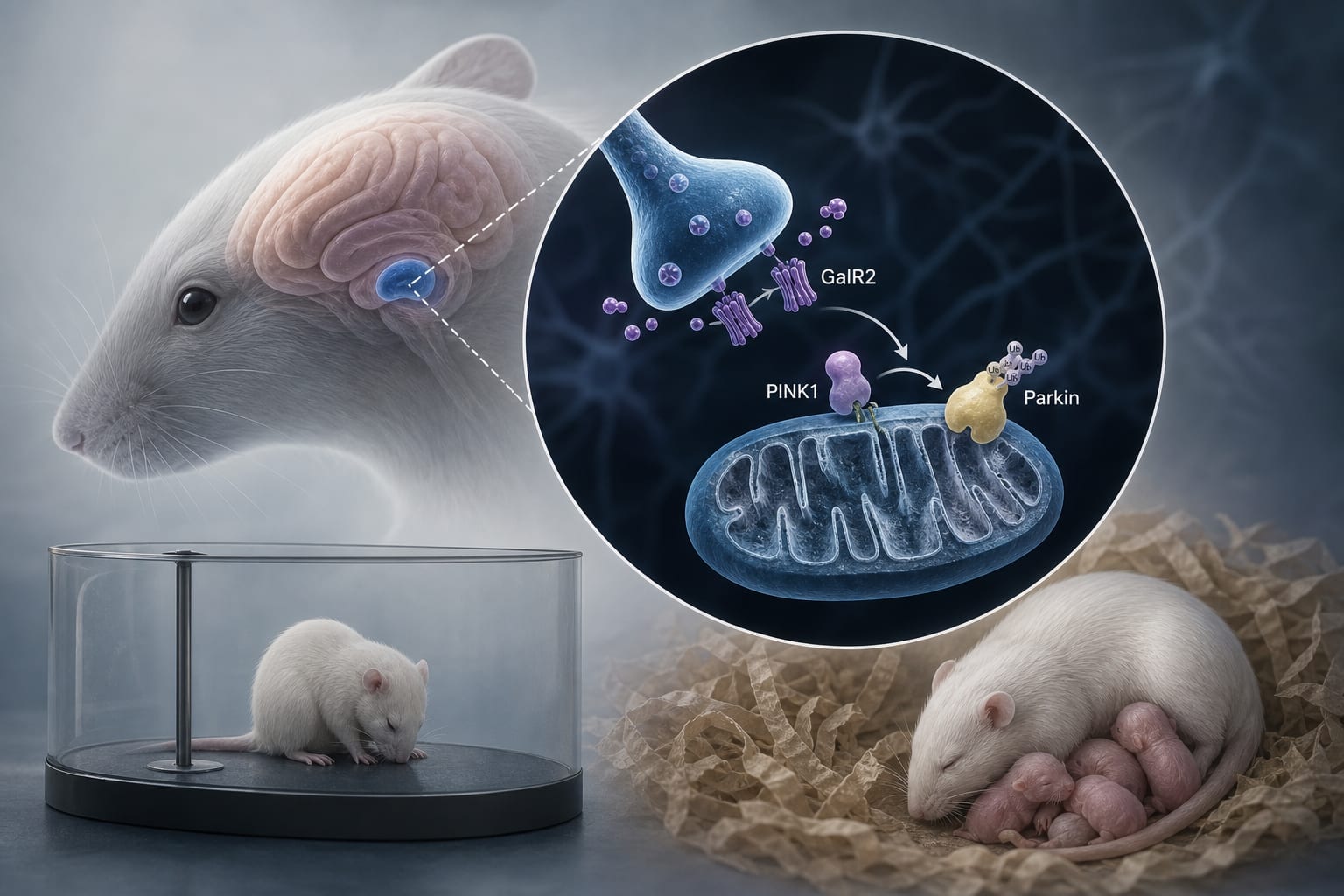
To investigate the impact of prenatal stress on GalR2 signaling and mitochondrial function in the ventral hippocampus, specifically examining the mechanisms linking these alterations to depression-like behaviors in offspring.
Key Findings:
Prenatal stress induced persistent anhedonia-like behavior and despair in adult offspring.
Marked mitochondrial structural abnormalities and reduced ATP production were observed in the ventral hippocampus.
Downregulation of GalR2 and PINK1/Parkin signaling was noted in the ventral hippocampus following prenatal stress.
Direct infusion of AR-M1896 into the ventral hippocampus elevated ATP and PINK1/Parkin levels, indicating a causal relationship.
Interpretation:
The findings suggest that prenatal stress disrupts the GalR2–mitochondrial axis in the ventral hippocampus, contributing to vulnerability to depression-like behaviors, highlighting the need for further exploration of this pathway.
Limitations:
The study primarily uses a rat model, which may limit the generalizability of the findings to humans.
Long-term effects of GalR2 activation beyond the immediate behavioral and mitochondrial changes were not assessed, potentially overlooking chronic implications.
Conclusion:
The research identifies a critical role for GalR2 signaling in mitochondrial function and its potential link to depression-like phenotypes following prenatal stress.