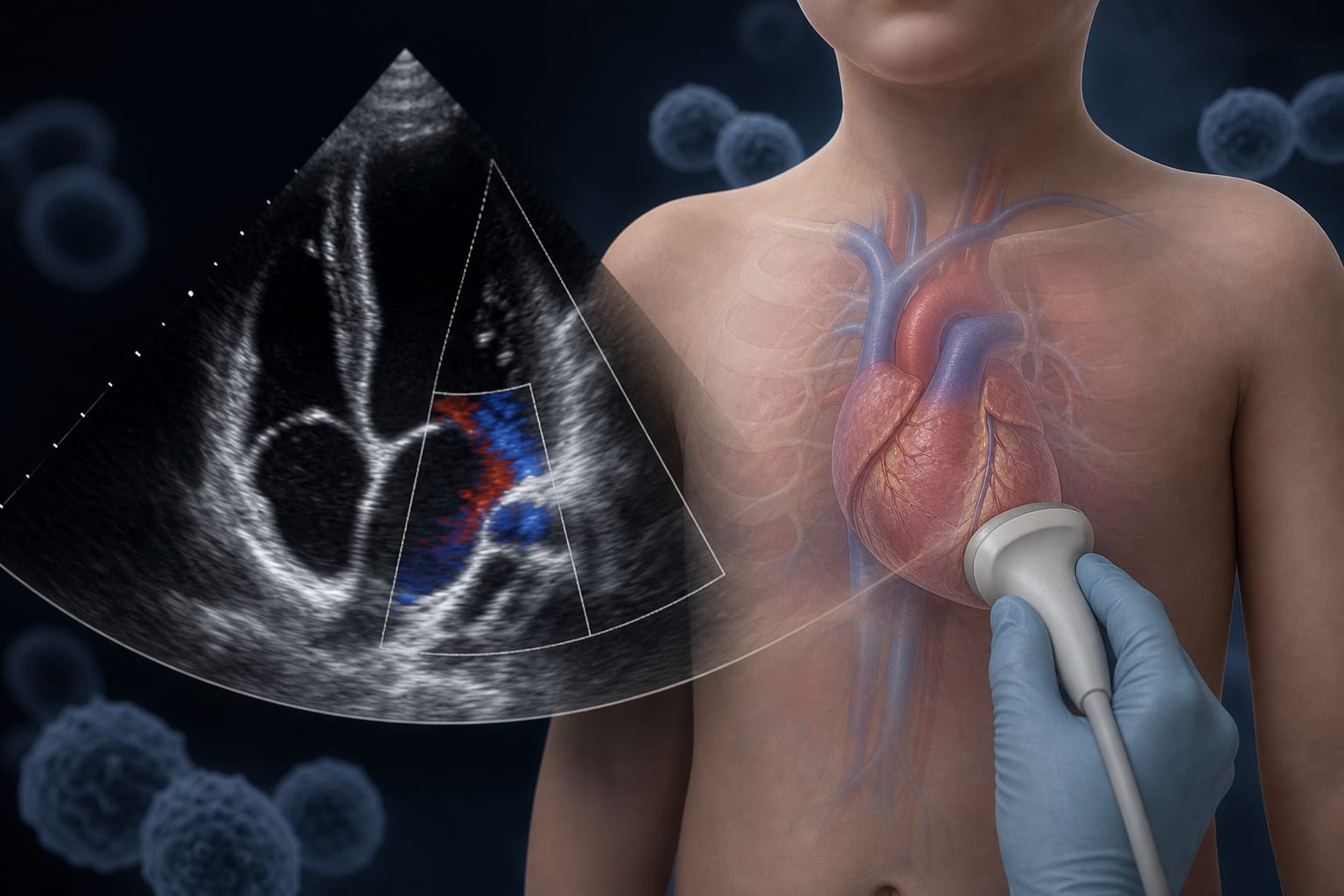
To investigate the use and findings of transthoracic echocardiography (TTE) in children with Staphylococcus aureus bacteraemia (SAB) and identify factors that guide its targeted use.
Approach:
Study Design: Multi-centre retrospective cohort study including 101 children aged ≤18 years with SAB across six hospitals in North West London from 2018 to 2023.
Data Collection: Data were collected from electronic patient records, including demographics, clinical signs, management, and laboratory results.
Key Findings:
70% of children underwent TTE, with 5.6% diagnosed with infective endocarditis (IE), all having established risk factors.
The TTE group had longer hospital stays (median 17 days) compared to the no-TTE group (4 days, p=0.0020).
Acute in-hospital mortality was 1/71 in the TTE group vs 0/30 in the no-TTE group (p=1.0).
Features associated with IE in the TTE group included embolic phenomena (75% vs 1.5%, p<0.001) and persistent bacteraemia (67% vs 4.9%, p=0.018).
Interpretation:
The study provides insights into the use of TTE in pediatric SAB, indicating that TTE may not be necessary in low-risk children without clinical features suggestive of IE.
Limitations:
Retrospective design may limit the ability to establish causality.
Findings are based on a specific cohort from North West London, which may not be generalizable.
Conclusion:
A structured risk-stratification approach to TTE in pediatric SAB is indicated, with prospective validation needed before any changes to routine practice.