Predictors of early response to GnRH and gonadotropin therapy in pediatric patients with suspected dual congenital hypogonadotropic hypogonadism: a retrospective single-center study - Summary - MDSpire
Advertisement
Predictors of early response to GnRH and gonadotropin therapy in pediatric patients with suspected dual congenital hypogonadotropic hypogonadism: a retrospective single-center study
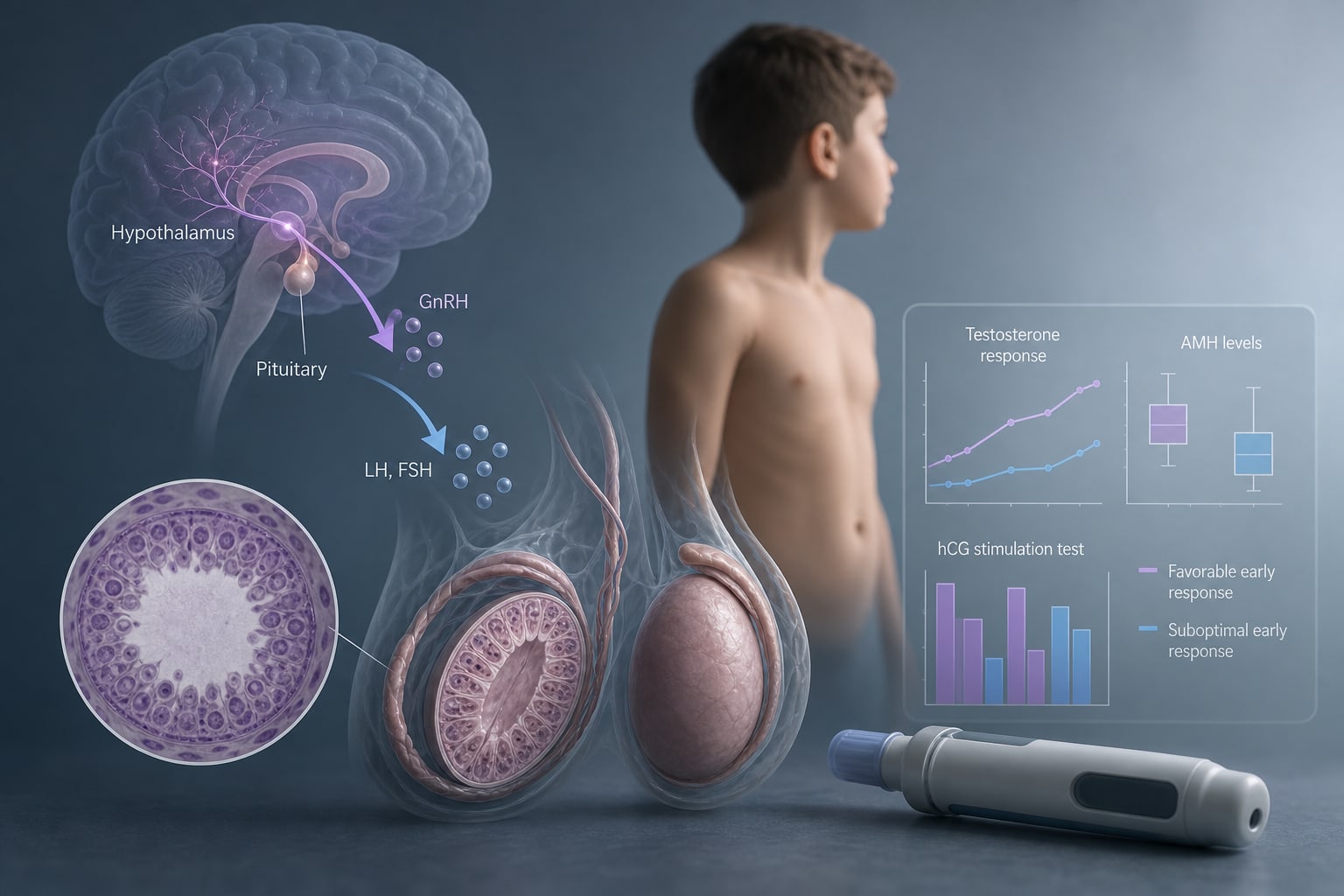
To investigate the predictive indicators of early clinical response to GnRH and gonadotropin therapy in pediatric patients with suspected dual congenital hypogonadotropic hypogonadism (CHH), particularly given the variability in treatment responses.
Key Findings:
Baseline AMH levels were positively correlated with favorable early response (odds ratio = 1.977; 95% CI: 1.010–3.870; p = 0.047).
Cut-off value of AMH at 8.9 ng/ml showed sensitivity of 88.89% and specificity of 93.75%.
Cut-off value of testosterone after hCG stimulation at 51.95 ng/dl showed sensitivity of 87.5% and specificity of 88.89%.
Interpretation:
Baseline AMH and testosterone levels after hCG stimulation are associated with early response to GnRH and gonadotropin therapy in suspected dual CHH patients, which may inform treatment strategies.
Limitations:
Study is based on a small cohort and requires validation in larger populations, which may limit the generalizability of the findings.
Lack of standardized treatment protocols and objective semen-based endpoints may affect the reliability of the results.
Conclusion:
Findings may help stratify treatment responsiveness in suspected dual CHH but need further validation in larger cohorts with standardized protocols.
More than 80% of women who were partially up to date reported a wellness visit in the prior year, suggesting missed opportunities for screening engagement in primary care.