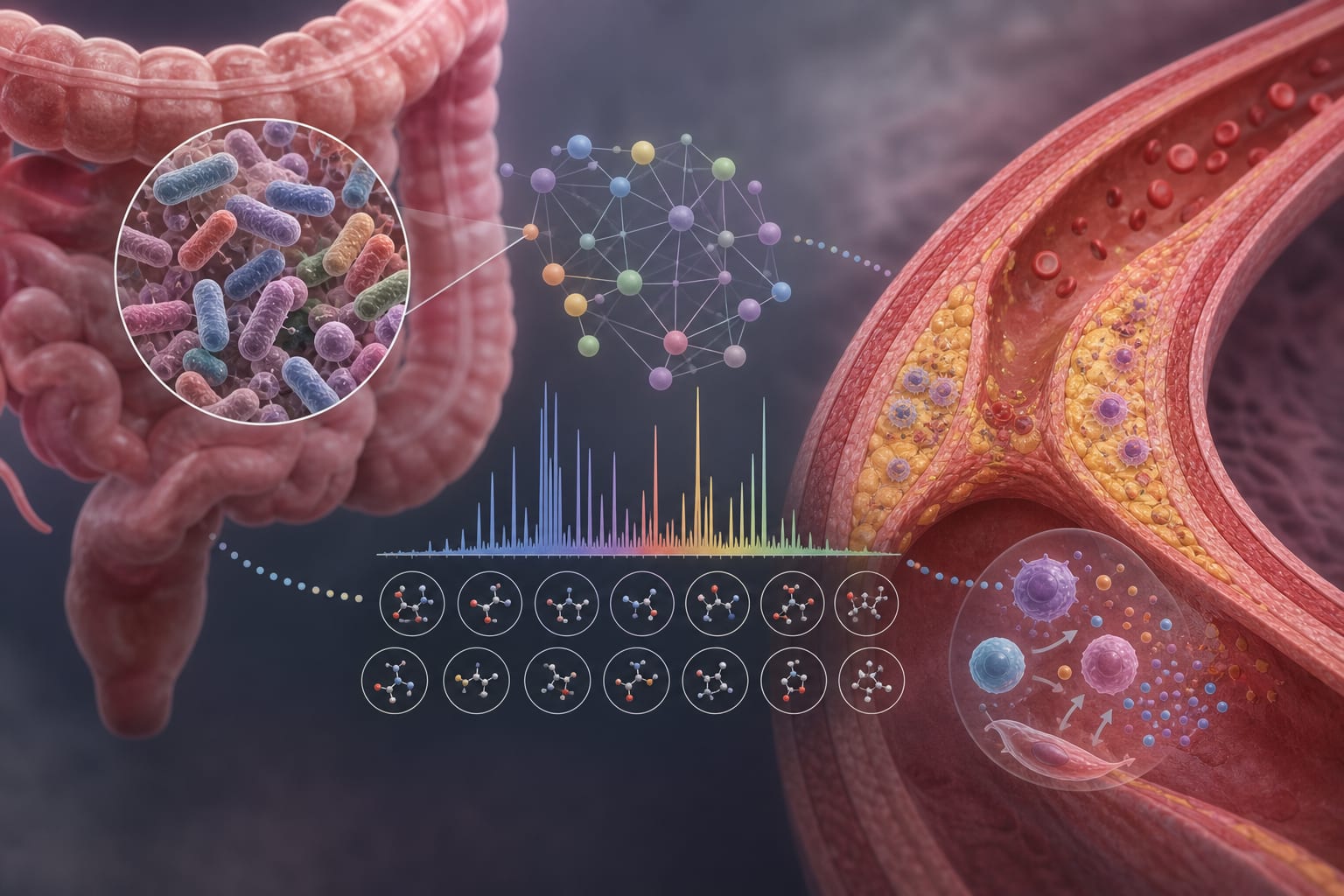
To systematically characterize metabolic alterations associated with atherosclerosis (AS) and identify potential metabolite signatures with diagnostic value, while exploring relationships among gut microbiota, host metabolism, and cellular senescence, which may contribute to disease progression.
Key Findings:
122 differential metabolites were identified, primarily enriched in amino acid-related pathways, indicating significant metabolic alterations.
A robust panel of 14 overlapping metabolites was revealed with strong discriminative performance, suggesting potential diagnostic utility.
Key metabolites with high diagnostic potential included Trimethylamine N-oxide, 3-Hydroxyhippuric acid, and Cholesteryl sulfate, which may influence AS progression.
Limited differences in gut microbial composition were observed, but significant correlations between specific genera and metabolites were noted, indicating functional alterations.
Senescence markers P16 and P21 were significantly elevated in AS and associated with key metabolites and microbial taxa, highlighting their role in disease mechanisms.
Interpretation:
The study identifies a coordinated microbiome–metabolite–host interaction network in AS, providing insights into metabolic mechanisms and potential biomarkers that could inform future research and clinical strategies.
Limitations:
The study may have limitations related to sample size and diversity, which could affect the generalizability of the findings.
The functional implications of identified metabolites and microbiota interactions require further investigation to establish their roles in AS.
Conclusion:
This study provides a comprehensive view of metabolic dysregulation in AS and suggests a potential microbiome–metabolite–senescence axis.