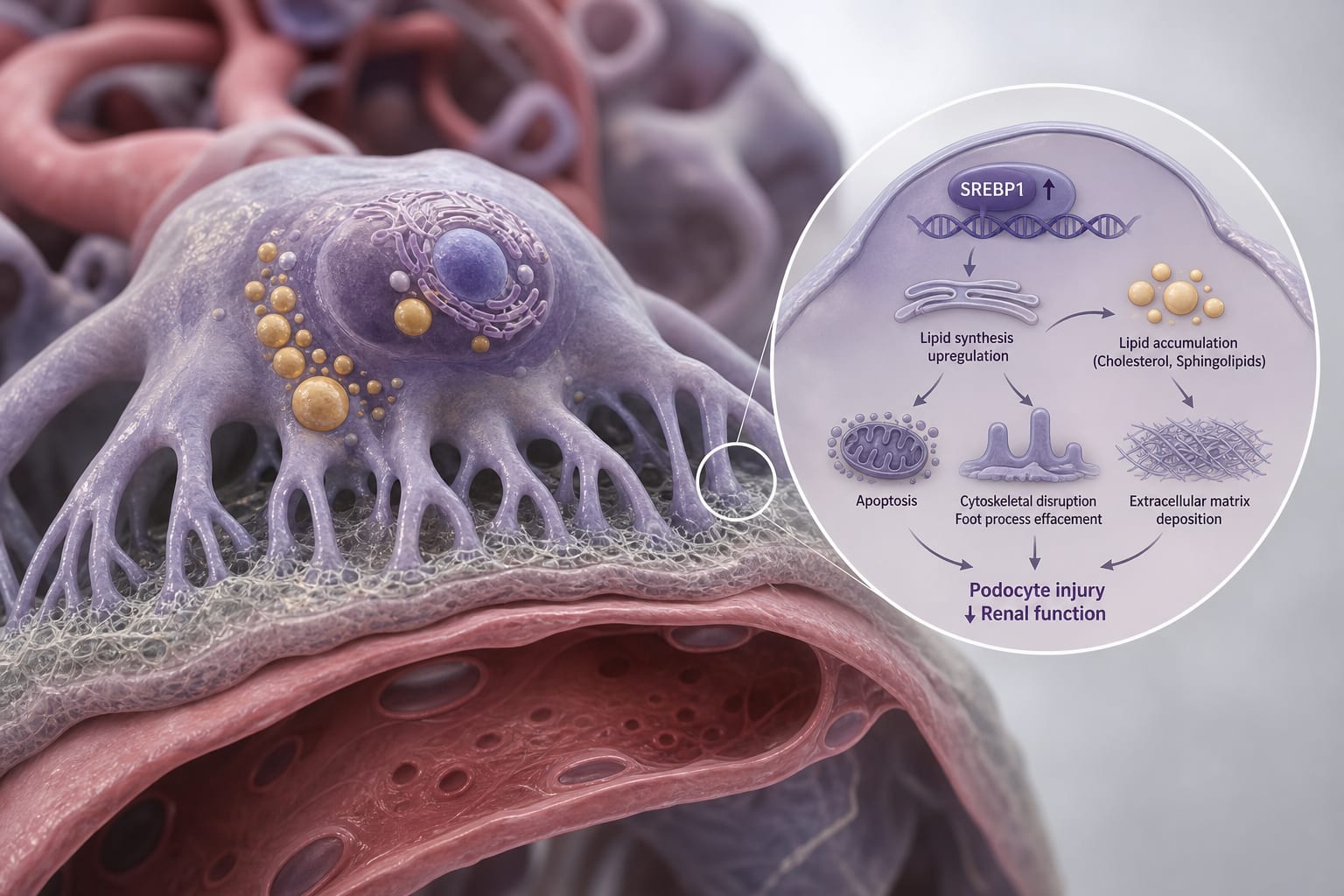
To systematically review the evidence on how lipid metabolism disorders drive podocyte injury in diabetic kidney disease (DKD) and summarize the key regulatory pathways involved.
Approach:
Review of Evidence: The article reviews recent studies indicating that lipid metabolism disorders lead to podocyte dysfunction, apoptosis, and extracellular matrix deposition through various pathways.
Mechanistic Insights: It discusses specific mechanisms, including lipid peroxidation, abnormal sphingolipid metabolism, and cholesterol accumulation, contributing to podocyte injury.
Regulatory Pathways: The review highlights the roles of key signaling pathways such as SREBP1, PPARα, and NLRP3 inflammasome in the context of lipid metabolism and podocyte health.
Key Findings:
Lipid metabolism disorders are central to podocyte injury in DKD.
Podocytes are sensitive to lipid metabolism changes, which can lead to structural and functional damage.
Key pathways involved include lipid peroxidation, sphingolipid metabolism, and cholesterol accumulation.
Interpretation:
Lipid metabolism disorder is identified as a significant driver of podocyte injury in DKD, suggesting potential therapeutic targets focused on lipid metabolism.
Limitations:
The specific mechanisms of lipid metabolism disorders in podocyte injury have not been fully characterized.
Further research is needed to elucidate the interaction network between the identified pathways.
Conclusion:
The review provides a theoretical basis for new therapeutic strategies targeting lipid metabolism in DKD.