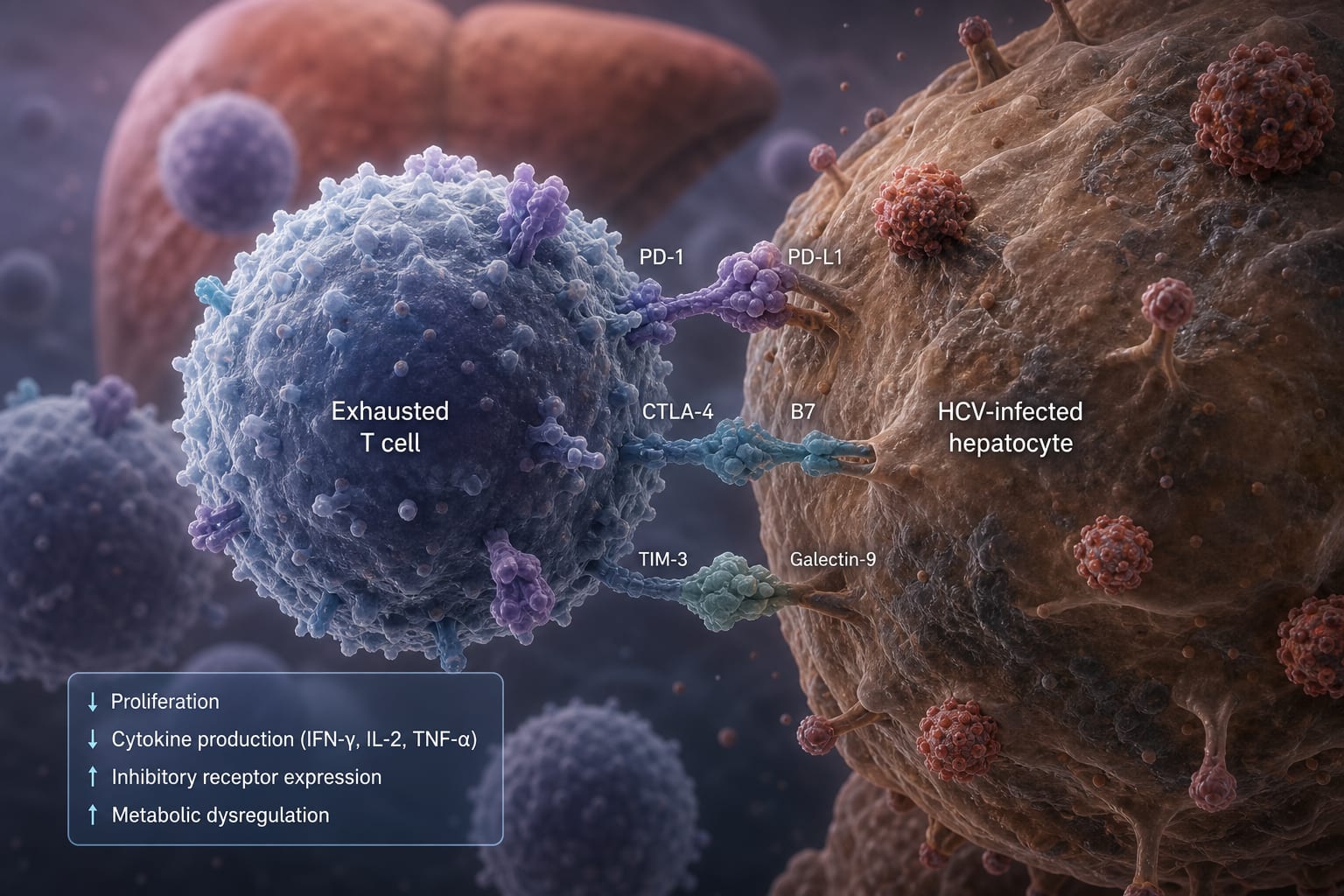
Impairment of T cell function and metabolic alterations in persistent hepatitis C virus infection
-
By
-
Bhavya Sajeet
-
Uma Ganapathi
-
Kiruthika Naganathan
-
Aarthi Parthasarathy
-
Pramod Darvin
-
Varun Sasidharan Nair
-
June 1, 2026
Objective:
To summarize the mechanisms of T cell dysfunction, epigenetic programming, and metabolic disruption in chronic hepatitis C virus (HCV) infection.
Key Findings:
- Chronic HCV infection leads to T cell exhaustion characterized by reduced proliferation and impaired cytokine production.
- Intrahepatic accumulation of regulatory T cells suppresses antiviral immune responses.
- Chronic HCV infection induces significant metabolic dysfunction, including oxidative stress and altered glycolytic adaptation.
Interpretation:
Remove unsupported conclusions and rephrase to reflect only the source material.
Limitations:
- Ensure limitations are directly sourced from the material.
Conclusion:
Revise to eliminate unsupported implications and focus on summarizing the findings.