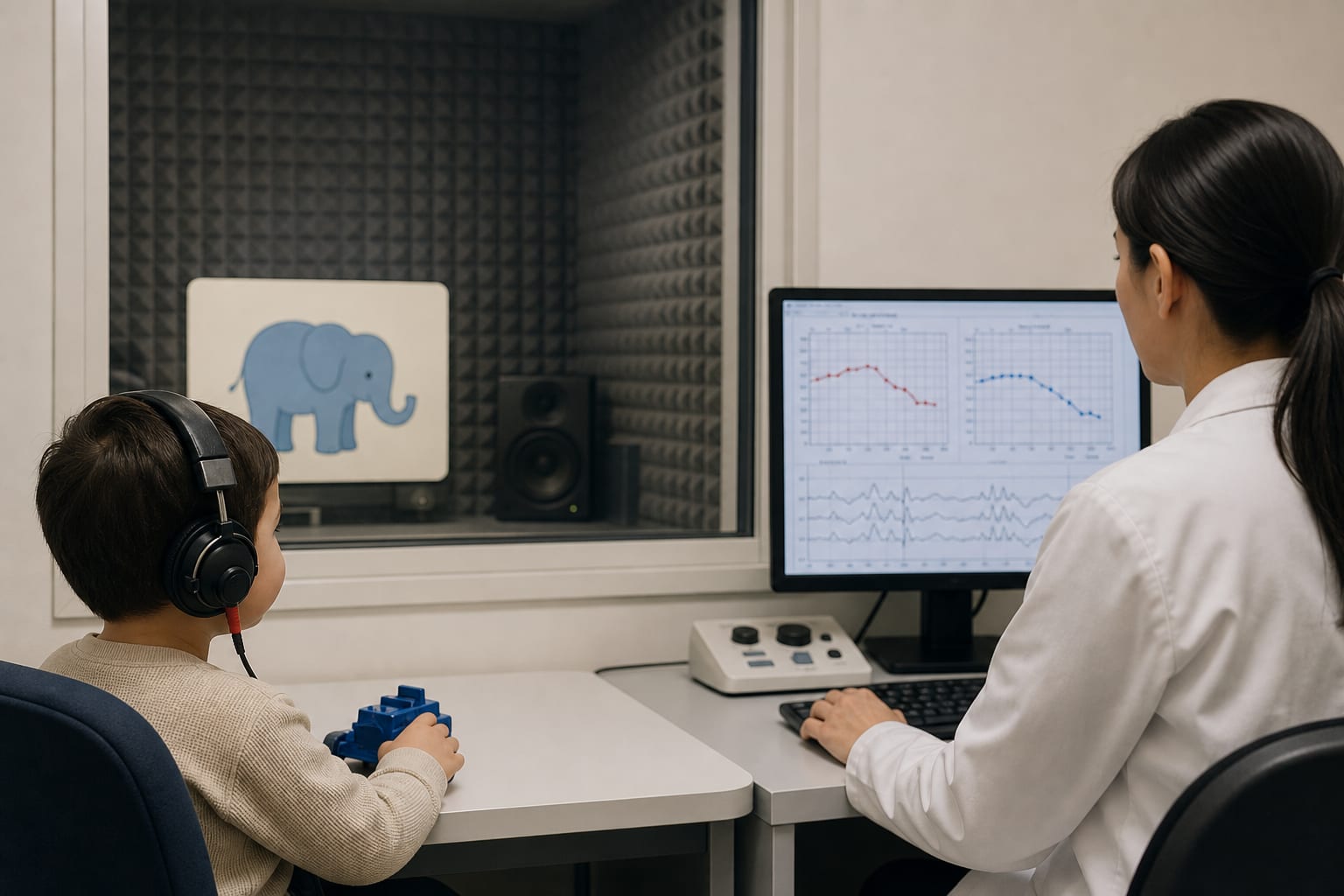
To evaluate the effectiveness of a standardized hearing assessment protocol for children aged 18 months to 8 years, with and without an autism diagnosis.
Approach:
Key Findings:
93.9% of children met speech criteria.
56.6% of children met discharge criteria.
Autistic children were significantly less likely to meet speech or discharge criteria compared to the comparison group.
Autistic children required nearly twice as many encounters to meet criteria and relied more on physiological measures.
Interpretation:
The protocol demonstrated overall effectiveness, with many autistic children meeting criteria by the second encounter.
Limitations:
The study was conducted at a single institution, which may limit generalizability.
The protocol may require refinement to better accommodate the unique needs of autistic children.
Conclusion:
The protocol has potential to improve timely and accurate determination of hearing status in children undergoing speech-language and/or autism evaluations.
A literature review published in Future Cardiology suggests that providers should look beyond chronological age to various modifiable physiologic factors when planning a superior cavopulmonary connection (SCPC) procedure.