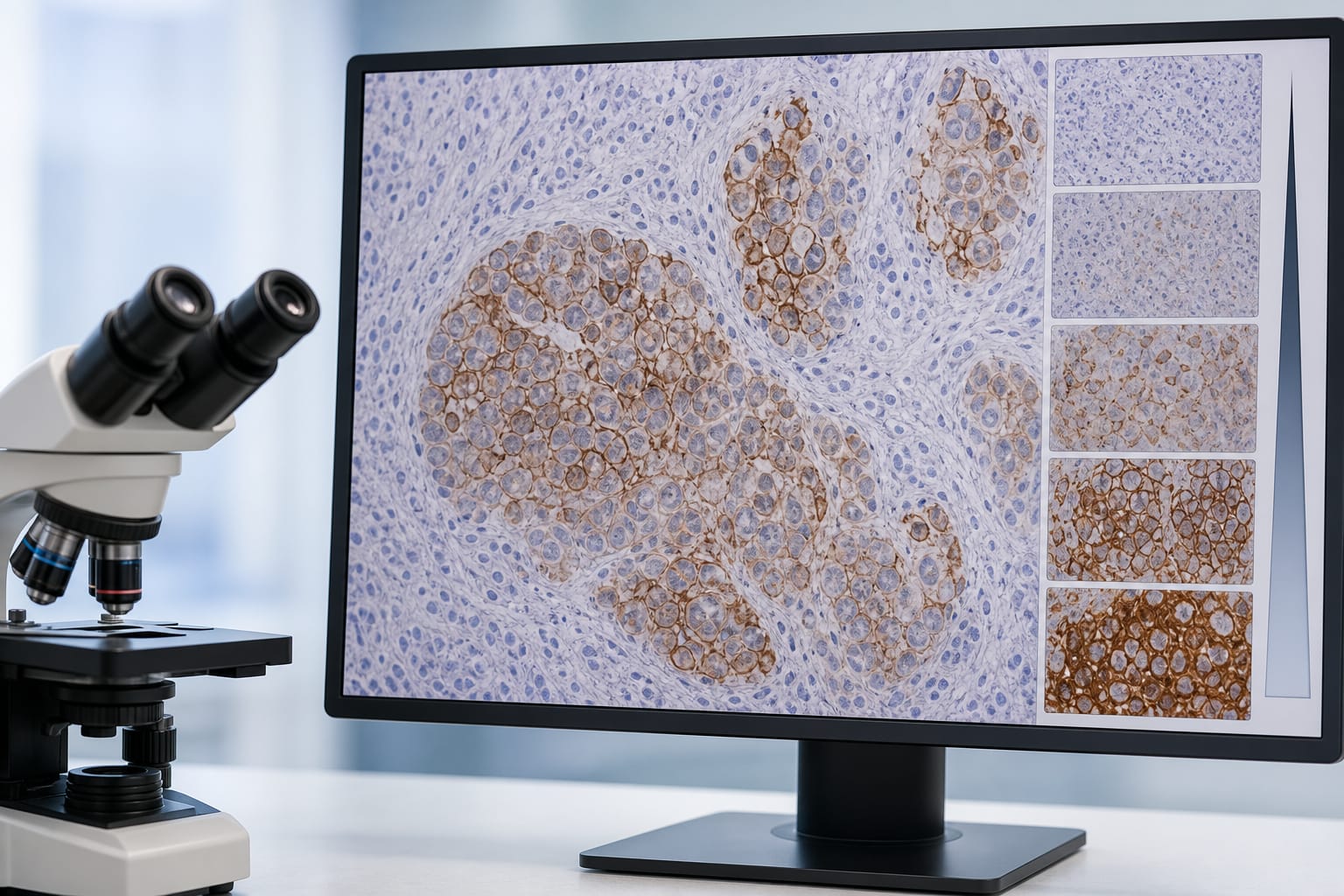
Training on PD-L1 scoring in non-small cell lung cancer with high intra- and inter-reader agreement: results of a worldwide microscopic/digital image-based training of 751 pathologists - Summary - MDSpire
Conexiant’s news site is now MDSpire News. Learn more
Advertisement
Global Training Initiative on PD-L1 Scoring in Non-Small Cell Lung Cancer Achieves High Consistency Among Pathologists: Findings from a Study Involving 751 Participants
To evaluate the accuracy and reproducibility of PD-L1 scoring in non-small cell lung cancer (NSCLC) after training pathologists worldwide, which is critical for informed treatment decisions.
Key Findings:
Overall inter-reader agreement for PD-L1-stained NSCLC was 95.6% for TPS ≥1% and 87.3% for TPS ≥50%.
Intra-reader agreement was 95.9% for TPS ≥1% and 91.4% for TPS ≥50%.
Negative percent agreement for TPS ≥1% was 85.6% and for TPS ≥50% was 91.9%.
Positive percent agreement was 97.6% for TPS ≥1% and 81.0% for TPS ≥50%.
Interpretation:
The high levels of inter- and intra-reader agreement suggest that the expert-led standardized training protocol effectively reduced variability in PD-L1 scoring among pathologists, enhancing the reliability of scoring for clinical decisions.
Limitations:
The study does not address long-term retention of scoring skills post-training.
Variability in pathologists' prior experience and training may still influence scoring, potentially affecting the results.
Conclusion:
The results indicate that structured training can enhance the consistency of PD-L1 scoring in NSCLC, which is critical for patient treatment decisions and improving patient outcomes.