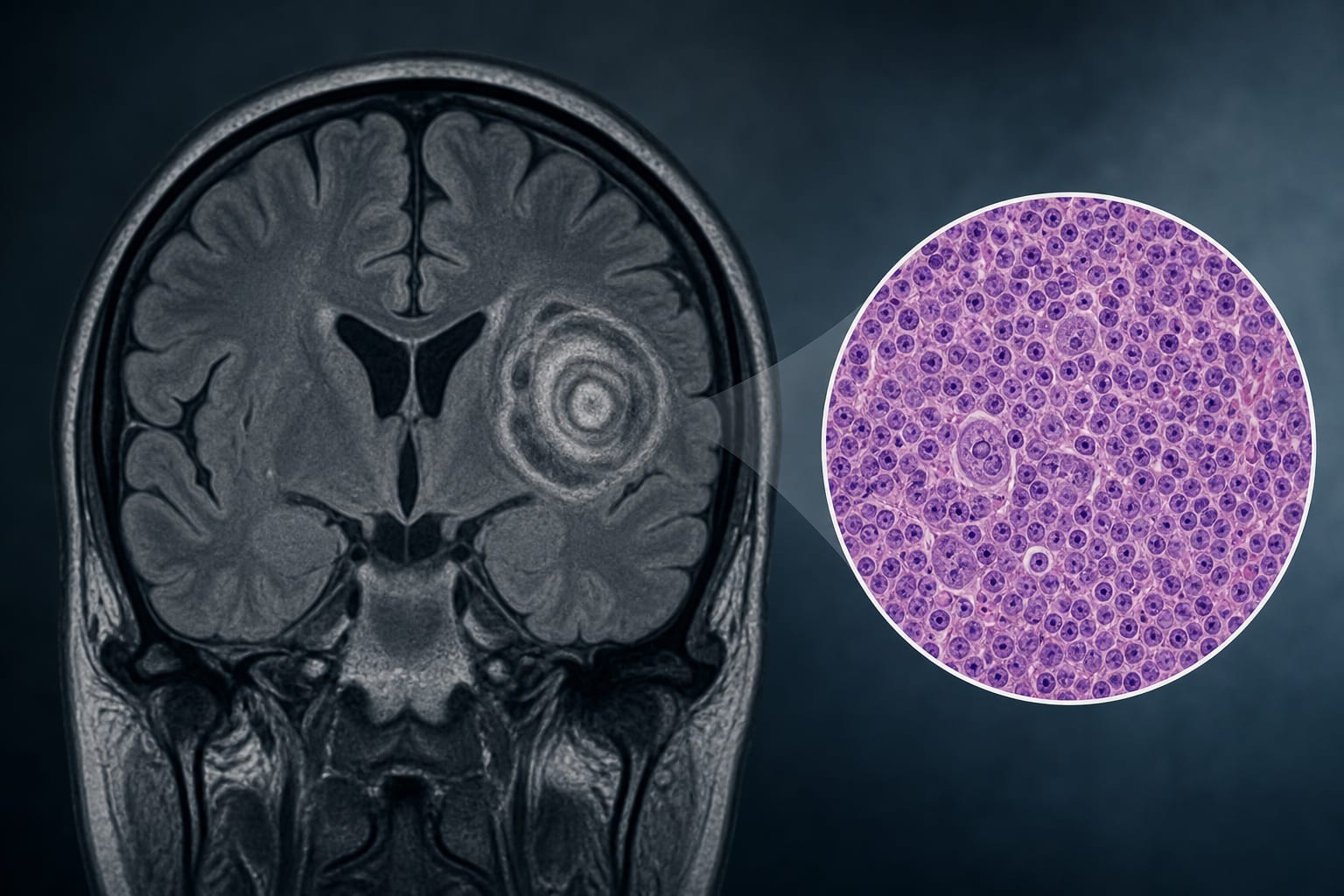
To summarize the clinical features of a case of Primary Central Nervous System PTLD that mimicked Baló’s concentric sclerosis to enhance early recognition and diagnosis.
Key Findings:
The patient, a 35-year-old male, presented with progressive neurological symptoms including cognitive decline and motor deficits.
Neuroimaging revealed lesions consistent with demyelination, initially suggestive of Baló’s concentric sclerosis.
Histopathological examination of brain tissue confirmed the diagnosis of PTLD, characterized by atypical lymphoid proliferation.
Interpretation:
This case underscores the necessity for clinicians to maintain a high index of suspicion for PTLD in post-transplant patients, especially when neurological symptoms are present. Early recognition is crucial for timely intervention and management.
Limitations:
The rarity of both conditions may limit generalizability.
The case report does not provide long-term follow-up data.
Conclusion:
This case highlights the importance of considering PTLD in post-transplant patients presenting with neurological symptoms.