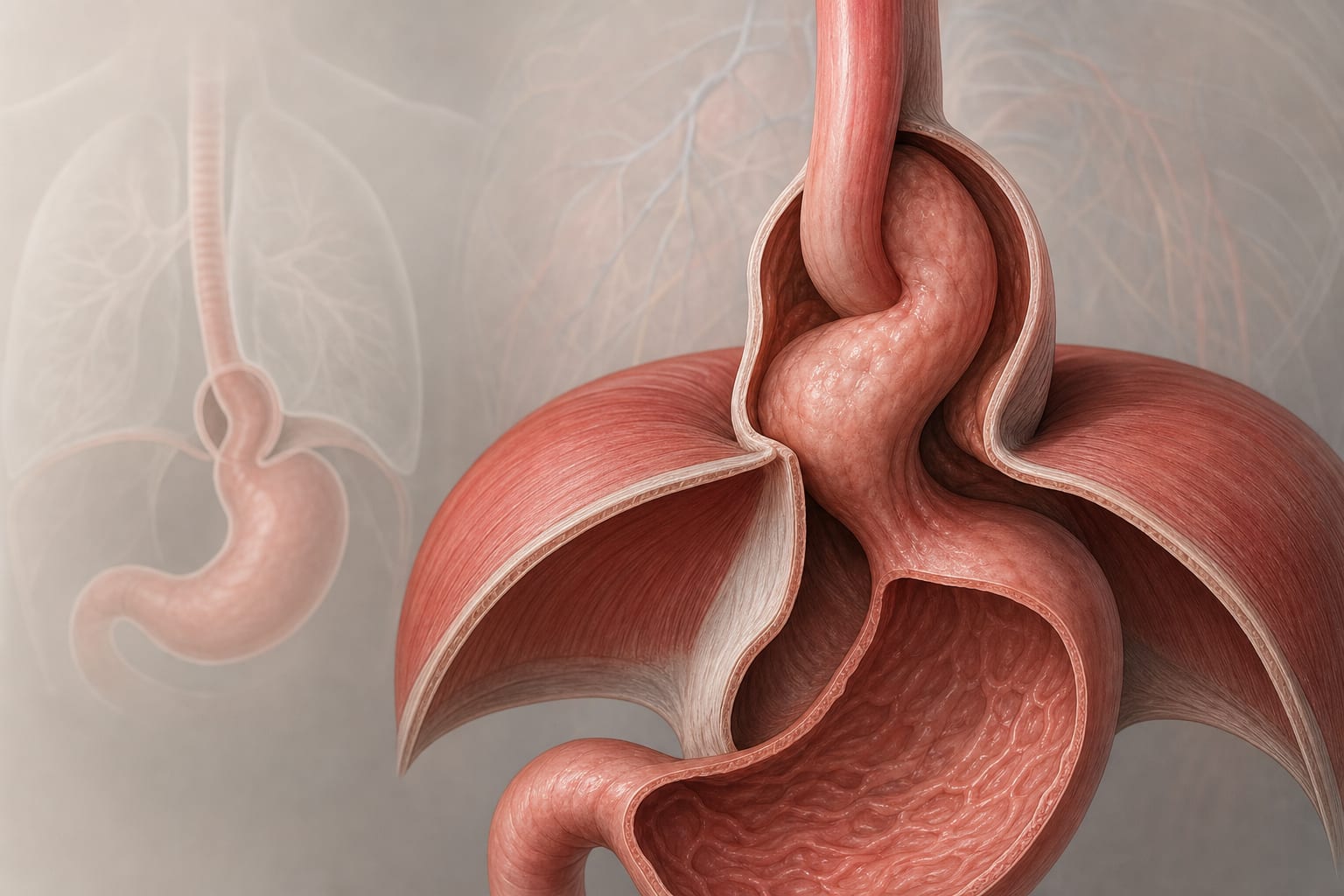
To compare the incidence of dysphagia and reflux control between laparoscopic floppy Nissen fundoplication with V-flap suturing (LNF-V) and conventional laparoscopic Nissen fundoplication (LNF).
Approach:
Key Findings:
The incidence of postoperative dysphagia was significantly lower in the LNF-V group compared to the conventional LNF group.
The LNF-V technique showed improved reflux control without compromising swallowing function.
Most cases of dysphagia were transient, resolving within 6 to 8 weeks postoperatively.
Interpretation:
The laparoscopic floppy Nissen fundoplication with V-flap suturing may provide a favorable balance between effective reflux control and reduced risk of postoperative dysphagia compared to traditional techniques.
Limitations:
The study is retrospective, which may introduce selection bias.
Follow-up duration may not capture long-term outcomes of dysphagia and reflux control.
Conclusion:
LNF-V appears to be a promising modification of the Nissen fundoplication technique, potentially offering better postoperative swallowing outcomes while maintaining effective reflux control.