Merck Highlights Early Tiespectus Data - Summary - MDSpire
Advertisement
Merck Highlights Early Tiespectus Data
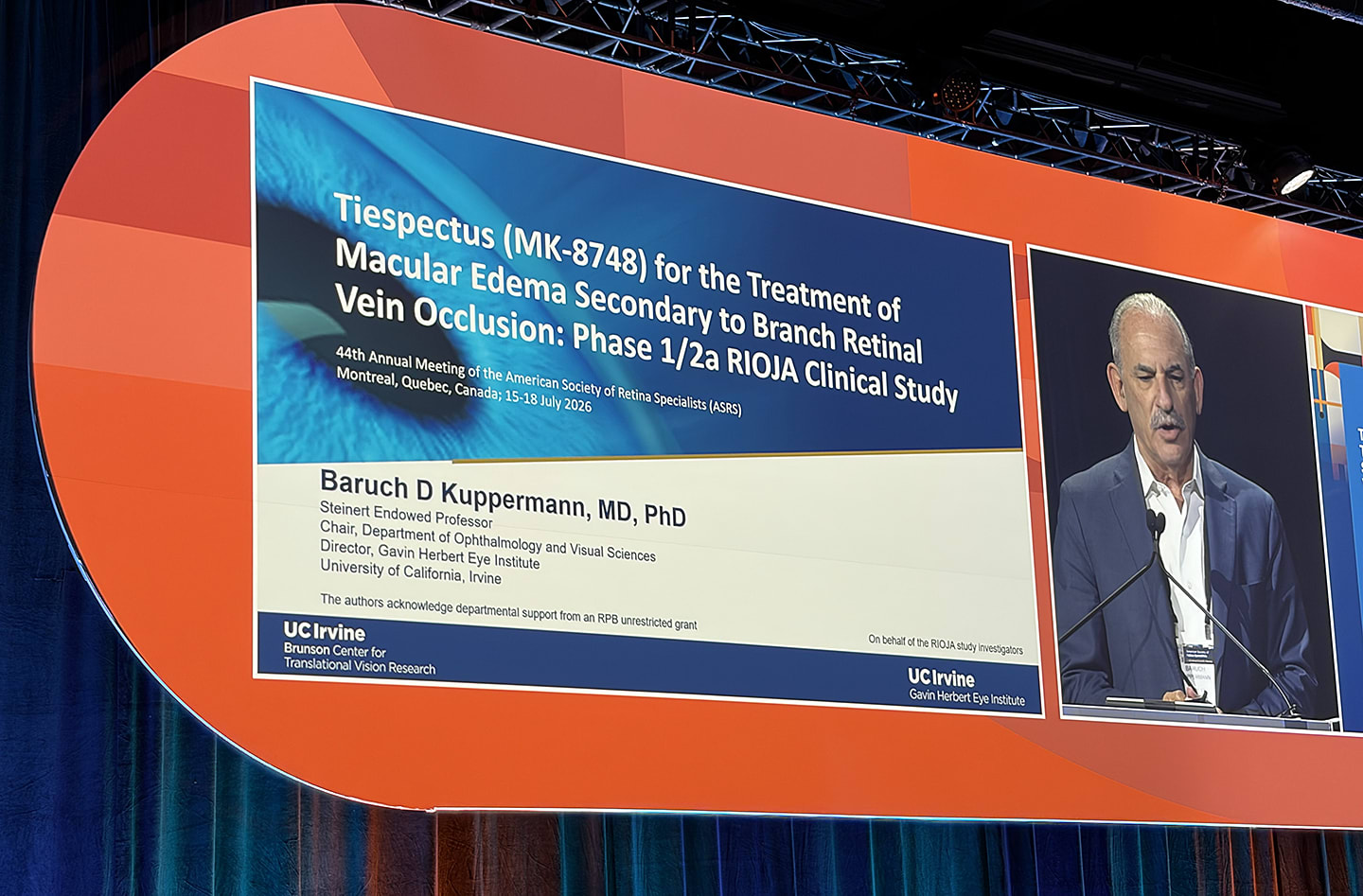
At the ASRS meeting in Montreal, Baruch D. Kuppermann, MD, PhD, presented BRVO findings from the phase 1/2a RIOJA program evaluating the investigational VEGF/Tie2 bispecific.
To evaluate the safety and efficacy of tiespectus (MK-8748) in patients with branch retinal vein occlusion (BRVO) as part of the phase 1/2a RIOJA trial.
Approach:
Study Design: An open-label dose-escalation study enrolling 12 treatment-naïve patients with macular edema secondary to BRVO, with four ascending-dose cohorts (1 mg, 4 mg, 7 mg, and 10 mg).
Treatment Administration: Patients received intravitreal injections every 4 weeks for a total of 3 doses, with dose escalation proceeding only after safety assessments.
Key Findings:
All dose levels were well tolerated with no drug-related safety concerns.
Mean best-corrected visual acuity (BCVA) improved by 16.7 ETDRS letters at week 12.
Mean central subfield thickness (CST) decreased by 157.8 µm across all dose cohorts.
Improvements in vision and retinal anatomy were observed as early as 1 week after treatment.
Interpretation:
The study primarily aimed to evaluate safety, but significant improvements in visual acuity and retinal structure were noted.
Limitations:
The study involved a small sample size of 12 patients.
Long-term durability and efficacy assessments are ongoing.
Conclusion:
Tiespectus shows promise as a dual-pathway inhibitor for retinal vascular diseases, with ongoing studies in neovascular age-related macular degeneration (nAMD).
In a panel at the Retina Innovation Summit in Montreal, regulatory experts, drug developers, academic advisors, and investors discussed how evolving FDA guidance is reshaping the path from clinical trials to approval.