Learning curve and perioperative outcomes: a retrospective cohort study between synchronous and combined inflatable mediastinoscope-laparoscopic radical esophagectomy - Summary - MDSpire
Advertisement
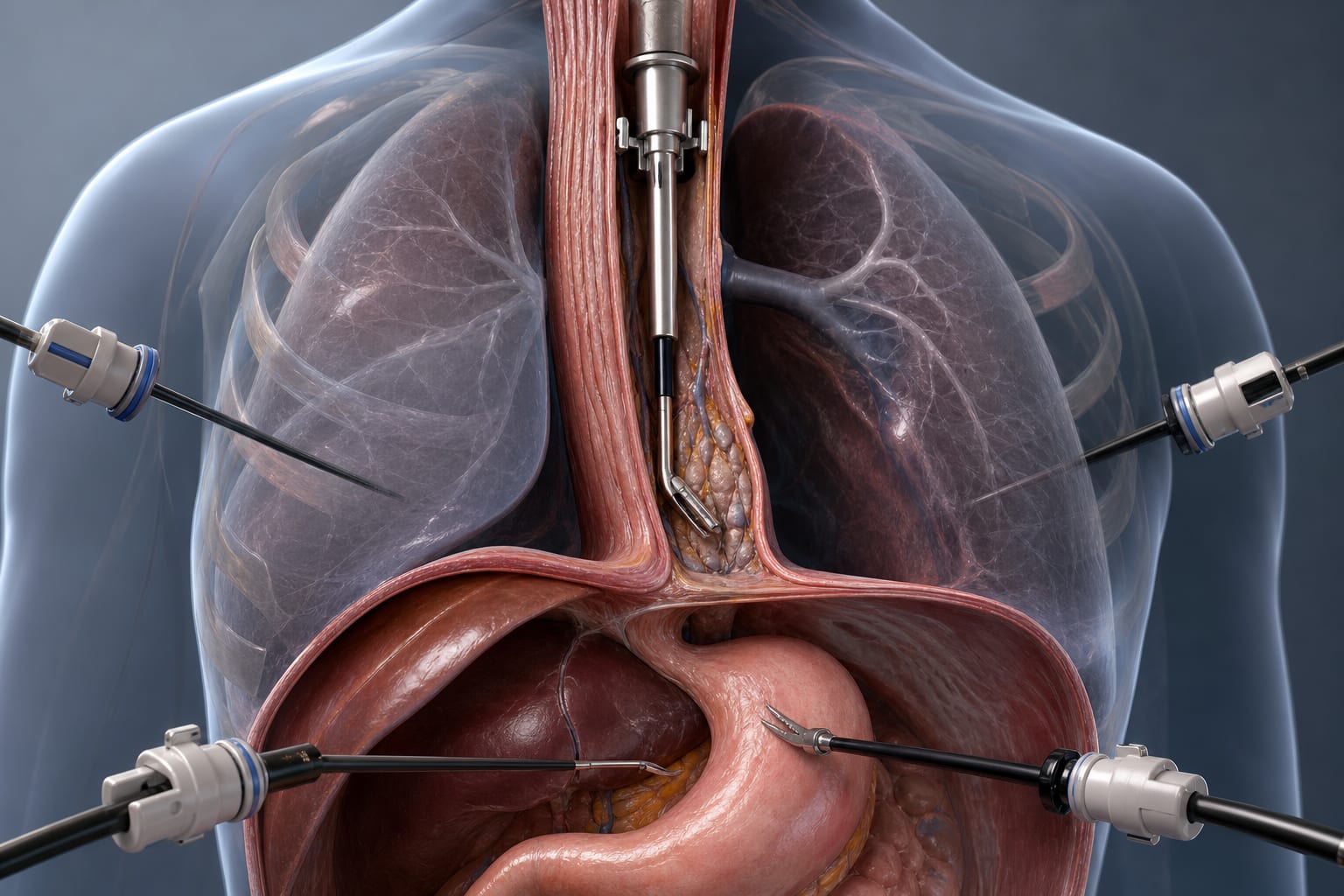
Learning curve and perioperative outcomes: a retrospective cohort study between synchronous and combined inflatable mediastinoscope-laparoscopic radical esophagectomy
To compare the learning curves and perioperative outcomes of synchronous versus combined inflatable mediastinoscope-laparoscopic radical esophagectomy.
Approach:
Study Design: Retrospective cohort study involving 229 patients who underwent minimally invasive laparoscopic radical esophagectomy.
Patient Selection: Patients were categorized into synchronous (118 cases) and combined (111 cases) groups, with 106 patients matched in each group after propensity score matching.
Surgical Methods: Procedures were performed by a fixed surgical team with over 10 years of experience in minimally invasive esophagectomy.
Learning Curve Assessment: Cumulative sum (CUSUM) analysis was employed to evaluate learning curves and perioperative outcomes.
Key Findings:
Synchronous approach may reduce mechanical lung injury and inflammatory response.
CUSUM analysis effectively identifies changes in operative performance and proficiency thresholds.
Limited studies exist comparing learning curves of synchronous and combined approaches.
Interpretation:
Limitations:
Retrospective nature of the study may introduce bias.
Limited sample size after propensity score matching.
Conclusion:
The study aims to enhance understanding of the learning curves and outcomes associated with different surgical approaches for esophageal cancer.