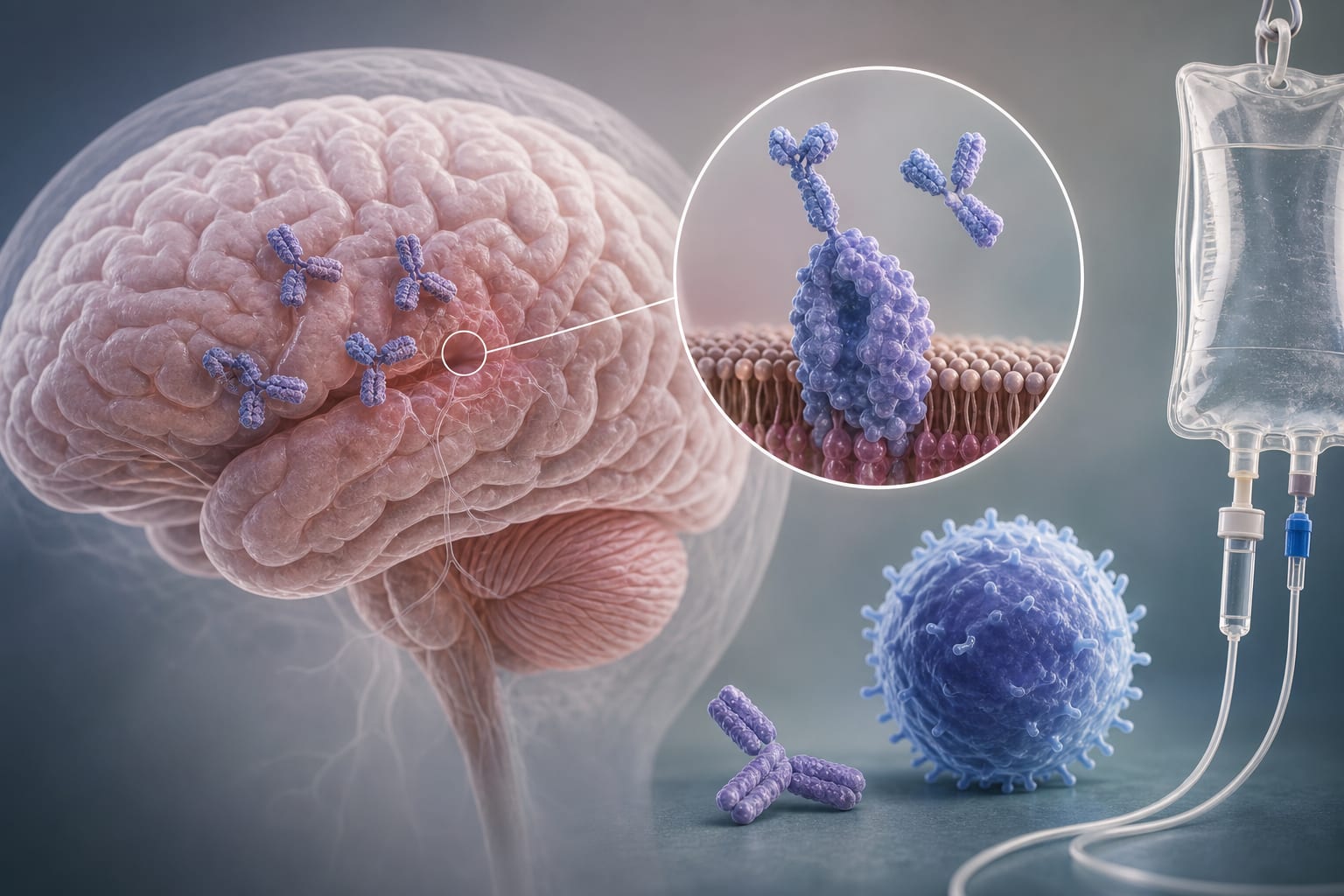
To investigate the clinical features, differential treatment responses, and management strategies of encephalitis associated with anti-Kelch-like protein 11 (KLHL11) antibodies, highlighting its significance in the context of existing literature.
Key Findings:
Case 1: A 52-year-old woman with anti-KLHL11 antibodies (titer 1:100) fully recovered after IVIG and low-dose rituximab, indicating a positive response to this treatment regimen. Case 2: A 65-year-old man with higher anti-KLHL11 antibodies (titer 1:320) had an initial suboptimal response to glucocorticoids but improved with efgartigimod, suggesting variability in treatment efficacy based on antibody titer. High serum anti-KLHL11 titer (1:320) was associated with treatment refractoriness, warranting further investigation.
Interpretation:
Anti-KLHL11 encephalitis shows significant clinical heterogeneity, with varying responses to treatment, which may have important implications for individualized patient management.
Limitations:
The association between high serum anti-KLHL11 titer and treatment refractoriness is a preliminary observation requiring validation in larger cohorts, and potential biases in case selection or reporting should be considered.
Conclusion:
Efgartigimod appears to be a promising therapeutic option for paraneoplastic neurological syndrome, but further research is needed to validate these findings and explore the underlying mechanisms.