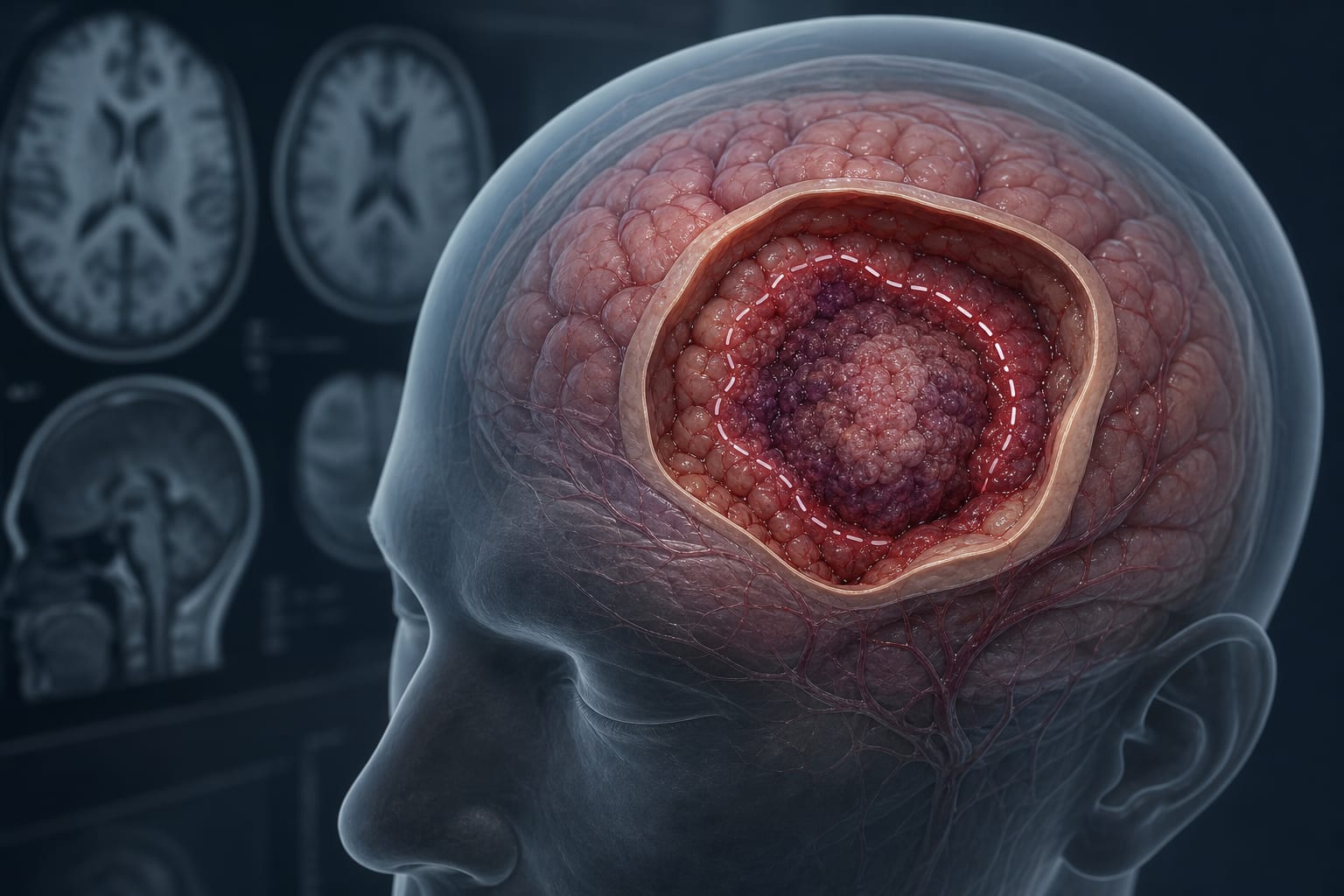
To improve the prognostic power of existing models for predicting postoperative motor deficits in glioma patients by incorporating additional neurophysiological parameters, specifically cortical silent periods and recruitment curves.
Key Findings:
Preoperative nTMS mapping leads to more extensive tumor resections with fewer functional deficits.
Incorporating cortical silent periods and recruitment curves as additional predictors enhances the model's prognostic accuracy for postoperative motor outcomes.
The study included a diverse patient demographic, which strengthens the applicability of the findings.
Interpretation:
The study suggests that nTMS is a valuable tool in preoperative planning, allowing for better prediction of motor deficits and enabling tailored surgical strategies that could improve patient outcomes.
Limitations:
The study's findings may not be generalizable to all brain tumor types outside of gliomas due to the specific patient population.
Potential biases in patient selection and follow-up assessments could affect the results.
Conclusion:
Integrating additional neurophysiological parameters from nTMS can significantly enhance the prediction of postoperative motor deficits, aiding in individualized surgical planning.
by Ina Moritz, Melina Engelhardt, Tizian Rosenstock, Ulrike Grittner, Oliver Schweizerhof, Rutvik Khakhar, Heike Schneider, Andia Mirbagheri, Anna Zdunczyk, Katharina Faust, Peter Vajkoczy, Thomas Picht