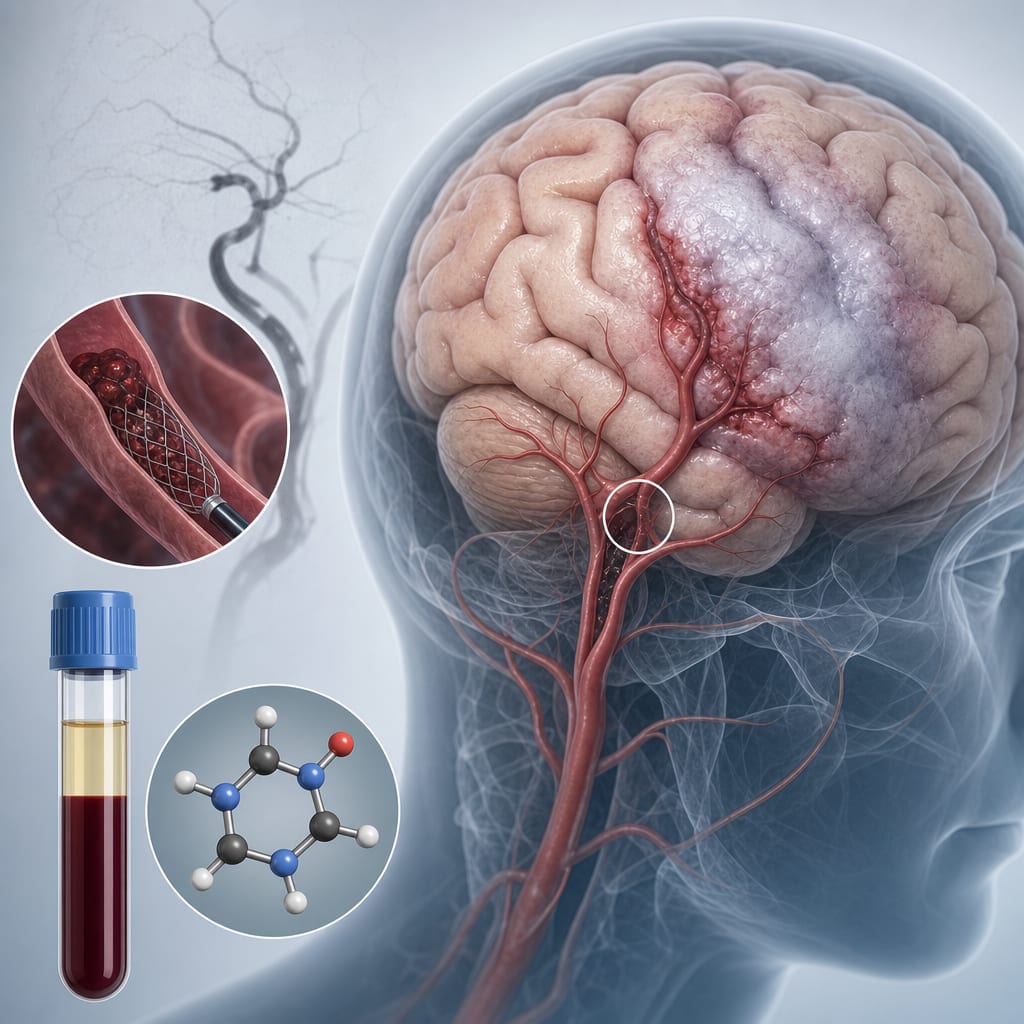
To investigate the association between serum uric acid levels and moderate-to-severe cerebral edema in large-vessel occlusion acute ischemic stroke patients following mechanical thrombectomy, highlighting its potential clinical significance.
Key Findings:
Patients with no-to-mild cerebral edema had significantly higher uric acid levels compared to those with moderate-to-severe cerebral edema (median 310.0 vs. 302.0 μmol/L; p < 0.05), indicating a potential protective effect.
Higher uric acid levels were inversely correlated with the risk of moderate-to-severe cerebral edema (adjusted OR: 0.74; 95% CI: 0.56–0.99; p = 0.044), suggesting a need for further investigation into uric acid as a therapeutic target.
The protective effect of uric acid was more pronounced in patients with lower admission blood glucose, higher mTICI grades, and a history of hypertension, emphasizing the importance of these factors in clinical assessments.
Interpretation:
Higher serum uric acid levels may protect against moderate-to-severe cerebral edema in LVO-AIS patients post-mechanical thrombectomy, particularly in specific subgroups, which could influence treatment strategies.
Limitations:
Retrospective design limits causal inference, necessitating caution in interpretation.
Blinding of assessors to serum uric acid levels and clinical data was not feasible, which may introduce bias.
Conclusion:
Higher serum uric acid levels may serve as a protective factor against moderate-to-severe cerebral edema following mechanical thrombectomy in LVO-AIS patients, underscoring the need for further research in this area.
Sentara Northern Virginia Medical Center has received the American Heart Association/American Stroke Association’s Get With The Guidelines® Target: Stroke Honor Roll Elite Plus Gold Plus Quality Achievement Award.