Noninvasive MRA-derived fractional flow for intracranial stenosis: methodological evaluation and hemodynamic insights - Summary - MDSpire

Noninvasive MRA-derived fractional flow for intracranial stenosis: methodological evaluation and hemodynamic insights

  • By

  • Xiaohui Wang

  • Haojing Zhu

  • Zhihua Du

  • Rongju Zhang

  • Yang Bian

  • Xinfeng Liu

  • Bin Lv

  • Rui Zhang

  • Jinhao Lyu

  • Xu Guan

  • Ziwei Guo

  • Xiangyu Cao

  • Jiawen Zhu

  • Rong Zou

  • Jianping Xiang

  • Shengyuan Yu

  • Jun Wang

  • June 29, 2026

  • 0 min

Share

Objective:

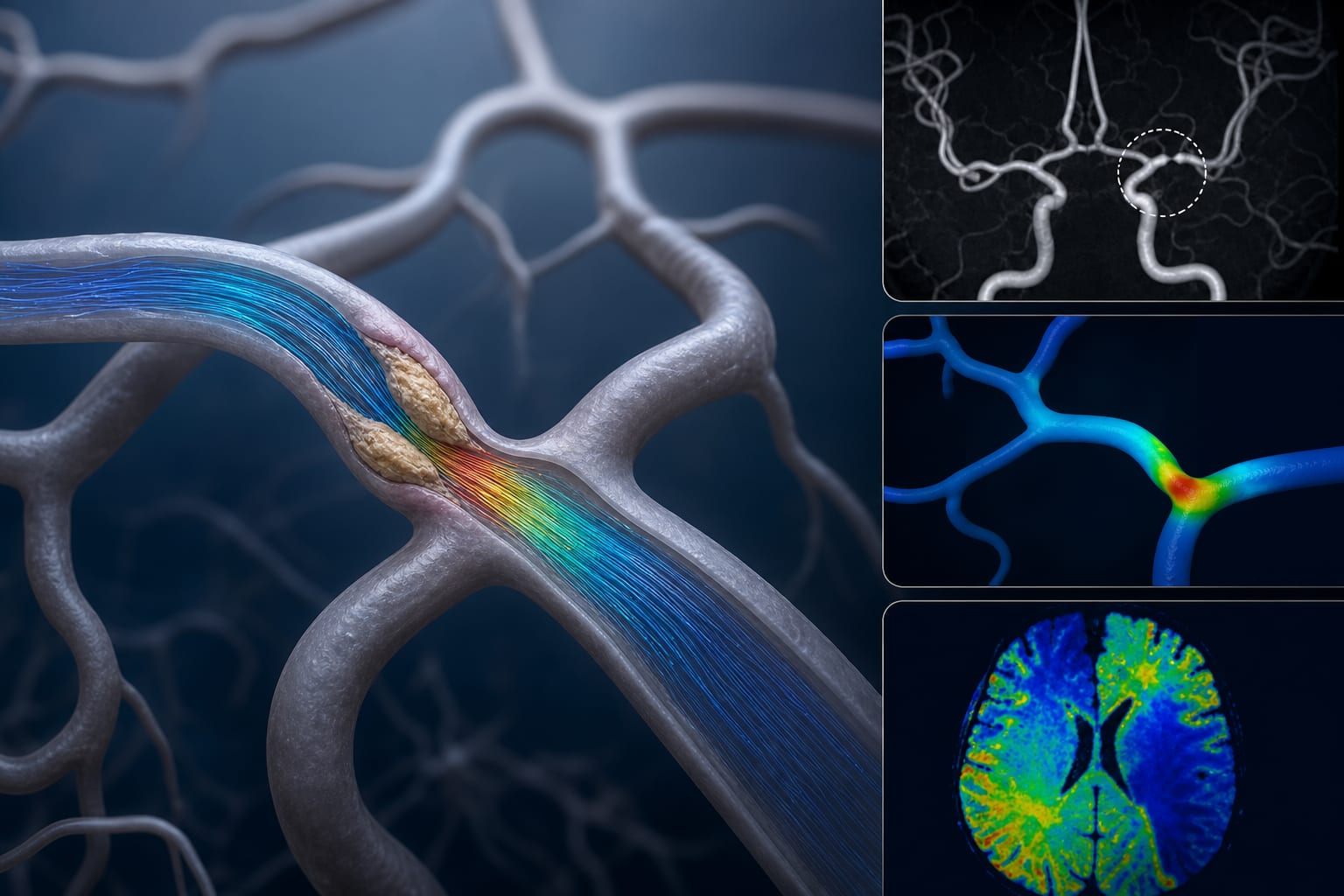
To evaluate a noninvasive fractional flow (FF) method derived from magnetic resonance angiography (MRA-FF) against established reference standards and assess its ability to reflect hemodynamically relevant impairment, including an exploratory assessment of its discriminative ability for hypoperfusion.

Approach:
  • Exploratory Analysis: Examined MRA-FF's ability to discriminate hypoperfusion using receiver operating characteristic (ROC) analysis in a subset of 38 patients with available perfusion imaging.
Key Findings:
  • MRA-FF showed moderate-to-good agreement with PW-FF (ICC = 0.743; 95% CI, 0.437–0.895) and good agreement with DSA-FF (ICC = 0.784; 95% CI, 0.649–0.871).
  • Equivalence to DSA-FF was confirmed by TOST (p < 0.01).
  • MRA-FF was lower in patients with hypoperfusion compared to those without (p = 0.022).
  • The area under the ROC curve for discriminating hypoperfusion was 0.723.
Interpretation:

MRA-FF demonstrates good agreement with invasive and angiographic reference methods.

Limitations:
  • Study is retrospective and conducted at a single center.
  • Further external validation is required.
Conclusion:

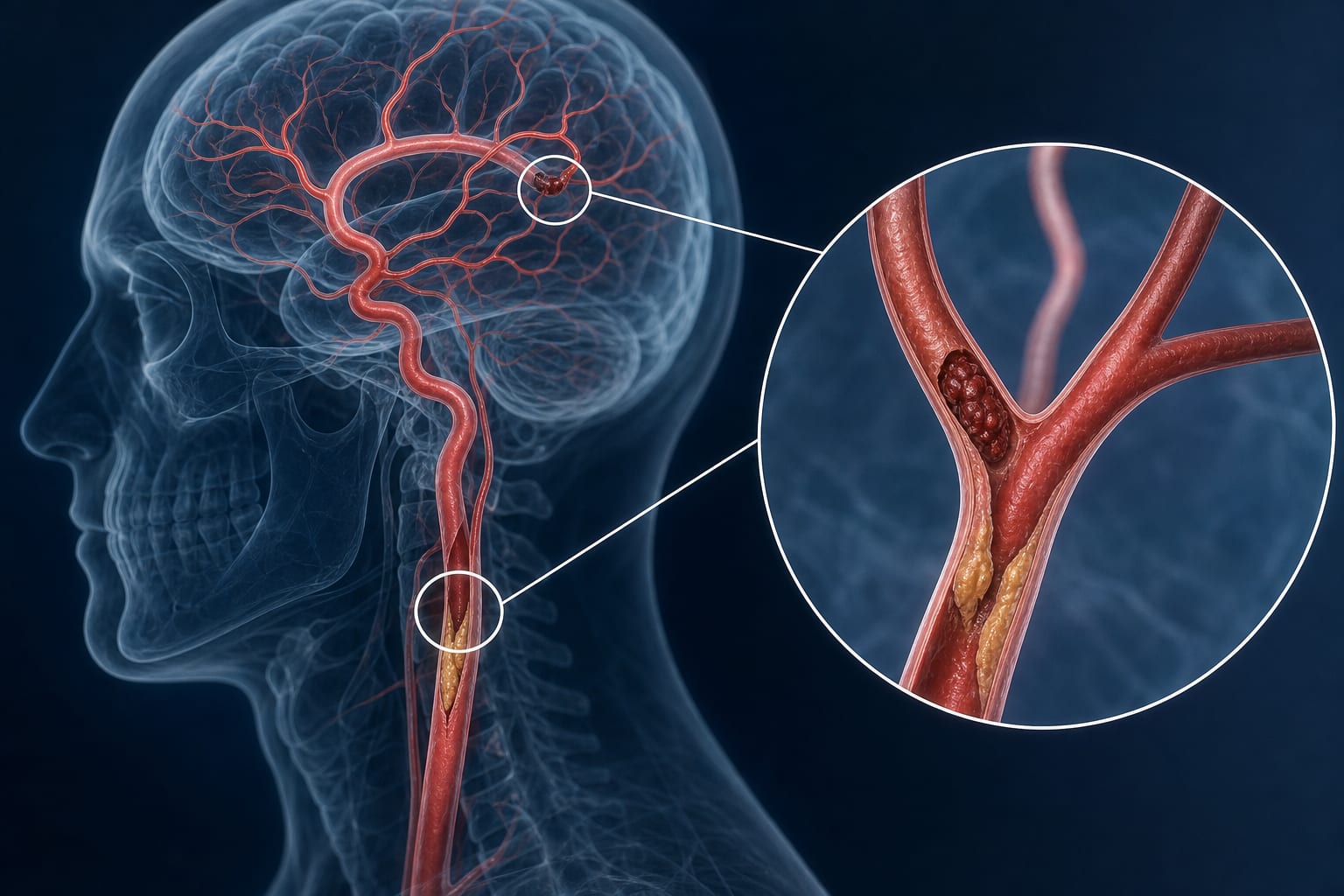
MRA-FF shows potential as a fully noninvasive tool for functional assessment and hemodynamic characterization in ICAS.

Original Source(s)

Related Content