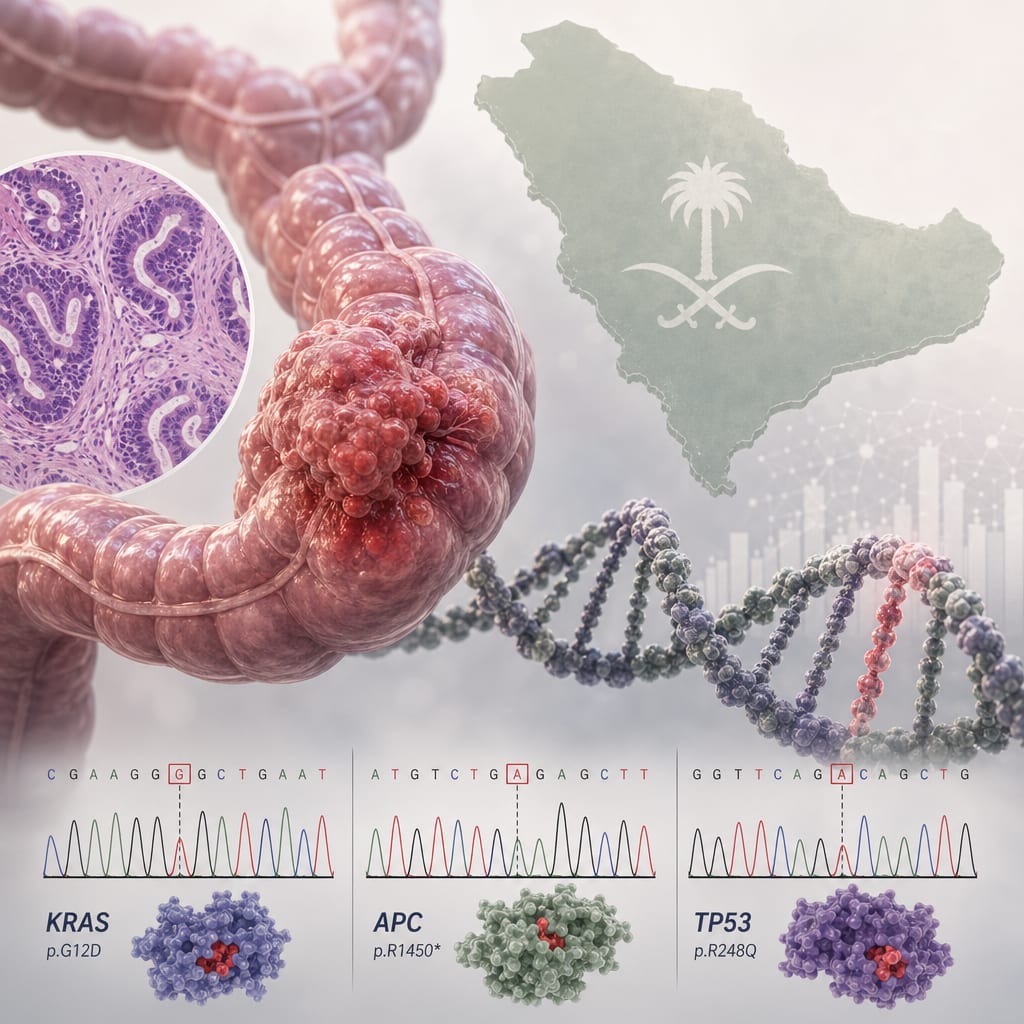
To investigate the molecular and phenotypic characteristics of colorectal cancer (CRC) in the Saudi population and compare them with similar cohorts, highlighting the public health significance.
Key Findings:
Saudi CRC patients exhibited lower KRAS mutation prevalence (6.5%) compared to MDACC (45.0%) and TCGA (41.1%) (p < 0.001).
APC mutations were also less common in Saudi patients (47.8%) versus MDACC (77.9%) and TCGA (79%) (p < 0.001).
TP53 mutations were more frequent in Saudi patients (50.0%) compared to MDACC (35.9%) and TCGA (43.0%) (p < 0.05).
A higher percentage of Saudi patients presented with sigmoid malignancy (41.7%) compared to MDACC (24.4%).
Saudi CRC patients were significantly younger (average age 58) than those at MDACC (62) and TCGA (68).
Interpretation:
The unique mutational profile of CRC in Saudi Arabia suggests distinct genetic influences and highlights the need for tailored diagnostic and therapeutic strategies, with implications for public health.
Limitations:
The study focused solely on sporadic MSS CRC, potentially limiting the generalizability of findings and introducing selection bias.
Sample size of 50 may not fully represent the broader Saudi population.
Conclusion:
The study reveals significant differences in the genetic landscape of CRC in Saudi Arabia, emphasizing the importance of population-specific research to inform cancer screening and treatment, and the need for further studies.
by Maha-Hamadien Abdulla, Jumanah Yousef Alshenaifi, Mansoor-Ali Vaali-Mohammed, Ahmad Zubaidi, Khayal Al Khayal, Noura S. Alhassan, Khalid Abdulrahman Al-Saleh, Omar Al Obeed, Scott Kopetz