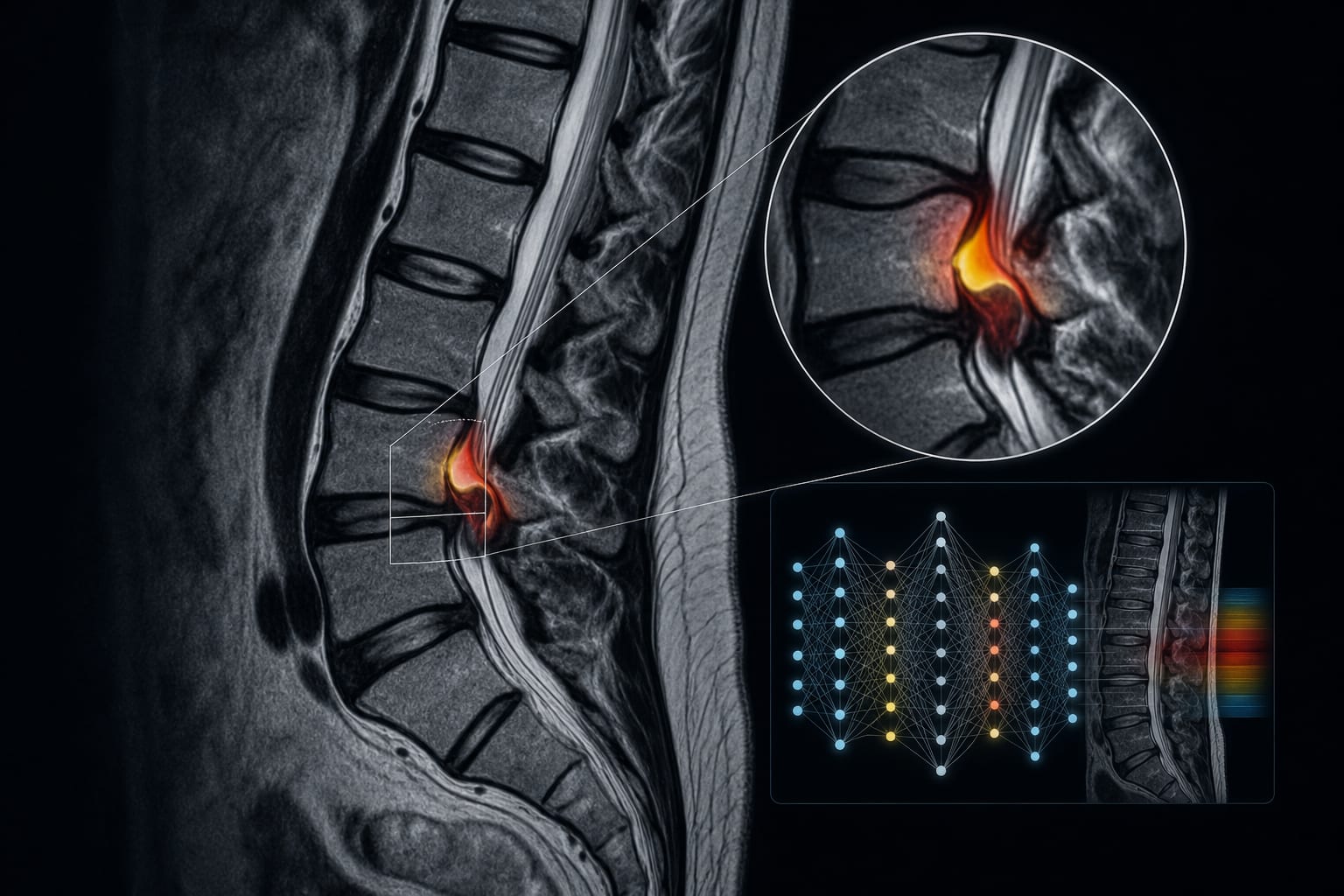
A review of the application of novel intervertebral disc diagnostic technologies integrated with artificial intelligence in medical imaging - Summary - MDSpire
To review recent advances in artificial intelligence technologies for diagnosing disc diseases across different imaging modalities and how AI can assist in clinical workflows.
Approach:
Introduction: Discusses the importance of accurate diagnosis of intervertebral disc pathologies and the limitations of conventional imaging techniques.
AI Integration: Explores how AI can optimize imaging workflows, improve segmentation, classification, and detection of disc diseases.
Key Findings:
Conventional imaging modalities like MRI, CT, and X-ray have significant limitations in diagnosing intervertebral disc diseases.
AI technologies can enhance diagnostic accuracy and efficiency by automating segmentation and classification tasks.
Interpretation:
AI has the potential to transform the diagnostic process for intervertebral disc diseases by addressing inefficiencies and improving accuracy.
Limitations:
Conventional imaging techniques are still widely used despite their limitations in soft tissue resolution and diagnostic accuracy.
Manual assessment in traditional diagnostics is time-consuming and prone to inter-observer variability.
Conclusion:
AI technologies represent a promising advancement in the diagnosis of intervertebral disc diseases, potentially leading to more efficient and standardized diagnostic tools.
Automated lesion measurements increased agreement on treatment response, although expert-generated proposals were accepted more often and required fewer adjustments.