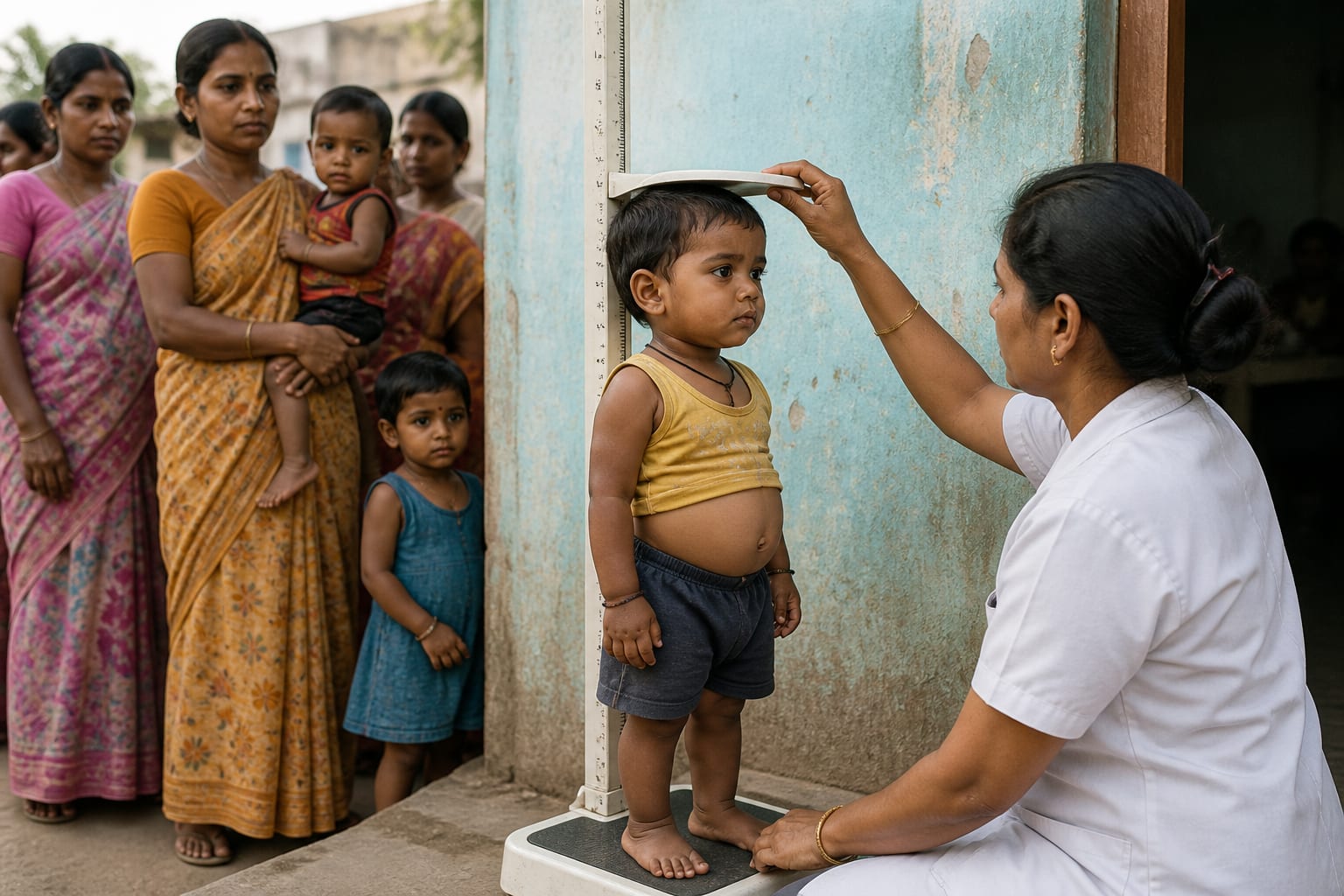
To examine trends in overweight and obesity among Indian children younger than 5 years across states and union territories and assess the feasibility of achieving the 2030 Global Nutrition Target for overweight.
Approach:
Study Design: A cross-sectional study utilizing microdata and aggregate data from the National Family Health Survey (NFHS) waves conducted from 2005 to 2024.
Data Sources: Data were drawn from NFHS-3, NFHS-4, NFHS-5, and NFHS-6, focusing on children aged 0 to 59 months.
Analysis Method: Trends in overweight and obesity prevalence were analyzed using final survey years: 2006, 2016, 2021, and 2024.
Key Findings:
Overweight prevalence among children under 5 in India increased from 1.6% in 2006 to 3.4% in 2021, then declined to 1.3% in 2024, according to the National Family Health Survey.
There are significant regional disparities in overweight and obesity prevalence across Indian states and union territories, as reported by the National Family Health Survey.
The Indian Academy of Pediatrics links childhood overweight and obesity to maternal characteristics, nutritional exposures, and genetic predisposition.
Interpretation:
The findings indicate a need for targeted public health interventions in regions with higher prevalence of childhood overweight and obesity.
Limitations:
Limited evidence on long-term trends across Indian states and union territories.
No studies evaluating the feasibility of achieving the 2030 Global Nutrition Target for overweight in these regions.
Conclusion:
Sustained, context-specific interventions involving multiple sectors are necessary to address childhood overweight and obesity in India.
Fayuvi is authorized for pediatric patients with preserved neurodevelopmental function following a study comparing treated children with a natural history cohort