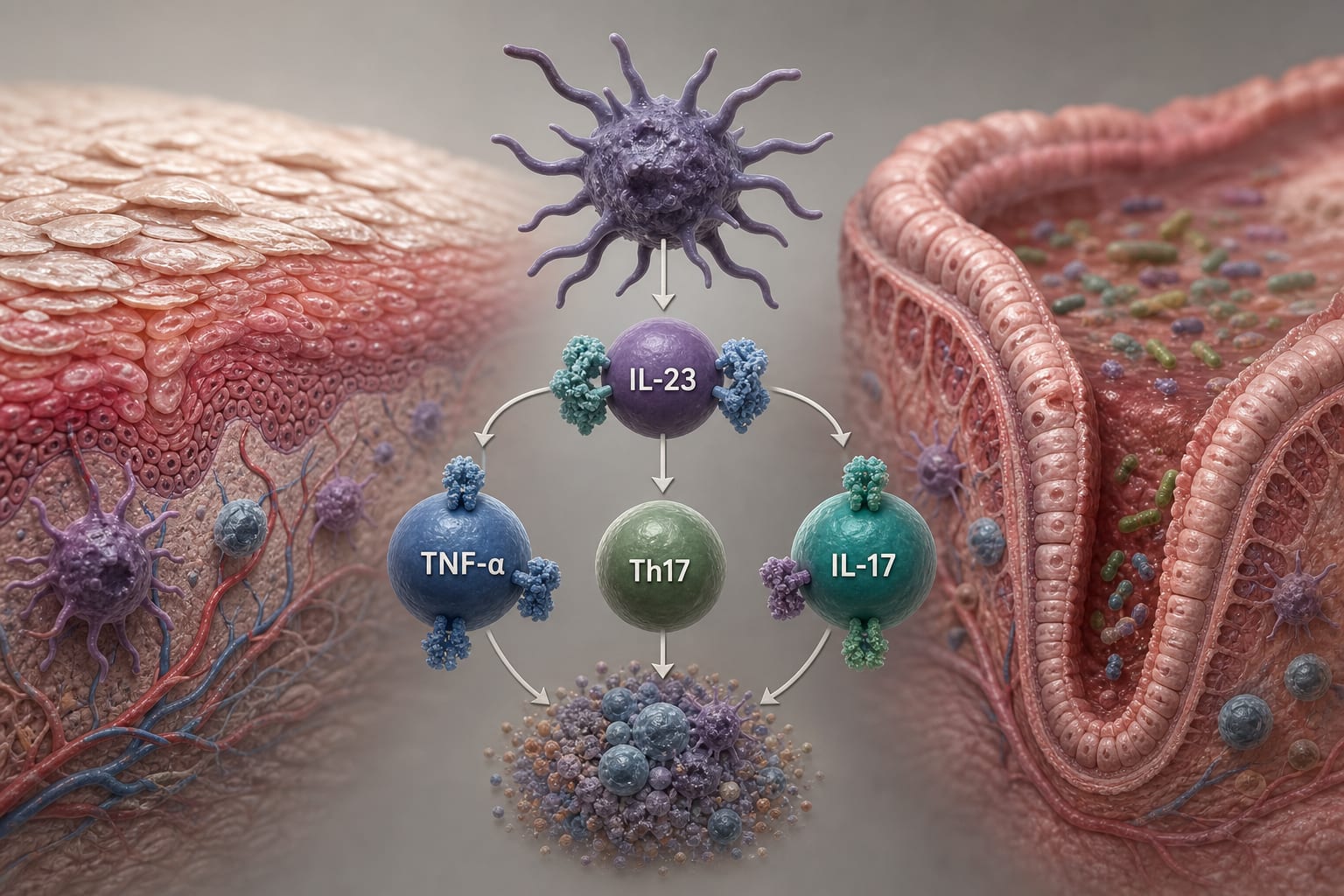
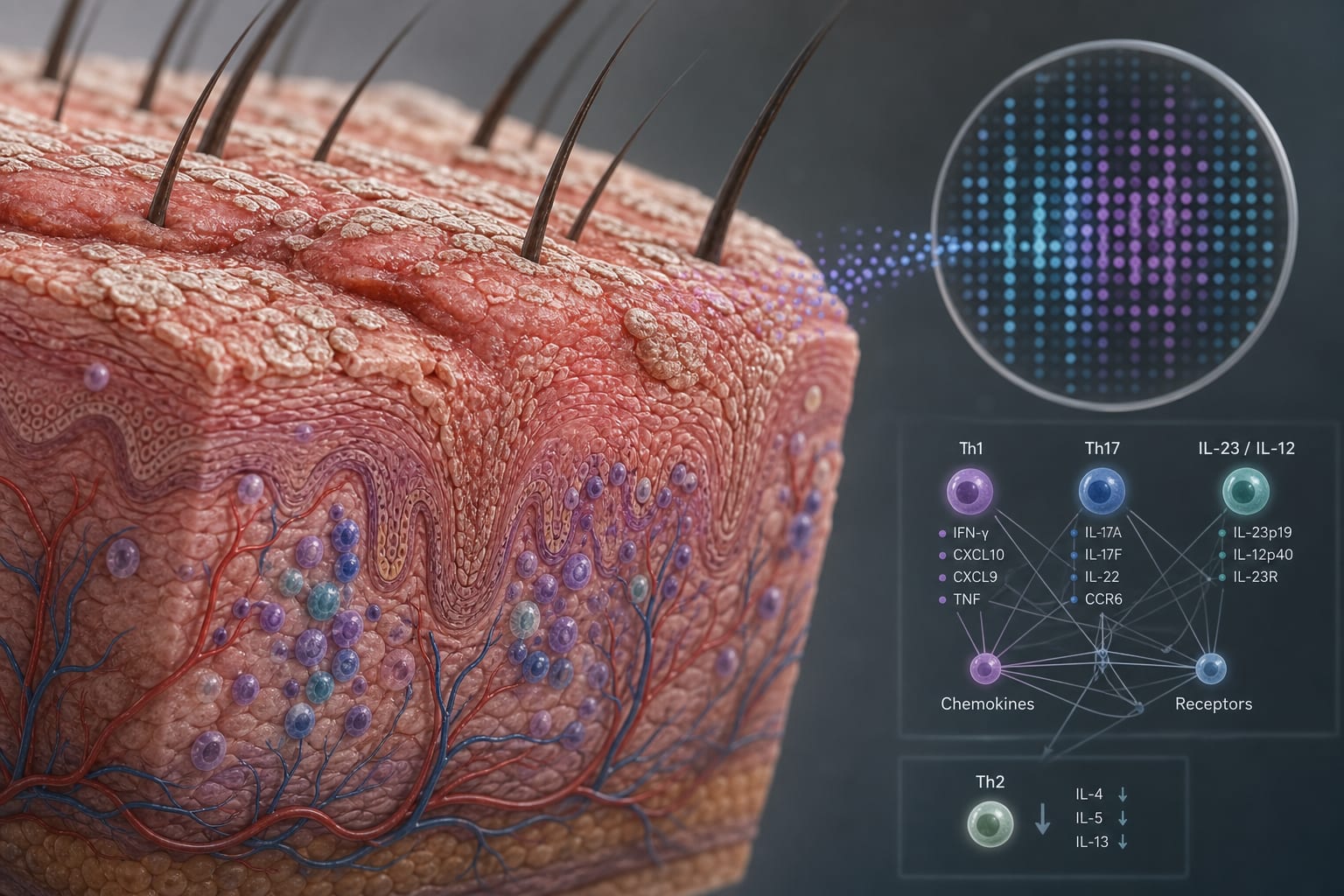
To explore psoriasis as a systemic immune-mediated condition that involves chronic inflammation and impacts multi-organ health, emphasizing the need for a comprehensive understanding of its immunological mechanisms and their implications for patient management.
Key Findings:
Psoriasis is characterized by persistent systemic inflammatory activation beyond skin lesions, contributing to comorbidities.
Chronic inflammatory priming leads to multi-organ comorbidities and disease recurrence, particularly through immune memory.
Tissue-resident memory T cells and trained immunity contribute to relapse after remission, highlighting the need for ongoing management.
Interpretation:
Psoriasis exemplifies a maladaptive reprogramming of the immune set-point, indicating that both spatial and temporal aspects of the disease are driven by shared immunological mechanisms, which have significant implications for long-term management strategies.
Limitations:
The article relies on existing epidemiological and mechanistic data, which may have gaps or biases, particularly in underrepresented populations.
The complexity of immune interactions in psoriasis may not be fully captured in a single framework, necessitating further research.
Conclusion:
Understanding psoriasis as a systemic inflammatory disorder has significant implications for evaluating comorbidities and developing long-term management strategies, emphasizing the need for a holistic approach to treatment.