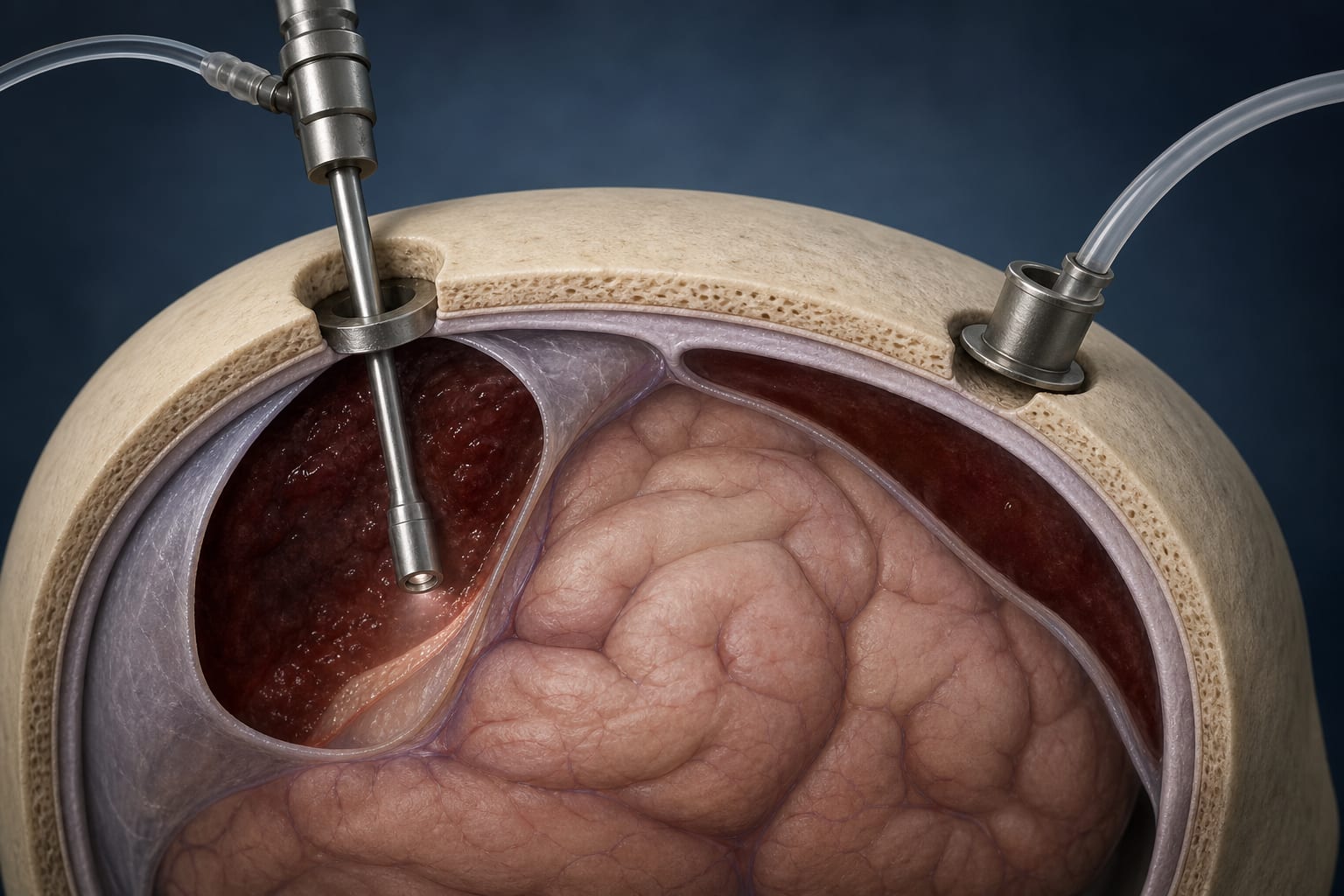
To demonstrate the utility of fMRI in improving surgical outcomes, specifically in reducing postoperative deficits, of LITT in patients with intracranial lesions near eloquent structures.
Key Findings:
One patient did not undergo LITT due to significant eloquent involvement identified by fMRI, highlighting the importance of preoperative mapping.
fMRI effectively localized functional areas and indicated risks of postoperative deficits, demonstrating its critical role in surgical planning.
The technique improved surgical planning and intraoperative safety during LITT, suggesting a potential standard of care.
Interpretation:
fMRI serves as a valuable adjunct for preoperative mapping and intraoperative guidance, potentially reducing the risk of functional deficits in high-risk patients undergoing LITT, thereby enhancing overall surgical outcomes.
Limitations:
Retrospective design may introduce selection bias, affecting the reliability of outcomes.
Small sample size limits generalizability of findings, necessitating further studies.
Potential variability in fMRI protocols and interpretation could impact consistency in results.
Conclusion:
Incorporating fMRI into the planning of LITT for lesions near eloquent structures enhances surgical safety and may improve clinical outcomes.