Early Response to Calcipotriol and Betamethasone Dipropionate PAD-Cream at Week 4 in Patients with Mild-to-Moderate Plaque Psoriasis: A Post-Hoc Pooled Analysis of Two Phase III Trials - Summary - MDSpire
Conexiant’s news site is now MDSpire News. Learn more
Advertisement
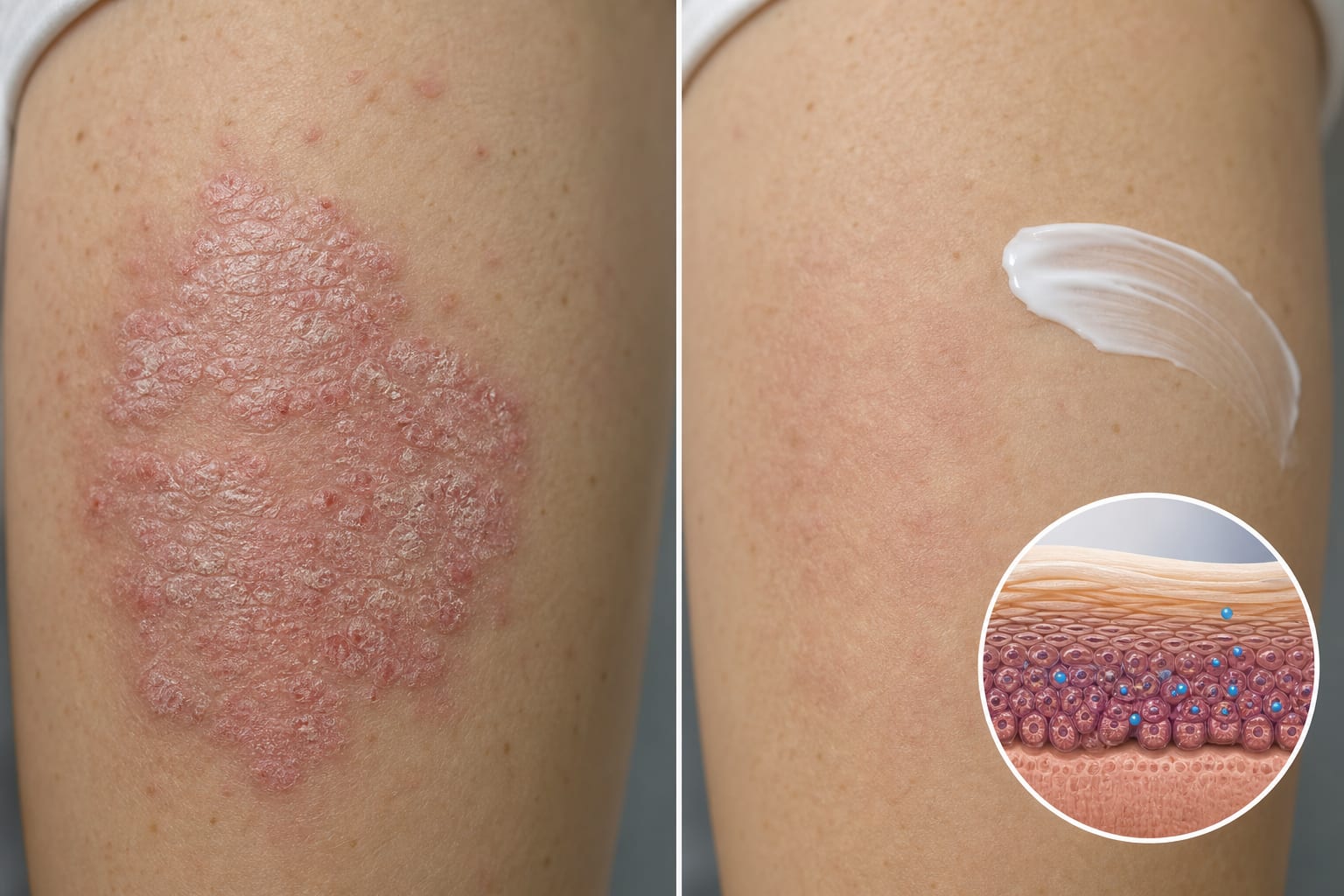
Assessment of Early Efficacy of Calcipotriol and Betamethasone Dipropionate PAD-Cream at Four Weeks in Individuals with Mild-to-Moderate Plaque Psoriasis: A Combined Analysis of Two Phase III Studies
To assess the proportion of early responders to CAL/BDP PAD-cream based on achievement of Physician Global Assessment (PGA) controlled disease at Week 4 and compare results with patient-reported outcomes (PROs).
Approach:
Study Design: Post-hoc pooled analysis of two phase III trials (MC2-01-C7 and MC2-01-C2) involving adults with mild-to-moderate psoriasis, randomized to receive CAL/BDP PAD-cream, vehicle, or CAL/BDP gel.
Outcomes: Assessment of PGA and SGA at baseline, Week 1, and Week 4 to evaluate controlled disease and treatment success.
Statistical Analysis: Rates of PGA and SGA outcomes compared using logistic regression models; concordance evaluated by percent agreement.
Key Findings:
CAL/BDP PAD-cream showed significantly higher early response rates at Week 4 compared to CAL/BDP gel and vehicle.
Approximately 70% of patients treated with CAL/BDP PAD-cream demonstrated concordance between their assessments and the physician’s assessment of controlled disease.
Interpretation:
The findings support the clinical relevance of early treatment response and the complementary value of PROs in psoriasis management.
Limitations:
The study was a post-hoc analysis and may be subject to biases inherent in such analyses.
P values were not adjusted for multiplicity, which may affect the interpretation of statistical significance.
Conclusion:
The study highlights the importance of early response in treatment adherence and the value of aligning patient and physician assessments.
Approval expands risankizumab use to pediatric plaque psoriasis and psoriatic arthritis and includes a new 55-mg prefilled syringe for weight-based dosing in patients weighing less than 40 kg.