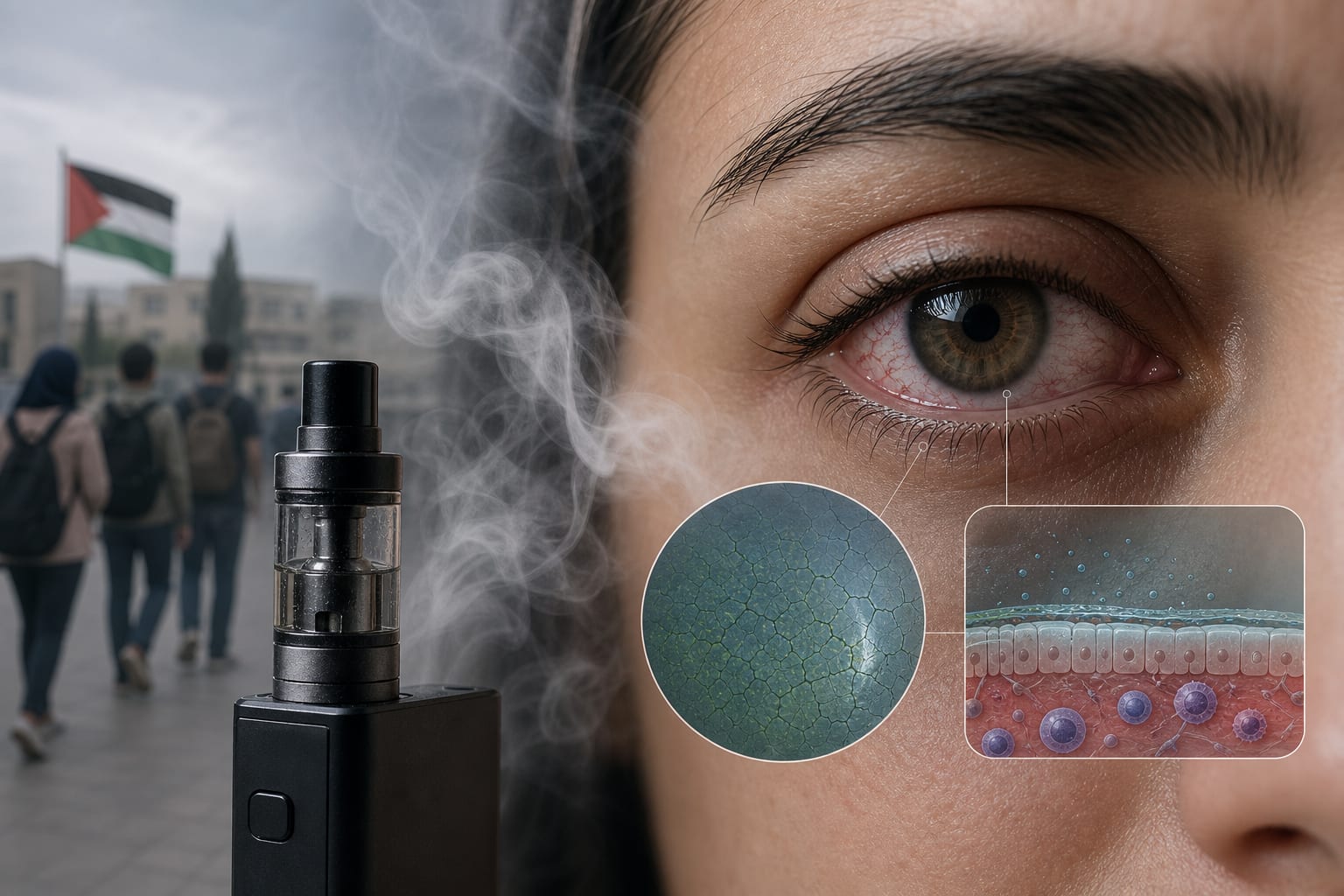
To quantify goblet cell density (GCD) and evaluate histomorphological changes in the conjunctival epithelium among patients using antidepressants, and to correlate GCD with routine dry eye investigations.
Approach:
Study Design: A case-control study involving 72 participants taking antidepressants and 70 age/sex-matched controls.
Participant Selection: Participants aged 20–40 years were recruited from psychiatric and optometry departments, excluding those with systemic or ocular surface diseases.
Assessment Methods: Included slit-lamp biomicroscopy, Ocular Surface Disease Index (OSDI) questionnaire, tear break-up time (TBUT), Schirmer test, and conjunctival impression cytology.
Statistical Analysis: Used WinPepi and Jamovi software for analysis, applying various statistical tests to assess normality and relationships between variables.
Key Findings:
The study enrolled 142 participants, with 72 cases and 70 controls.
Common psychiatric disorders among cases included depression (33.33%) and anxiety (26.38%).
Goblet cell density (GCD) was significantly lower in the antidepressant group compared to controls.
Histomorphological changes in the conjunctival epithelium were observed, indicating alterations due to antidepressant use.
Interpretation:
Limitations:
The study was limited to a specific age group (20-40 years).
Participants were recruited from a single institution, which may affect generalizability.