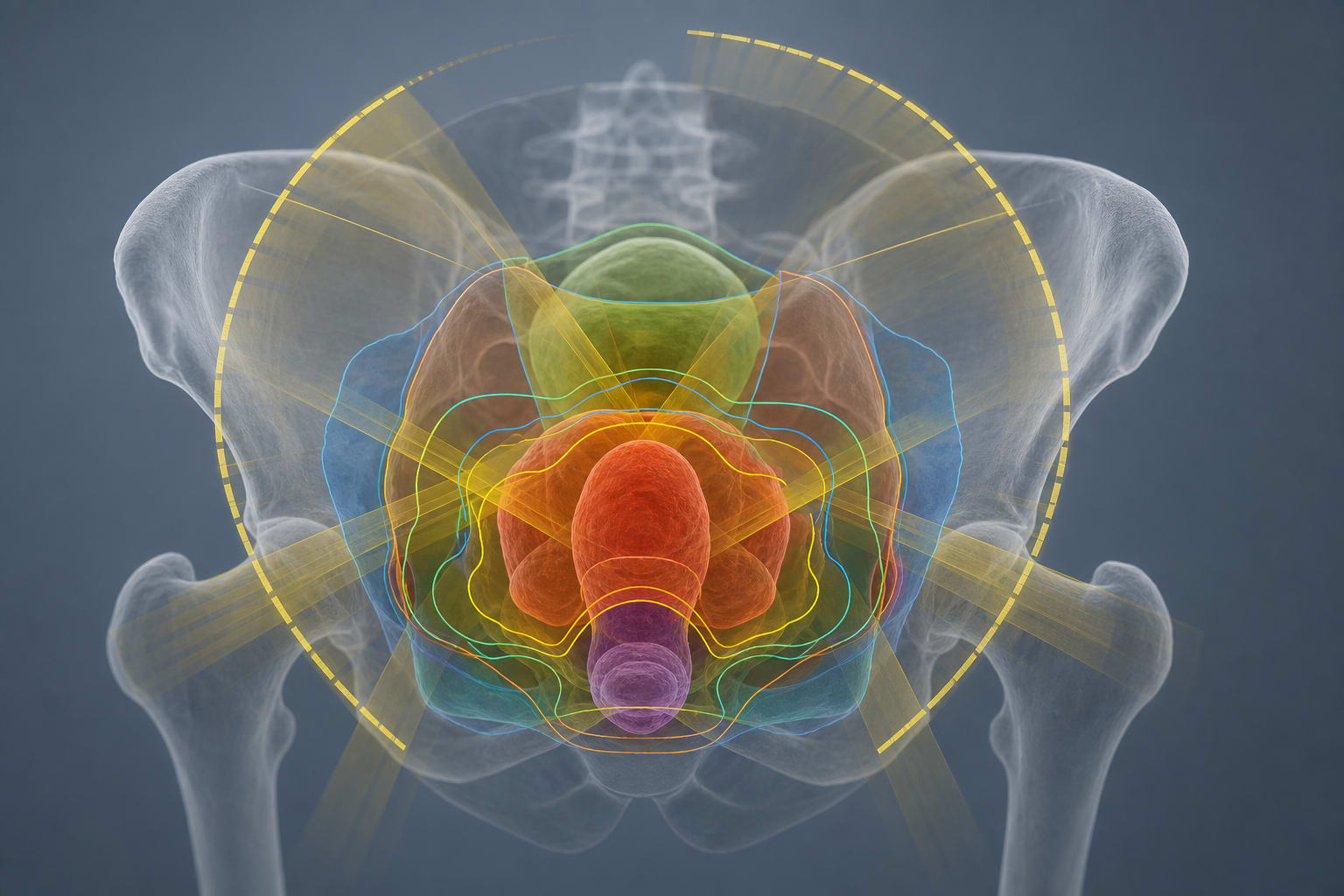
To develop and evaluate an anatomy-driven automated planning strategy (VCAP) for whole pelvic radiotherapy (WPRT) that enhances target coverage and organ-at-risk (OAR) sparing, ultimately improving patient outcomes.
Key Findings:
VCAP achieved V95 above 95%, comparable to CP, AP, and RP, indicating effective target coverage.
Rectal doses reduced by 24.6% compared to CP and 12-13% compared to AP and RP, suggesting significant OAR sparing.
Bladder sparing improved in the 15–40 Gy range, enhancing patient safety.
Bowel bag exposure decreased with V30 reduced by over 20.5% compared to CP, indicating better dose management.
Mean planning time decreased from 120 minutes with CP to 21 minutes with VCAP, demonstrating improved efficiency.
Interpretation:
VCAP enhances OAR sparing while maintaining robust PTV coverage, suggesting improved planning efficiency and consistency in clinical practice, which may lead to better patient outcomes.
Limitations:
Retrospective design may limit generalizability; future studies should consider prospective designs.
Further validation needed to assess broader clinical applications and long-term outcomes.
Conclusion:
VCAP offers an efficient, anatomy-driven approach to VMAT planning for WPRT, potentially improving treatment planning processes and patient outcomes.