An updated review on the role of extracellular vesicles in immune system modulation in breast cancer with special emphasis on immune checkpoint regulators - Summary - MDSpire
Advertisement
An updated review on the role of extracellular vesicles in immune system modulation in breast cancer with special emphasis on immune checkpoint regulators
To discuss the role of extracellular vesicles (EVs) in immune checkpoint regulation in breast cancer and their contribution to immune evasion and therapy resistance.
Approach:
Literature Review: A review of studies from the past decade related to EV biology, immune checkpoints, and breast cancer was conducted using PubMed, Google Scholar, and Web of Science.
Key Findings:
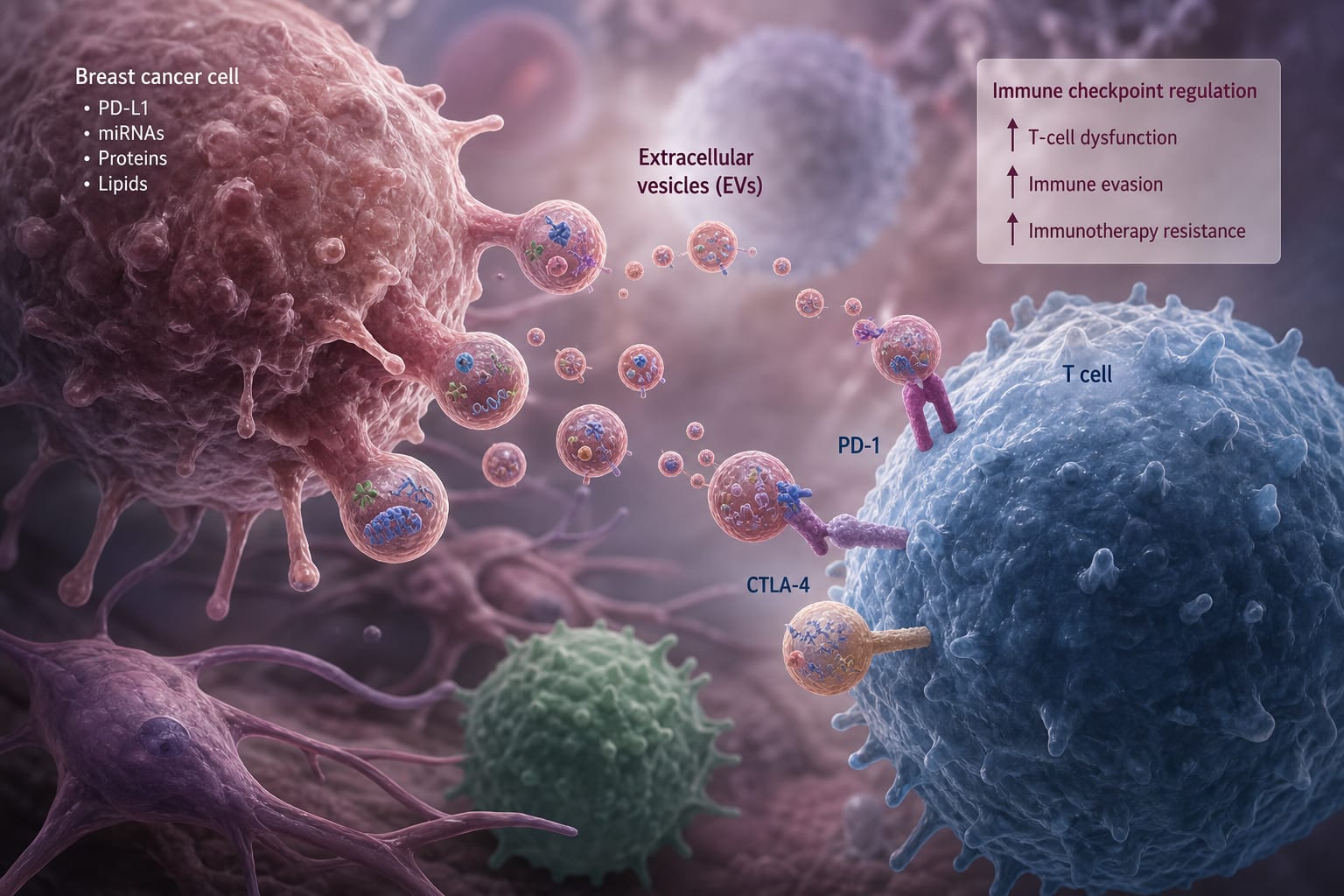
Tumor-derived EVs contribute to immunosuppression by impairing T-cell function and promoting immune tolerance.
EVs facilitate metastatic progression and support resistance to immunotherapy.
EV-mediated effects vary across different breast cancer subtypes, influencing treatment response and clinical outcomes.
EVs may serve as minimally invasive biomarkers for disease monitoring and as therapeutic targets or delivery systems for precision medicine.
Interpretation:
EVs are implicated in modulating immune responses in breast cancer, particularly through the regulation of immune checkpoints such as PD-L1 and CTLA-4.
Limitations:
The integration of EVs' mechanistic involvement in immune checkpoint regulation with clinical applications remains insufficiently explored.
Further research is needed to evaluate the potential of EVs as diagnostic biomarkers and therapeutic targets.
Conclusion:
This review discusses the role of EV-mediated immune checkpoint regulation in breast cancer, highlighting the complexity of these interactions and the potential of PD-L1 and CTLA-4 as targets for immunotherapy.