The efficacy and safety of Femoston combined with Baoqing granules for kidney Yin deficiency in perimenopausal women: a randomized, double-blind, placebo-controlled trial - Summary - MDSpire
Advertisement
The efficacy and safety of Femoston combined with Baoqing granules for kidney Yin deficiency in perimenopausal women: a randomized, double-blind, placebo-controlled trial
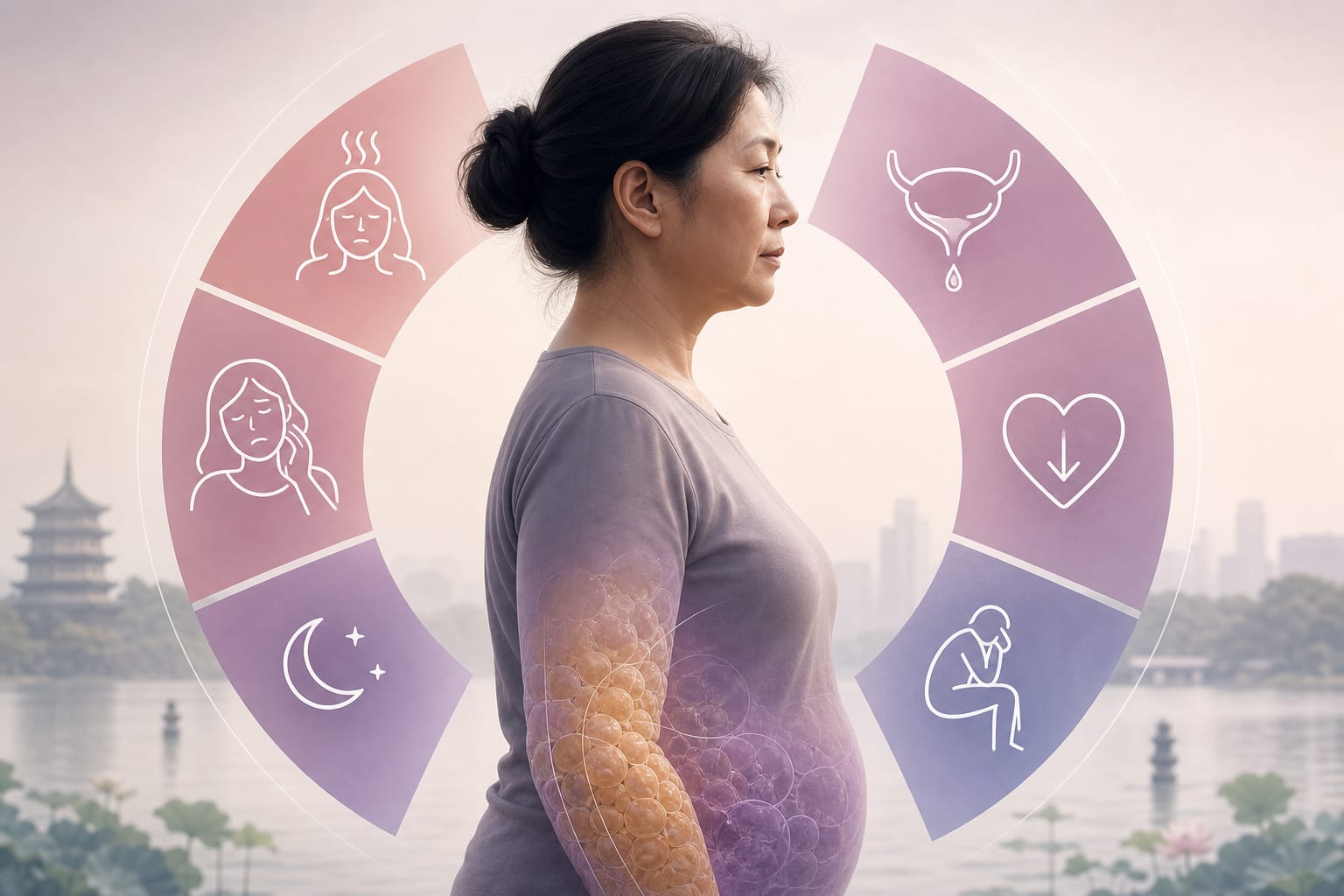
To evaluate the safety and effectiveness of Baoqing granules (BQG) combined with Femoston for treating kidney Yin deficiency in perimenopausal women, addressing a significant gap in current treatment options.
Key Findings:
Both treatment groups showed significant improvements from baseline.
Participants receiving BQG experienced greater short-term improvements in Modified KMI, TCM syndrome scores, MENQOL, and PSQI.
Differences in SAS and SDS scores became significant only at follow-up, indicating a delayed response.
No significant between-group differences in hormone and lipid profiles, but exploratory analyses suggested hormonal benefits in postmenopausal women receiving BQG.
Liver and kidney functions remained normal with only one mild adverse event reported.
Interpretation:
BQG as an adjunct to Femoston may enhance the management of perimenopausal symptoms, demonstrating acceptable tolerability and potential benefits for clinical practice.
Limitations:
Short duration of the study (8 weeks) limits long-term efficacy and safety conclusions, and may introduce biases.
Exploratory subgroup analyses may require further validation.
Conclusion:
BQG combined with Femoston shows promise for improving perimenopausal symptoms, warranting further long-term studies to confirm benefits and safety, and to explore its role in clinical practice.