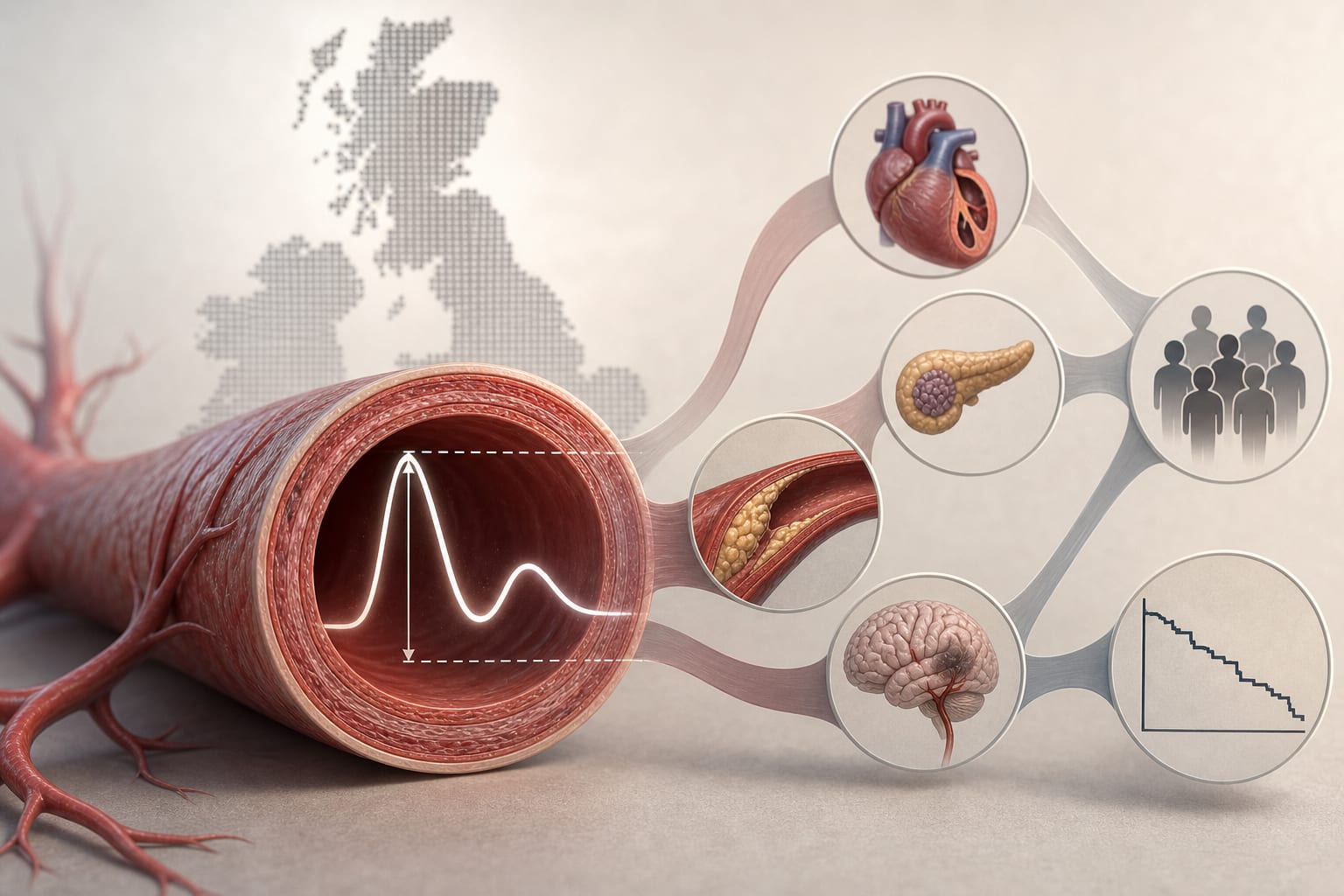
To determine which glycemic variability (GV) indicators most effectively predict outcomes in critically ill patients and to quantitatively compare the strength of the associations between different GV metrics and clinical endpoints.
Approach:
Key Findings:
Elevated coefficient of variation (CV) was significantly associated with increased 30-day, 90-day, and 1-year all-cause mortality (ACM).
Mean amplitude of glycemic excursions (MAGE) showed a strong association with 30-day ACM (HR = 1.50).
Elevated standard deviation (SD) and MAGE were associated with an increased risk of major adverse cardiovascular events (MACE).
The impact of increased CV on 30-day ACM was greater in non-diabetic patients compared to diabetic patients.
Interpretation:
Elevated GV, particularly MAGE and CV, independently predicted both short- and long-term ACM and MACE.
Limitations:
The study was limited by the number of available studies on the association of MAGE with other GV metrics.
Conclusion:
Clinicians should emphasize dynamic GV monitoring and individualized glucose management to improve patient outcomes.