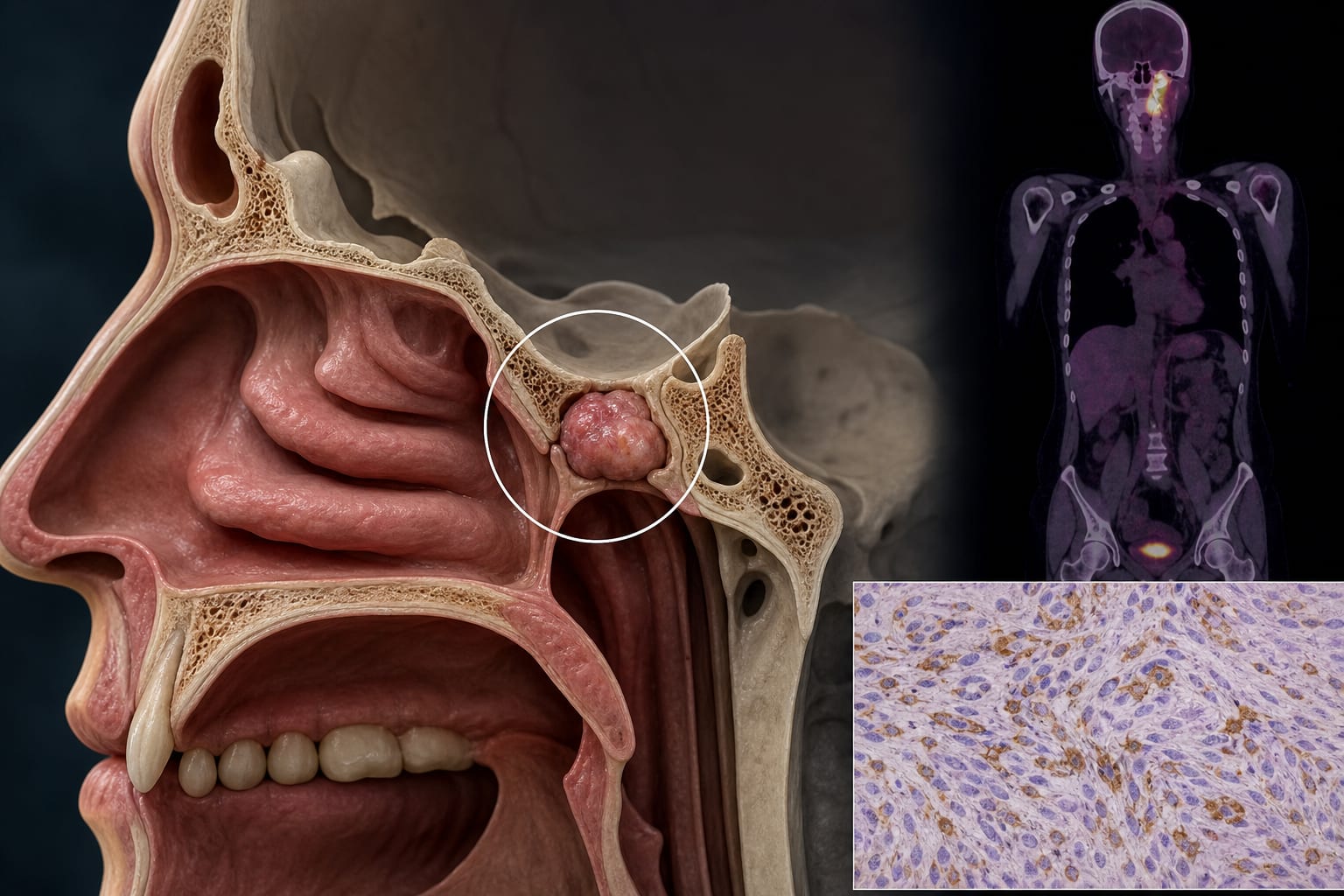
To summarize clinical experience, identify critical diagnostic indicators for sinonasal/skull base PMTs, and analyze current challenges and potential improvements, emphasizing the significance of these indicators in clinical practice.
Key Findings:
PMTs are rare in the sinonasal region and skull base, leading to high rates of missed and misdiagnosis, which can significantly affect patient outcomes.
Persistent hypophosphataemia is a vital diagnostic indicator that should be monitored closely.
PET imaging showed somatostatin receptor positivity in patients, indicating its potential role in diagnosis.
Immunohistochemistry revealed SSTR2+/SATB2+ expression in tumours, which may aid in distinguishing PMTs from other lesions.
Interpretation:
The study highlights the diagnostic challenges associated with sinonasal/skull base PMTs due to their atypical clinical manifestations and obscured locations, underscoring the need for heightened clinical awareness.
Limitations:
Small sample size of only 5 patients limits the generalizability of the findings.
Retrospective nature may introduce bias in data collection and interpretation.
Variability in diagnostic delay and clinical presentation may affect the reliability of the conclusions.
Conclusion:
The findings emphasize the need for increased awareness and improved diagnostic strategies for sinonasal/skull base PMTs to reduce misdiagnosis, ultimately improving patient outcomes.