High versus low ligation of the inferior mesenteric artery during transanal total mesorectal excision for low rectal cancer: impact on postoperative anastomotic leakage - Summary - MDSpire
Advertisement
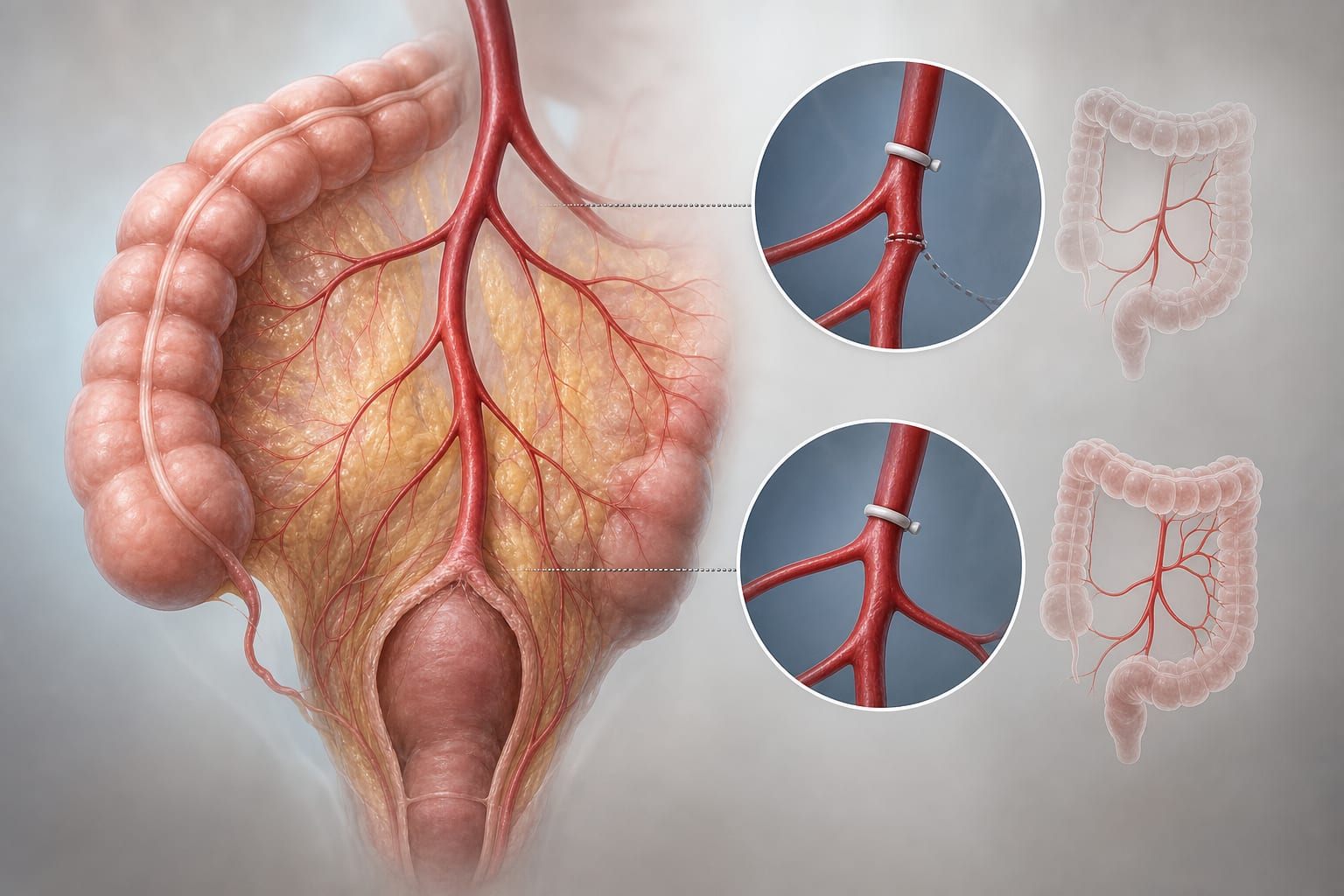
High versus low ligation of the inferior mesenteric artery during transanal total mesorectal excision for low rectal cancer: impact on postoperative anastomotic leakage
To evaluate the effects of left colic artery (LCA) preservation versus non-preservation techniques on anastomotic leakage in patients undergoing transanal total mesorectal excision for low rectal cancer.
Approach:
Patient Groups: 182 patients were assigned to LCA preservation (low ligation) or non-preservation (high ligation) groups based on propensity score matching.
Key Findings:
The incidence of postoperative leakage in the LCA preservation group was lower than in the non-preservation group (4.3% vs. 13.2%, p = 0.036).
Among patients who received neoadjuvant therapy, LCA preservation was associated with a lower incidence of anastomotic leakage rates (7.0% vs. 24.0%, p = 0.049).
Interpretation:
LCA preservation may have clinical value in selected patients with low rectal cancer, particularly those receiving neoadjuvant therapy.
Limitations:
The study is retrospective and conducted at a single center, which may limit generalizability.
Further research is needed to clarify the feasibility and safety of LCA preservation.
Conclusion:
LCA preservation during transanal total mesorectal excision may be associated with differences in the risk of anastomotic leakage in specific patient populations.