Factors of modern lifestyle influencing gait pattern alterations in elementary school children: a mini review - Summary - MDSpire

Factors of modern lifestyle influencing gait pattern alterations in elementary school children: a mini review

  • By

  • Mario Kasović

  • Sanja Musić Milanović

  • Damir Knjaz

  • Saša Janković

  • Goran Sporiš

  • Katarina Pavičić Dokoza

  • Tomáš Vespalec

  • Martin Sebera

  • Marta Gimunová

  • Tomislav Krističević

  • Goran Vrgoč

  • Dinko Vidović

  • Dario Novak

  • Dejan Blažević

  • Tihana Nemčić Bojić

  • Tanja Petrušič

  • Bruno Škrinjarić

  • Lenka Svobodová

  • Slaven Krtalić

  • Maja Lang Morović

  • Krešimir Hrg

  • Ana Starešinić

  • Bartol Vukelić

  • Anja Topolovec

  • Maja Flego Ostović

  • Ivana Olivari

  • Magda Bujan

  • Ljiljana Hanžek

  • Martina Čiček

  • Petra Vita Kasović

  • Fran Tisaj

  • Petra Čuljak

  • Mateja Očić

  • June 17, 2026

  • 0 min

Share

Objective:

To synthesize current evidence on how selected modern lifestyle factors influence gait biomechanics in elementary school-aged children (approximately 6–14 years), highlighting the implications for public health.

Approach:
    Key Findings:
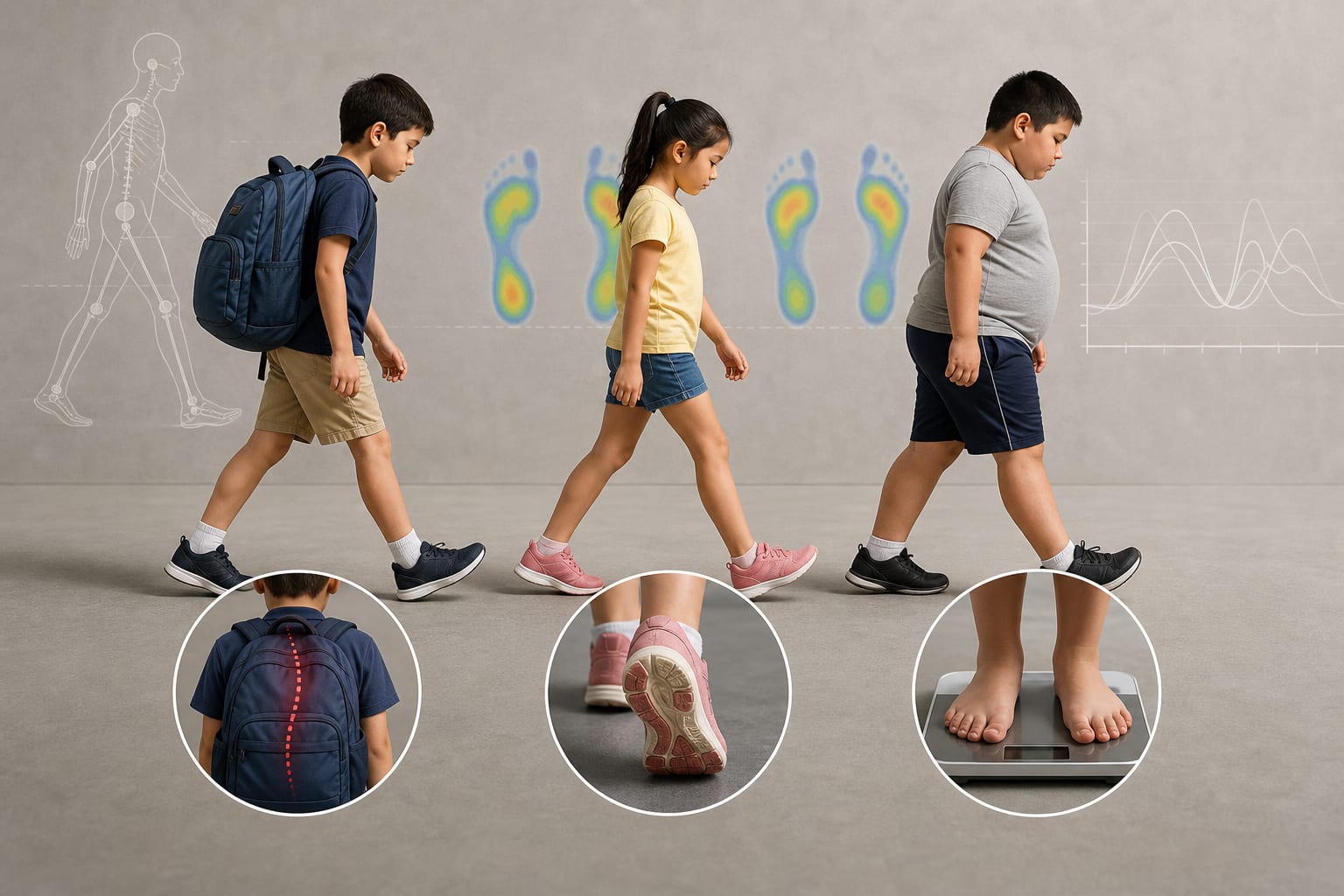
    • Backpack loads exceeding 10%–12% of body weight alter spatiotemporal parameters, ground reaction forces, and postural control, which may lead to long-term musculoskeletal issues.
    • Footwear characteristics, including sole flexibility and heel elevation, modify foot kinematics and joint mechanics, potentially affecting overall gait efficiency.
    • Childhood overweight and obesity significantly change gait velocity, stride characteristics, joint loading patterns, and plantar pressures, increasing the risk of future locomotor dysfunction.
    Interpretation:

    The findings highlight the impact of contemporary lifestyle factors on children's gait biomechanics, suggesting the need for targeted interventions in schools to promote healthy musculoskeletal development.

    Limitations:
    • The review is limited to studies published since 2000 and may not encompass all relevant research, potentially overlooking earlier significant findings.
    • The heterogeneity in study designs and methodologies may affect the generalizability of the findings, and potential biases in the studies reviewed should be considered.
    Conclusion:

    Addressing modifiable lifestyle factors is essential for preventing long-term locomotor dysfunction in children, particularly through school health policies and community programs.

Original Source(s)

Related Content