To provide an imaging-guided, risk-based framework for the evaluation and management of peripheral retinal degenerations (PRD), emphasizing the role of posterior vitreous detachment (PVD) and the integration of emerging AI-assisted decision support in clinical practice.
Key Findings:
PRD can be stratified into low risk (atrophic lesions), intermediate (degenerative retinoschisis), and high risk (tractional lesions such as lattice degeneration and retinal tufts) categories.
PVD is a key biomechanical event linking PRD with retinal tears (RT) and rhegmatogenous retinal detachment (RRD).
Ultra-widefield (UWF) imaging and swept-source OCT (SS-OCT) enhance visualization of peripheral retinal morphology and tractional dynamics.
Selective prophylactic laser photocoagulation is supported for symptomatic RT, fellow eye RRD, or OCT-confirmed tractional instability, while routine treatment of asymptomatic low-risk PRD is not justified.
AI-assisted decision support may standardize risk interpretation by integrating multimodal imaging features with clinical risk modifiers, potentially improving clinical outcomes.
Interpretation:
Management of PRD should be individualized, utilizing integrated clinical assessment and multimodal imaging to target interventions based on tractional instability and significant risk factors.
Limitations:
Limited consensus on translating specific imaging features into reproducible, risk-based management decisions, which may lead to inconsistent patient care.
Variability in prophylactic treatment thresholds across clinicians and centers, highlighting the need for standardized guidelines.
Conclusion:
An imaging-guided, risk-stratified approach is essential for effective PRD management, minimizing unnecessary interventions while addressing clinically relevant risks through individualized patient assessment.
Carl J. Danzig, MD, reviews 4.5 years of real-world findings showing sustained anatomic improvements, longer treatment intervals, and a favorable safety profile with faricimab in neovascular AMD.
At ASRS 2026, Dilsher S. Dhoot, MD, FASRS, shared additional phase 3 SOL-1 data on vision maintenance, rescue treatment, and safety with investigational OTX-TKI (Axpaxli) in neovascular AMD.
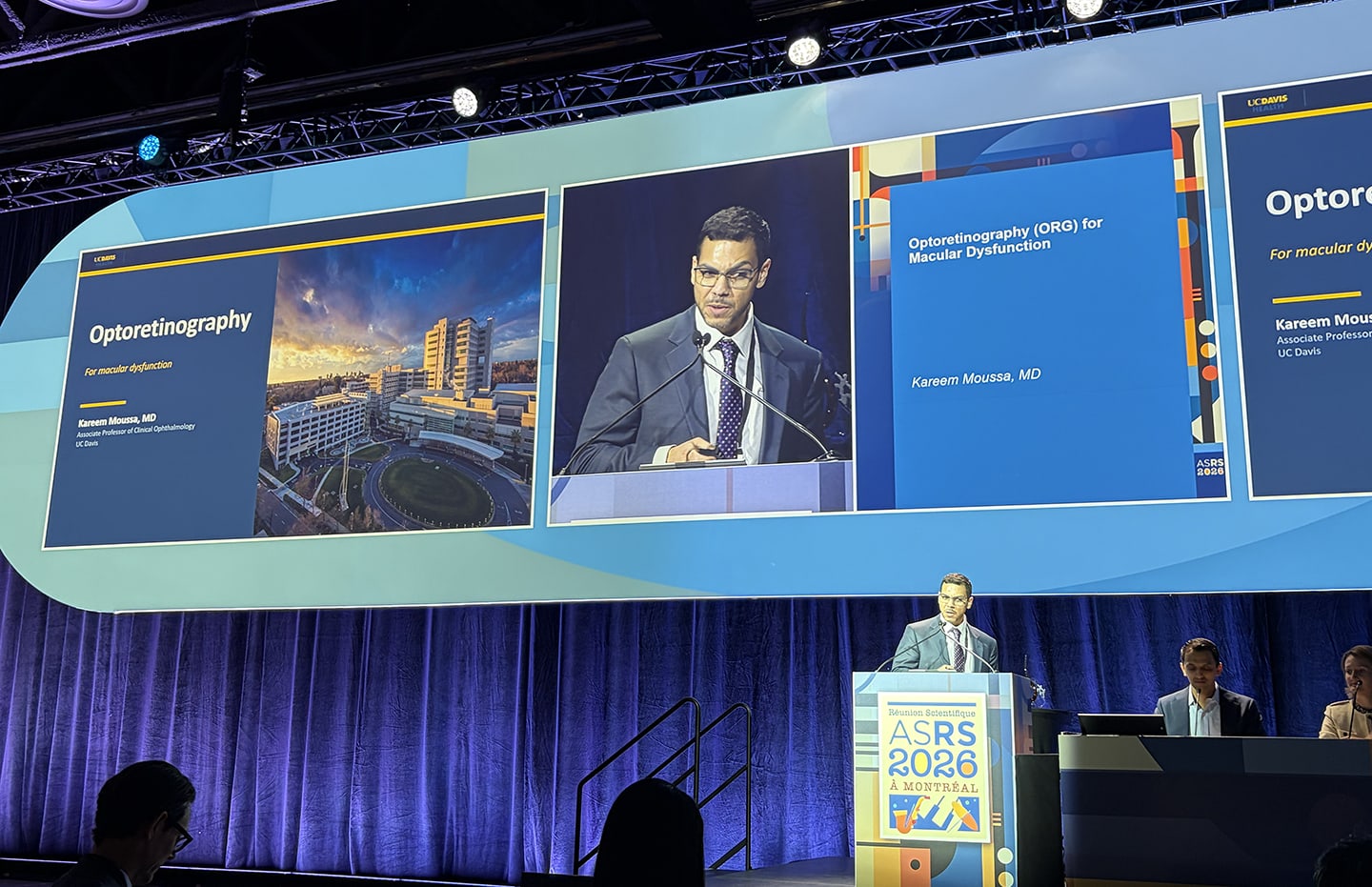
At ASRS 2026, Kareem Moussa, MD, presented early data suggesting optoretinography may identify photoreceptor dysfunction in diabetic eyes before conventional imaging reveals abnormalities.