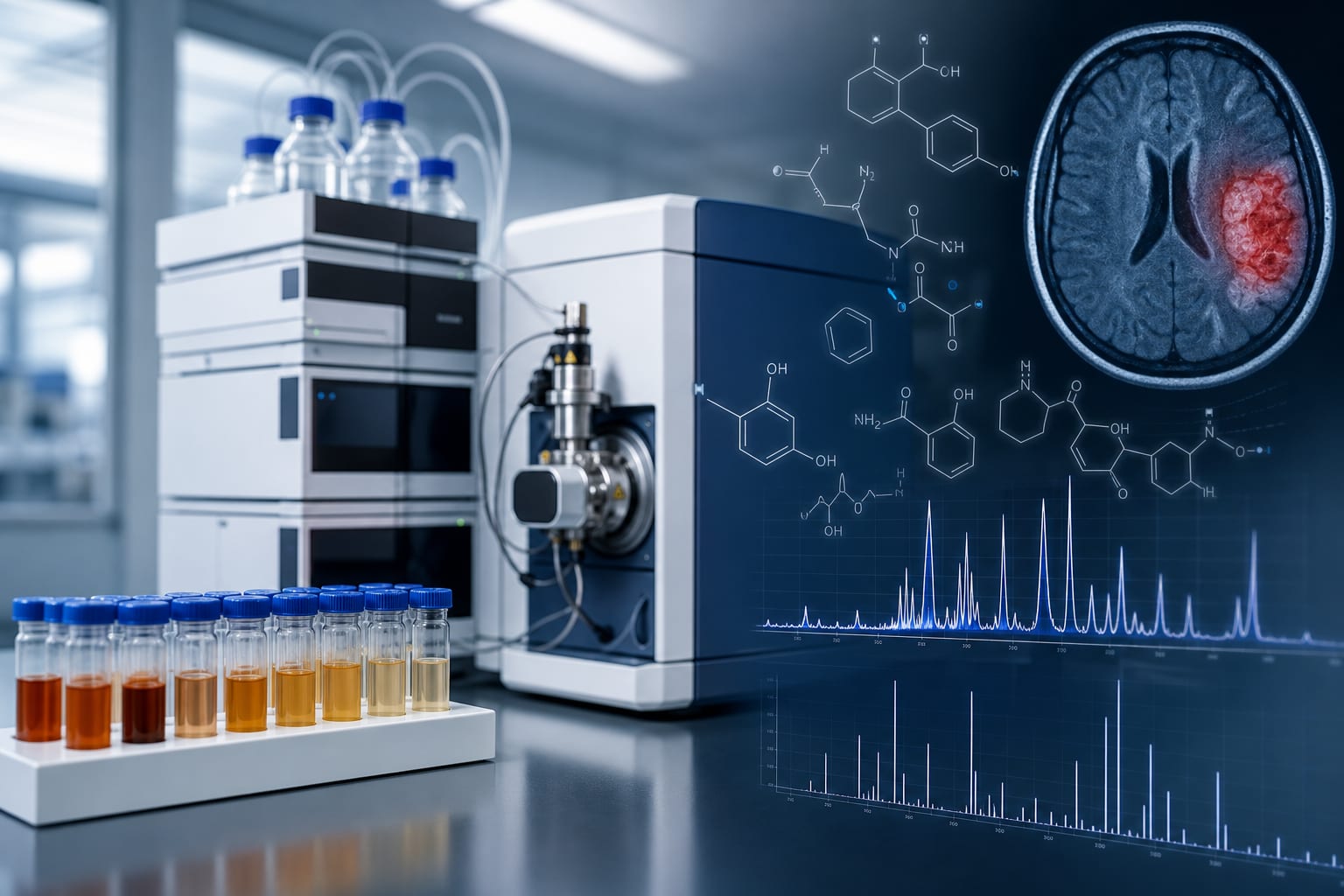
LC–MS-based serum metabolomics reveals distinct metabolic signatures in patients with intracerebral Hemorrhage
By
Wei Zheng
Wei Wang
Xiaohui Lu
July 2, 2026
Objective: To characterize the serum metabolic profile of patients with ICH and identify potential metabolic biomarkers associated with disease pathogenesis.
Approach: Methodology: Liquid chromatography–mass spectrometry (LC–MS) was used to analyze serum metabolite profiles in 20 patients with and without ICH, employing various statistical and pathway enrichment analyses.Key Findings: Atotalof3,178metaboliteswereidentified.InpatientswithICH,benzeneandsubstitutedderivativeswerethemostabundantmetaboliteclass(15.63%),followedbyorganicacids(12.47%),aminoacidsandtheirmetabolites(12.41%),andheterocycliccompounds(12.07%).SignificantseparationbetweenICHandcontrolgroupswasobserved(p<0.01).Increasedlevelsofbenzenederivativesandorganicacidswerenoted,whileaminoacidsandlipidmetabolitesweredecreased.Keymetabolicpathwaysinvolvedincludedlinoleicacidmetabolismandglycerophospholipidmetabolism.ROCanalysisindicatedexcellentdiagnosticperformanceforseveralmetabolites,includingDibutylphthalate(AUC=0.980)andOctadecanamide(AUC=0.960). Interpretation: Distinct alterations in the serum metabolomic profile of ICH patients were observed.
Limitations: The study involved a small sample size of 20 patients. The findings may not be generalizable to a broader population. Conclusion: The study provides insights into the metabolic mechanisms underlying ICH.