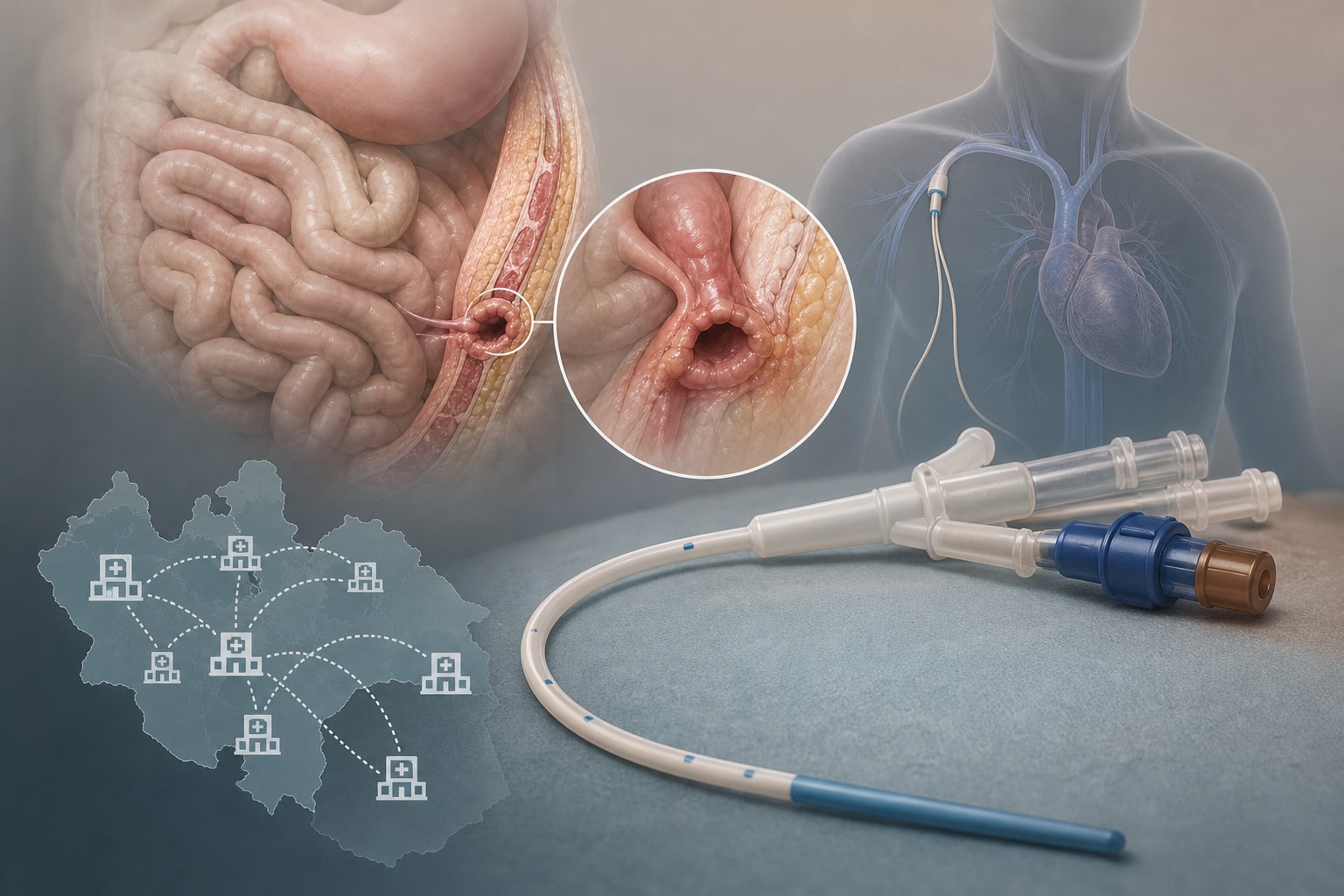
The article reviews evidence for sacral neuromodulation (SNM) in low anterior resection syndrome (LARS), including clinical outcomes, treatment context, and unresolved questions about patient selection and mechanisms.
Approach:
Clinical context: LARS includes bowel symptoms such as urgency, fecal incontinence, increased frequency, clustering, and incomplete evacuation, which can impair quality of life.
Treatment pathway: Management is described as stepwise: dietary and pharmacological measures and pelvic floor rehabilitation, followed where appropriate by transanal irrigation; SNM may be considered for major LARS refractory to optimized conservative treatment.
Evidence reviewed: The article discusses the SANLARS randomized trial, observational and long-term studies, and the ongoing POLARiS trial.
Key Findings:
In SANLARS, 35 of 46 participants (78%) completed the test phase and received permanent implantation.
At 6 and 12 months, SNM was associated with significant improvements in LARS score, continence outcomes, urgency, clustering, bowel-emptying sensation, and quality of life.
Improvement appeared to diminish over longer follow-up but remained statistically significant.
A secondary analysis reported significant improvement in urinary symptoms; overall sexual function did not improve significantly, although male participants reported greater confidence maintaining an erection.
After device deactivation, approximately half of patients retained improvements in fecal and urinary continence, while symptoms recurred in some patients.
One study reported a median LARS score decrease from 38.5 to 19 after a median 48-month follow-up, alongside improvements in Wexner scores, bowel frequency, and quality-of-life measures.
Interpretation:
The article presents SNM as an effective option for major LARS refractory to conservative management. Response may vary by symptom profile, but reliable predictors and clearly defined candidate phenotypes have not been established. Proposed effects on sacral sensory pathways and neuroplasticity remain hypotheses.
Limitations:
Earlier evidence was largely based on small observational series.
The magnitude of symptom improvement may decrease over time.
Optimal patient selection and treatment sequencing remain under refinement.
The mechanisms of SNM in LARS are not fully elucidated.
The contribution of SNM to sexual dysfunction requires further clarification.
Conclusion:
The article describes SNM as a validated therapeutic option for major LARS refractory to conservative treatment, with reported benefits for bowel and urinary function and quality of life. The ongoing POLARiS trial is expected to provide comparative data on SNM, transanal irrigation, and optimized conservative treatment.